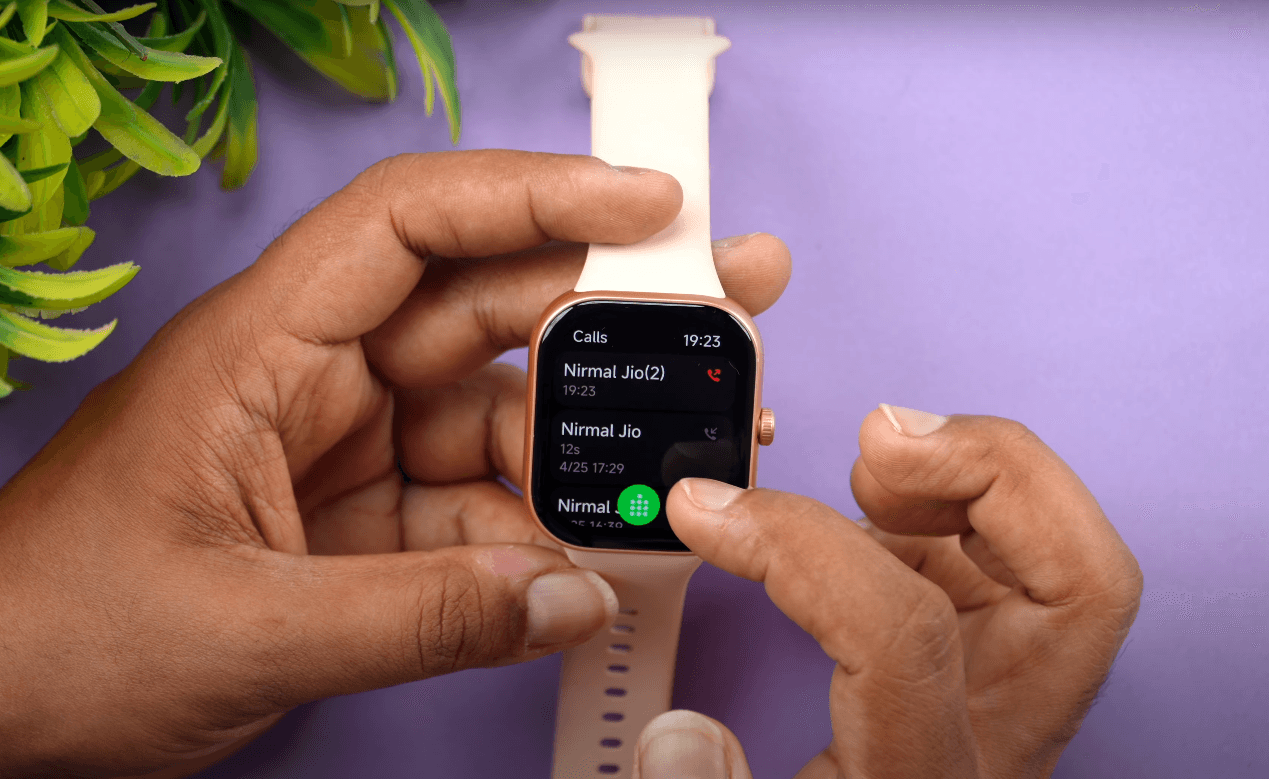
Redmi Watch Move Call test

Redmi Watch Move

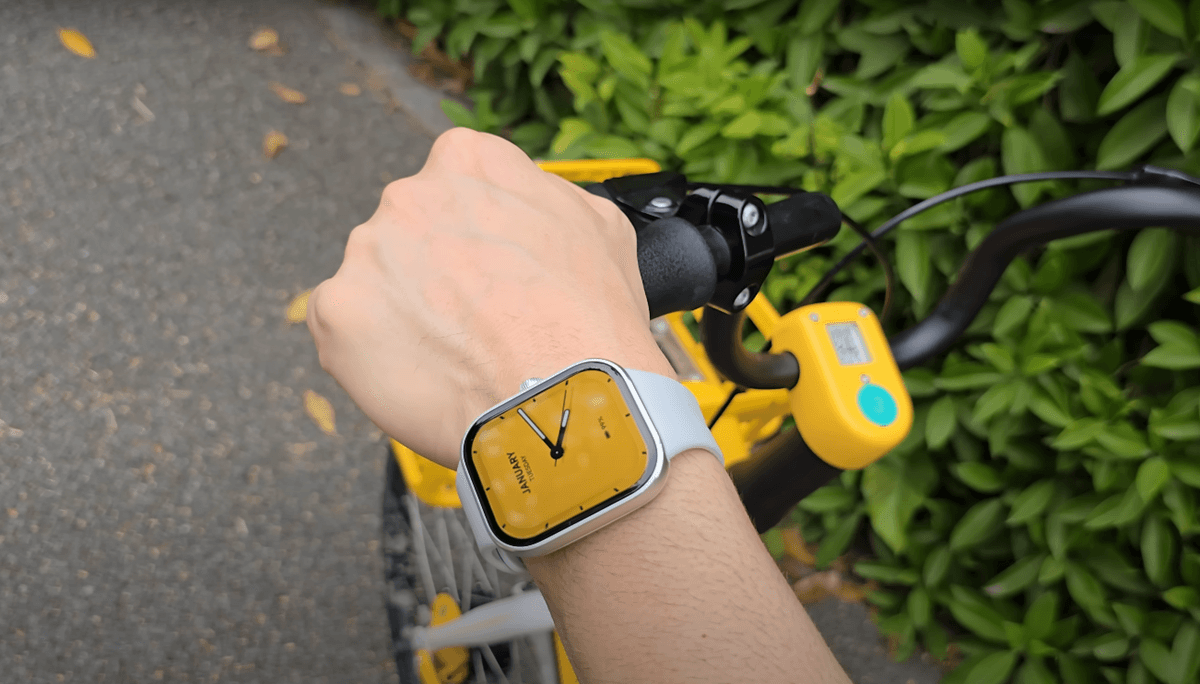
I have the Redmi Watch Move. The review emphasizes the watch’s design, functionality, and value at this price point. The design is highlighted as particularly appealing, offering a premium appearance that rivals watches costing much more. First off, let’s discuss what I liked about the watch, and the first thing is its design. It includes multiple color options and a full-function crown for versatile use.


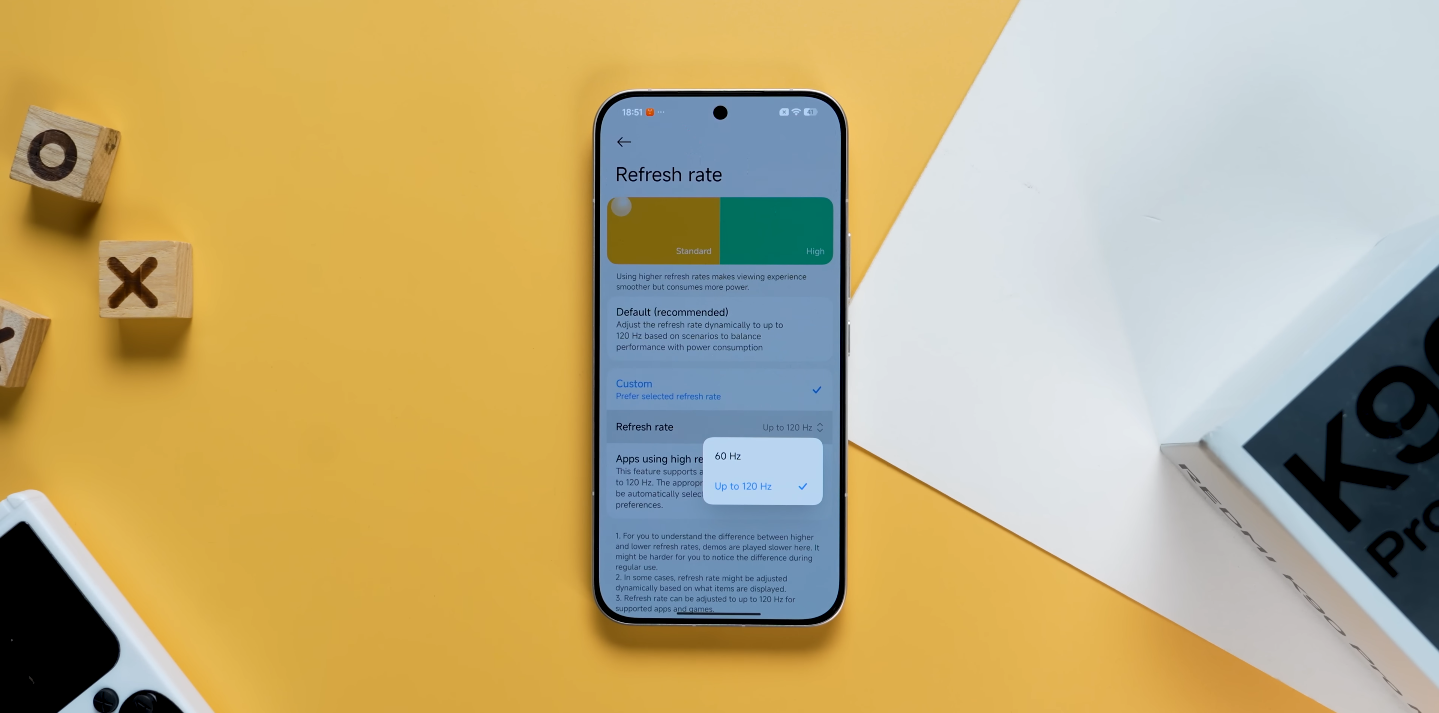
Operates at a refresh rate of 50-60 Hz, providing a sharp and vibrant viewing experience


The display features AMOLED technology, despite having some bezels, and operates at a refresh rate of 50-60 Hz, providing a sharp and vibrant viewing experience. It means you get good build quality and nice design here, especially considering the price point. You have a plastic frame with TPU straps and a plastic buckle. The watch is lightweight and very comfortable to wear.


The watch is equipped with IP68 water resistance, allowing usage in various conditions such as swimming. Because it’s so light, you hardly feel like you’re wearing a watch at all. The body size is pretty suitable, so whether you’re a man or a woman, it’ll look good on anyone’s wrist. Plus, there are multiple color options available for this watch, You can find them easily.


I can’t adjust the brightness. I’m asking for a bit too much considering the price, but it would be better if it was possible. IP68 Water Resistance: Safely use the watch in water up to 1.5 meters for 30 minutes. Offers a vibrant and sharp viewing experience, supporting positive outdoor visibility.


You get an IP 68 rating and AMOLED display


The step comes with a quick release mechanism, which means you can use third-party straps on it. This crown can do multiple things, like scrolling through the menu. If you long press it, the AI gets activated, and with a few more long presses, you can adjust various settings. I’m really impressed with the watch’s build quality.


Here you get an IP 68 rating, which means you can use this watch in water up to 1.5 meters deep for about 30 minutes. To me, that seems a bit low because if it had a 5 ATM rating on paper, it would feel a lot more reassuring. But honestly, I think using it in slightly deeper water shouldn’t be a problem. The next thing, I liked about the Redmi Watch Move is the display. It comes with an AMOLED display.
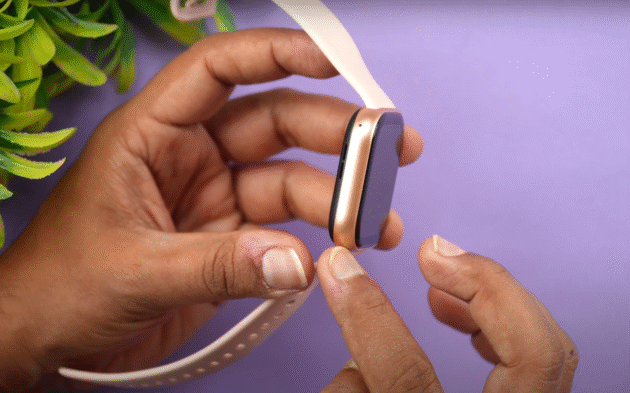


Redmi Watch Move
Redmi Watch Move


What I really liked about this display is the pixel density; it’s quite good. This means that the watch faces and text look really sharp, and any content you view on the display, whether it’s apps or anything else, looks great. Sure, the bezel on the side is a decent size, but since… You get a curved design on the front, which makes it look pretty premium. Plus, the AMOLED display switches between a 50-60 Hz refresh rate. It also has a peak brightness of 600 nits, which isn’t a huge number, but you won’t have any issues using it outdoors.


The next thing I don’t like about it is that the watch is lightweight, which is a plus since it’s not bulky. But here’s the issue with the crown: it sits really close to your wrist. So when you try to scroll it, your finger keeps touching your wrist, and the watch ends up being a bit of a hassle.


This watch easily pairs with the Mi Fitness app


If you’re tracking your heart rate or monitoring your health, you’ll feel like you’re using a nice watch with a good display. It also has an always on display feature, which is a great bonus. This watch easily pairs with the Mi Fitness app, and you’ve got loads of options there. For instance, you can use a bunch of different watch faces on it. Whether it’s analog, digital, or even cartoon-based. I really liked the watch faces here. Now, talking about the app, you’ve got tons of options inside. For example, if you go into the health section, you can check everything about your vitality, and within that, you can see how you’re performing over a week.


The memory is a bit limited, meaning you can’t have more than four or five watch faces downloaded at the same time. But when it comes to watch faces, you definitely have plenty to choose from. There are a bunch of options. If you score well, you even get some points. Redmi has done a great job here with the app’s integrations in the watch.


It’s really snappy, and with a refresh rate of around 50-60 Hz, you won’t feel any lag or sluggishness. The watch is well optimized. It runs on Hyper OS here and offers great connectivity.


Redmi Watch Move calling and App test


The app is pretty neat and well-organized. You can easily access everything. I noticed that the health report shows a blood pressure feature, but there’s no blood pressure feature in the app itself. Plus, there are some additional features like tracking your menstrual cycle. But you’ve got your heart rate, SpO2, stress monitor, and the vitality score I mentioned—all of that is available here. Redmi claims this is around 97 to 98% accurate, which seems pretty spot on based on my testing. Speaking of features, let’s talk about fitness tracking.


There are over 140 fitness activities available here, including outdoor running, walking, hiking, gym workouts, and more. So you can definitely rely on it. Plus, there’s an auto-detect feature that works with about seven activities, meaning it automatically recognizes those workouts for you. So, it saves you a bit of effort. And you’ve also got the ‘raise to wake’ feature here. Comprehensive app support that enables multiple watch faces and tracks health metrics effectively.


Also Read: HUAWEI WATCH D2: A Perfect Blood Pressure Moniter Smart Watch   


It’s really snappy, and with a refresh rate of around 50-60 Hz, you won’t feel any lag or sluggishness. The watch is well optimized. It runs on Hyper OS here and offers great connectivity. You can control your music with it too. You can control your music with it too. You can make calls with it. There’s a dialer available. You get call lock features. You can also reply to notifications if you want to. It’s packed with smart features.


Redmi Watch Move Battery backup


What I really liked is its battery backup. The brand claims that if you turn off the always-on display, it can give you about 14 days of battery life. With the always-on display on, it lasts around 5 days. In my usage, I kept the always-on display switched on.


Now let’s talk about what I didn’t like. The first thing is, sure, you get an AMOLED display here, but there’s no adaptive brightness feature available. This means that when you move from a bright outdoor space to a dim indoor area. And It’s got a backup that lasts comfortably between 5 to 6 days, which I think is pretty good. And if you turn it off, you’ll get even more backup.


The crown can be difficult to manipulate comfortably due to its close proximity to the wrist. Despite these downsides, the review recommends the Redmi Watch Move as a solid purchase for anyone looking in the budget-friendly segment of the smartwatch market. The Redmi Watch Move exudes a premium feel despite its low price, making it visually appealing. Music control, calls, and notifications enhance user experience despite being a budget model.


Also Read: Scykei Movis: The Smartwatch with Vibrant AMOLED and Long-Lasting Power   
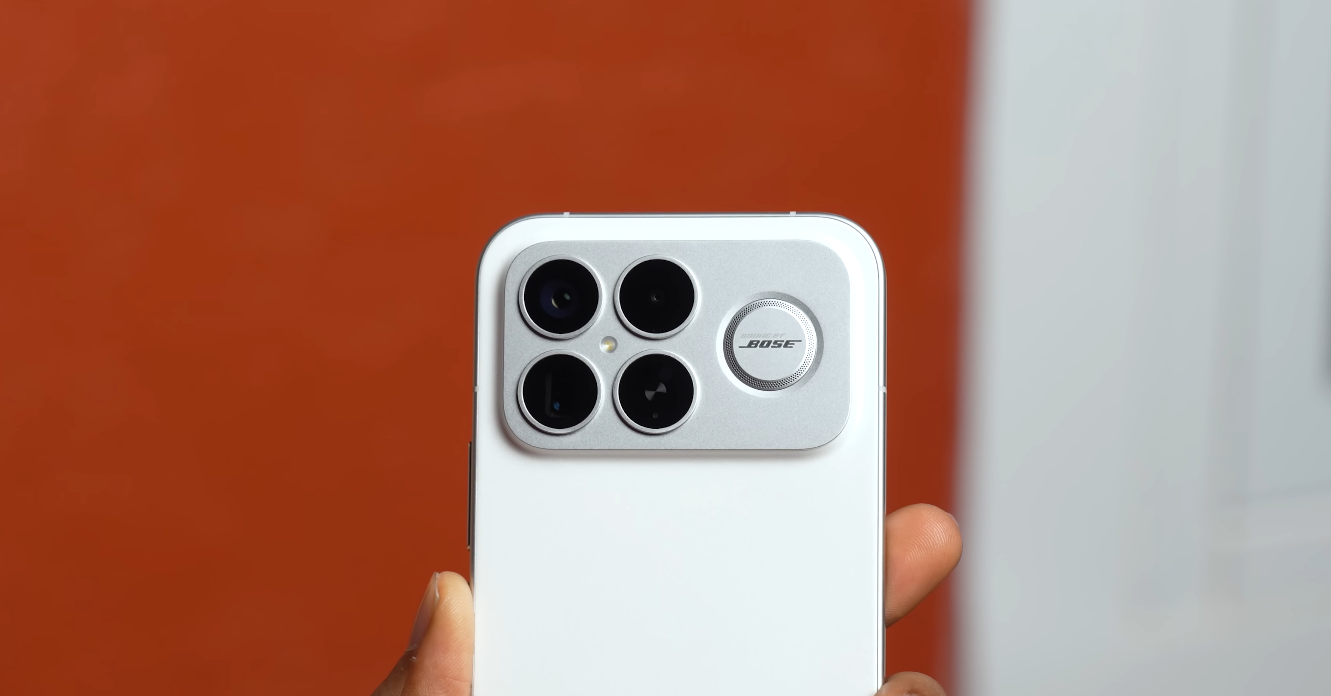
 

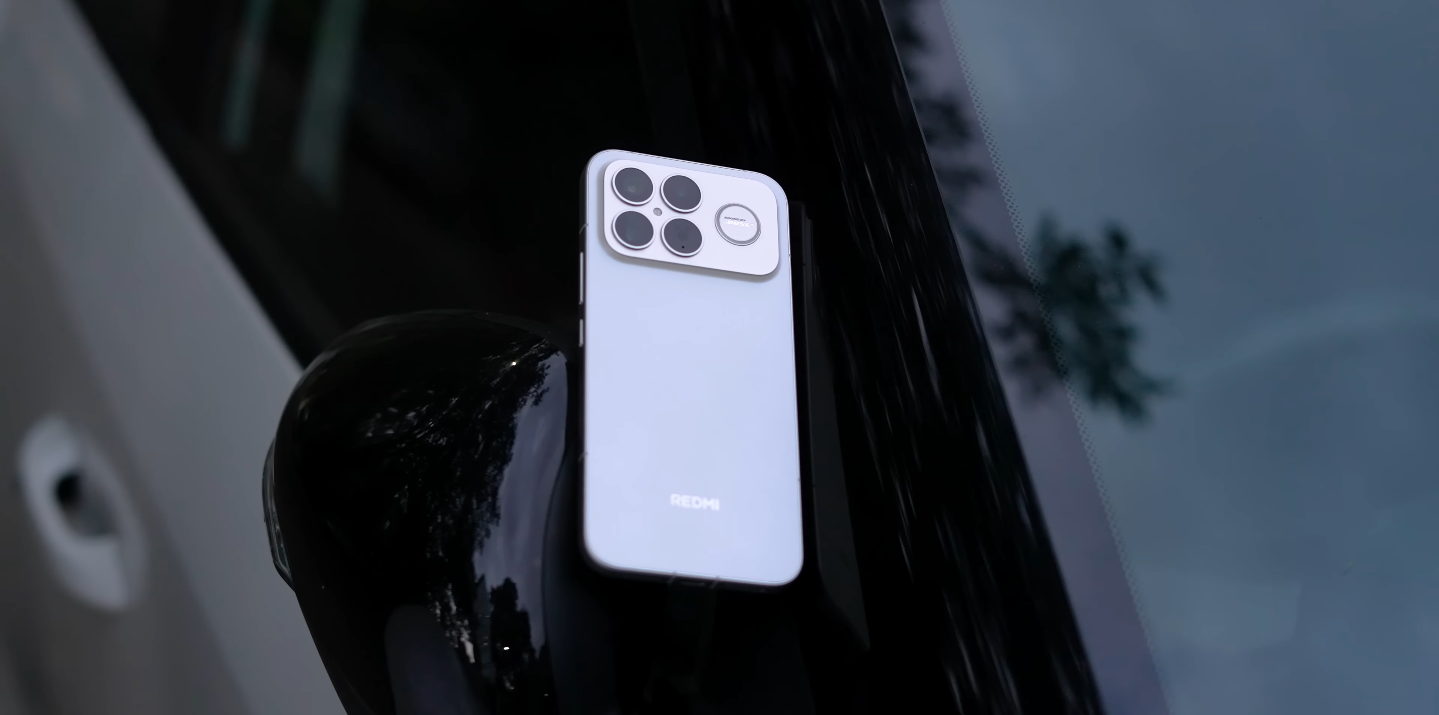
Redmi K90 Pro Max stereo speaker test: sub-woofer makes a difference?

Redmi K90 Pro Max stereo speaker test sub-woofer makes a difference

Evaluating Real-World Sound Quality and Audio Balance

The Redmi K90 Pro Max has drawn attention for including a 2.1-channel speaker layout, something rarely seen in smartphones. This setup pairs stereo speakers with a dedicated sub-woofer element designed to improve bass impact. With many users relying on their phone for music, gaming and video playback, the question is whether this system provides a noticeable upgrade or if it remains a marketing feature.

The stereo arrangement aims to create a broader sound field, giving clearer separation between left and right channels. This can help when watching films or playing games that include directional audio cues. The sub-woofer is intended to handle lower-frequency sound, relieving the main speakers so that mids and highs are less compressed. On paper, this creates a richer and more layered audio experience.

In everyday use, the phone’s speakers produce sound that feels fuller than conventional single- or dual-speaker designs. Bass tones have more presence, especially in music genres where lower frequencies carry emotional weight, such as hip-hop, electronic and cinematic tracks. Instead of thin or sharp sound, audio playback feels more resonant when the phone is placed on a firm surface.

Redmi K90 Pro Max stereo speaker test sub-woofer makes a difference

Movies and streaming content also benefit from the system. Voices remain clear while background music and effects have depth. Dialogues are not overwhelmed by bass, and the slight physical vibration produced by the sub-woofer adds a tactile sense of atmosphere. Users who enjoy watching video without headphones may find the experience more immersive than usual.

Gaming makes strong use of the audio setup as well. Sound cues such as footsteps, engine sounds and environmental effects become more pronounced, helping players stay more aware of the surroundings in competitive games. The separation between high and low tones allows action sequences to retain clarity even when several sound events occur at once. This is valuable for users who rely on built-in speakers while gaming.

Volume levels are strong and can fill a small room without distortion at moderate levels. At maximum volume, the system remains controlled, though pushing it to the limit can soften detail slightly. This is expected for smartphone speakers regardless of tuning. What stands out is that the sub-woofer ensures that audio does not become overly sharp or hollow, which often happens with traditional phone speakers at higher loudness.

Placement of the device can influence bass performance. When the rear of the phone is resting on a solid surface, low tones are reinforced and feel more pronounced. Holding the phone in the hand still maintains good sound quality, though the physical resonation may become slightly less noticeable. This behaviour aligns with how small acoustic chambers interact with surfaces.

The tuning balance leans towards a natural presentation rather than exaggerated bass. This avoids the “boomy” effect that can reduce clarity. Music enthusiasts will appreciate that vocals and instruments maintain definition even when the bass is active. The sub-woofer supports the sound rather than overpowering it, which makes listening comfortable over longer periods.

Users who primarily listen through wireless earbuds or over-ear headphones will notice less difference from the speaker setup, since the enhancements apply mainly to external audio. However, for those who often play audio aloud, the Redmi K90 Pro Max stands out among devices in its class. The speaker system makes the phone more capable as a standalone entertainment device.

In conclusion, the sub-woofer in the Redmi K90 Pro Max does provide a meaningful improvement in speaker performance. The combination of stereo clarity with added bass depth results in sound that feels richer and more immersive than typical smartphone output. While it cannot replace larger dedicated audio systems, it sets a strong benchmark for media and gaming enjoyment directly from the device. For users who value strong built-in speakers, this feature adds real everyday benefit.

Redmi K90 Pro Max vs Apple iPhone: can it really compete?

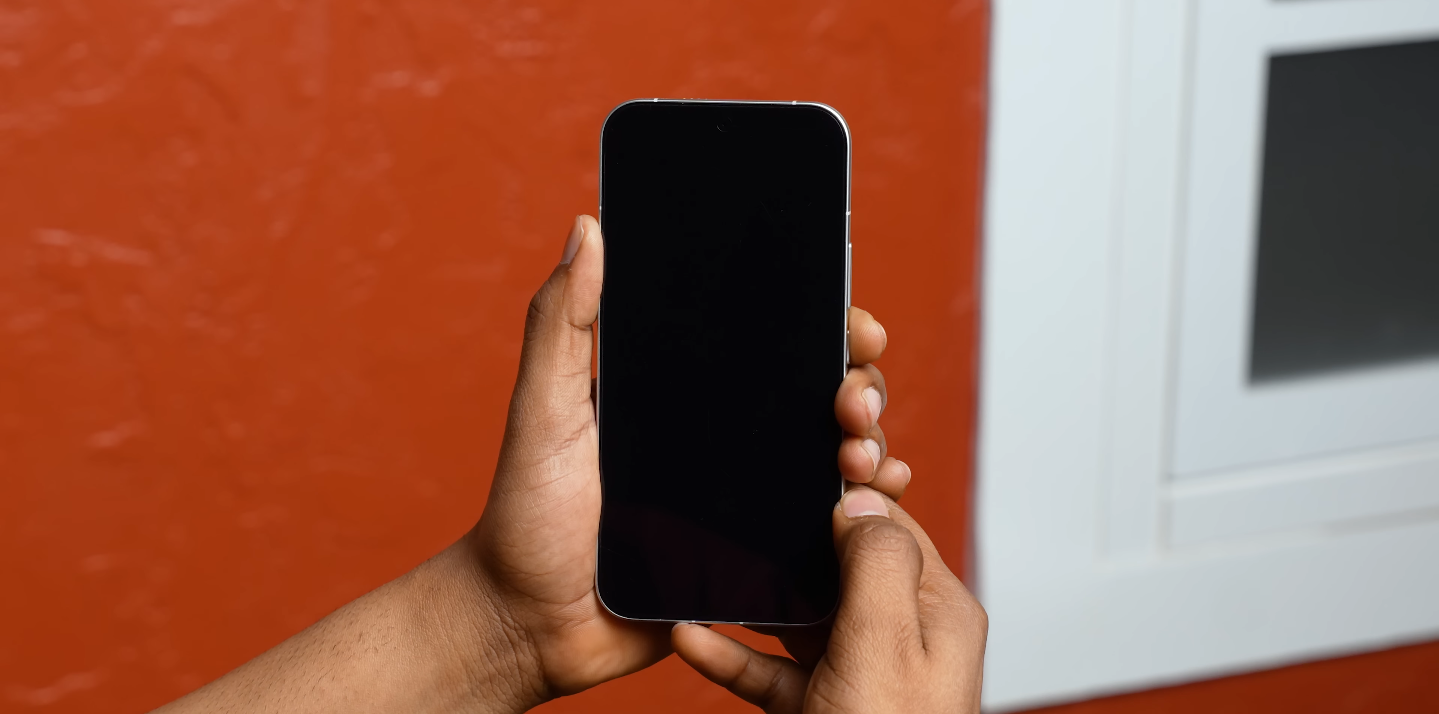
Redmi K90 Pro Max vs Apple iPhone can it really compete

The battle between power and prestige in 2025

The smartphone arena in 2025 is witnessing an interesting face-off between the Redmi K90 Pro Max and the latest Apple iPhone models. With Redmi offering near-flagship specifications at a fraction of the cost, the big question is whether it can genuinely stand toe-to-toe with Apple’s iconic device in performance, features, and real-world value.

At the heart of this battle lies raw power versus refined experience. The Redmi K90 Pro Max comes equipped with Qualcomm’s Snapdragon 8 Elite Gen 5 chipset, paired with high-speed LPDDR5x RAM and UFS 4.1 storage. This combination delivers exceptional speed and efficiency, rivalling the iPhone’s A17 Pro processor in everyday performance and gaming. For most users, the difference in speed between these two giants will be barely noticeable.

When it comes to display quality, Redmi’s approach is uncompromising. The K90 Pro Max offers a 6.9-inch OLED 2K display with a 120Hz refresh rate, ensuring ultra-smooth visuals and vibrant colours. The iPhone, on the other hand, delivers remarkable accuracy and brightness on its smaller 6.1-inch Super Retina XDR panel. While Apple’s display remains a benchmark for colour precision, Redmi’s larger screen and higher refresh rate offer a more immersive multimedia experience.

Redmi K90 Pro Max vs Apple iPhone  can it really compete

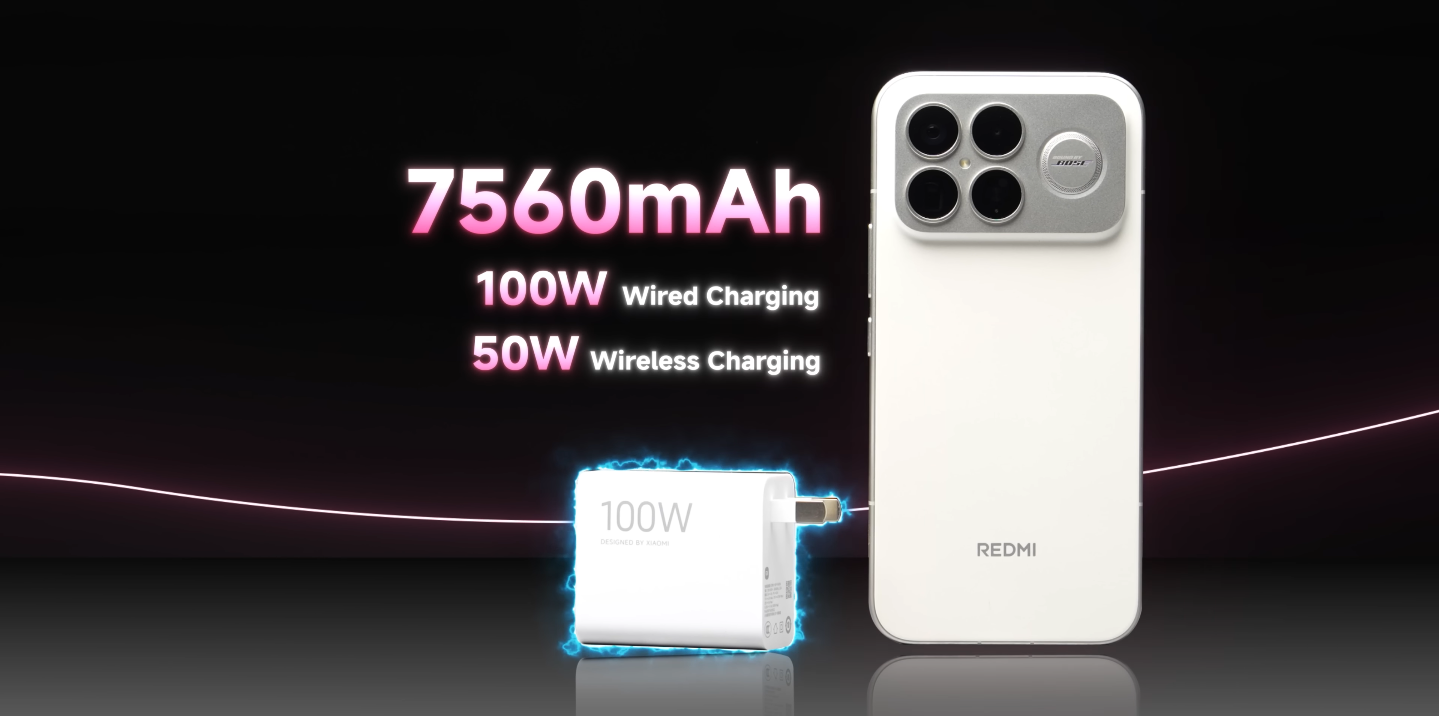
Battery life is one area where the Redmi K90 Pro Max clearly leads. Its massive 7,560mAh battery with 100W wired and 50W wireless charging means a full day of intense use with minimal downtime. The iPhone’s smaller cell and slower charging speeds cannot match Redmi’s rapid energy replenishment, making it less ideal for power users who demand endurance.

Camera performance, however, remains Apple’s stronghold. The iPhone’s 48MP sensor with deep software optimisation delivers natural colours and superior consistency across lighting conditions. Redmi’s triple 50MP setup, featuring a periscope zoom lens and a high-end main sensor, offers incredible versatility and detail. While Apple wins in computational photography and low-light balance, Redmi’s optical capabilities give it an edge in zoom and daylight detail.

Audio experience is another area where Redmi surprises. With a unique 2.1-channel speaker system, including a dedicated subwoofer, it produces a richer and deeper sound profile than most phones on the market. The iPhone’s stereo setup remains excellent but lacks the same depth and power, making Redmi’s approach a standout for entertainment lovers.

In terms of software, Apple’s iOS ecosystem still holds a commanding advantage. Its seamless integration with other Apple devices, superior long-term software updates, and unmatched security remain key reasons many users stay loyal. The Redmi K90 Pro Max runs Android with a custom MIUI interface that offers flexibility and customisation but may not deliver the same polish or longevity in software support.

When comparing build quality and design, both phones exude a premium feel. The iPhone’s titanium frame and precision engineering maintain its reputation for craftsmanship, while the Redmi K90 Pro Max’s glass-metal combination and sleek curved edges give it a bold, futuristic look. For many, the aesthetic choice will depend on personal preference rather than outright superiority.

Price remains Redmi’s most powerful weapon. The K90 Pro Max is expected to cost nearly half as much as the latest iPhone models, while still offering comparable hardware and features. For users prioritising performance, display, and battery over brand prestige, the Redmi offers tremendous value that few other devices can match.

However, for UK buyers, availability and support are key considerations. The Redmi K90 Pro Max is primarily launched in China, with no confirmed UK release. This means potential challenges such as network compatibility, lack of local warranty, and slower updates. The iPhone, by contrast, enjoys complete local support, insurance options, and trade-in programmes that make ownership more seamless.

Ultimately, the Redmi K90 Pro Max can indeed compete with Apple’s iPhone — and even surpass it in areas like charging speed, display size, and value for money. But Apple’s ecosystem, build quality, and long-term reliability continue to give it an edge for users seeking a refined, worry-free experience. For those who value performance and innovation at an accessible price, the Redmi K90 Pro Max might just be the unexpected flagship challenger of 2025.

Redmi Turbo 4 Pro UK Price and Variant Details

Redmi Turbo 4 Pro UK Price and Variant Details

Redmi has entered the UK market with another feature-packed smartphone under the Turbo lineup. The Redmi Turbo 4 Pro is gaining attention for offering high-end specifications at a surprisingly affordable price.


British buyers who want flagship-level performance without spending a premium are now considering this phone as a serious option. Let us take a look at its pricing and variant availability in the UK market.


Redmi Turbo 4 Pro Price in United Kingdom


The Redmi Turbo 4 Pro with 12GB RAM and 256GB storage is currently listed on UK platforms starting from around £295. Some sellers are offering it slightly higher at about £337, depending on shipping time and seller location. This makes the phone one of the most affordable Snapdragon 8 series devices available to UK buyers.


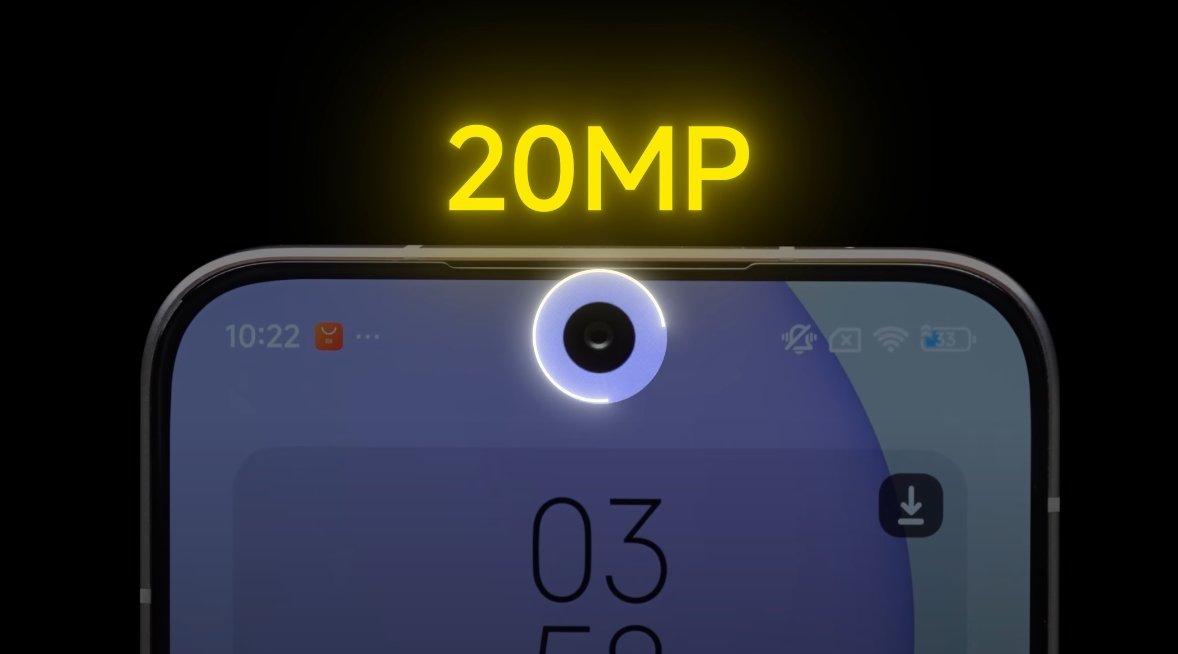
Redmi Turbo 4 Pro UK front camera 20 mp

In some deal listings and early import offers, the base variant is being sold for as low as £280 to £290. These deals are usually from overseas sellers but available for UK delivery. The 16GB RAM variant is expected to be priced around £320, and if a 512GB or 1TB version is released officially for the UK, the price could reach close to £380.


Memory Options and Feature Expectations


Buyers in the UK will get to choose between at least two major variants of the Redmi Turbo 4 Pro. The 12GB RAM model with 256GB storage is perfect for most users, offering fast performance and enough space for regular use. A 16GB RAM model is ideal for multitaskers and gamers who demand more power and smoother background app switching.


Both variants are likely to come with LPDDR5X RAM and UFS 4.0 storage, ensuring ultra-fast app loading and lag-free performance. Combined with a high refresh rate AMOLED display and a large battery, the Turbo 4 Pro delivers top-tier features for its price.


Redmi Turbo 4 Pro UK Price and Variant

Should You Buy the Turbo 4 Pro in UK


If you are living in the UK and looking for a high-performance smartphone under the mid-range category, the Redmi Turbo 4 Pro is definitely worth considering. At under £300, the 12GB model gives you a premium chipset, stunning display, and solid battery life. This makes it a perfect choice for students, professionals, and gamers who want real value without overspending.


However, before buying, UK customers should check whether the imported models support full 4G and 5G band compatibility with local networks. Some units may come with Chinese firmware, so buying from a seller offering global firmware and local support is a smart move.

Also Read:  Tecno Camon 40 Premier UK Price And Launch Status


Final Verdict on UK Pricing


The Redmi Turbo 4 Pro offers excellent value in the UK market, with the base variant starting at just £295. Higher configurations may go up to £380, depending on storage and seller. For those who want flagship-like speed, long battery life, and great visuals at a budget-friendly price, this device is a great option. Just make sure to check seller reputation, warranty support, and network compatibility before placing your order.

Redmi Turbo 4 Pro Canada Price and Full Variant Details

Redmi Turbo 4 Pro Canada Price and Full Variant Details

Redmi has stepped up once again in delivering flagship-level performance at a budget-friendly cost. The Redmi Turbo 4 Pro is now gaining interest among Canadian buyers who are looking for powerful specifications without the premium price tag.


From gaming to daily multitasking, this phone is designed for performance-first users. Let us take a detailed look at the pricing and variant options available in Canada.


Redmi Turbo 4 Pro Price in Canada


The Redmi Turbo 4 Pro base variant with 12 GB RAM and 256 GB storage is currently available in Canada for around 420 Canadian dollars. Some listings from international sellers show it for as low as 345 to 380 Canadian dollars depending on availability, shipping, and import duties. This price range makes it one of the most affordable high-performance smartphones in the country.


Redmi Turbo 4 Pro Canada Price and Full Variant Details

The higher variant with 16GB RAM and 256GB storage is expected to be priced around 470 Canadian dollars. A 512GB storage option may go up to 540 or even 600 Canadian dollars. If Redmi launches the 1TB edition officially for Canada, it could cost close to 640 Canadian dollars or more, depending on demand and supply.


Variant Wise Availability in Canada


Canadian buyers can choose between multiple memory and storage combinations. The base version comes with 12GB RAM and 256GB storage, which is more than enough for most users. Those who need more power can go for the 16GB RAM model, especially if they use the phone for editing, streaming, or gaming regularly. Some platforms are also listing a special edition with 512GB storage, which is ideal for users with high media or app usage.


The memory on this phone is LPDDR5X and the storage type is UFS 4.0, which ensures ultra-fast performance even under heavy load. This makes the Redmi Turbo 4 Pro a strong option in the Canadian market for users who want flagship performance at mid-range pricing.


Why It Offers Strong Value in Canada


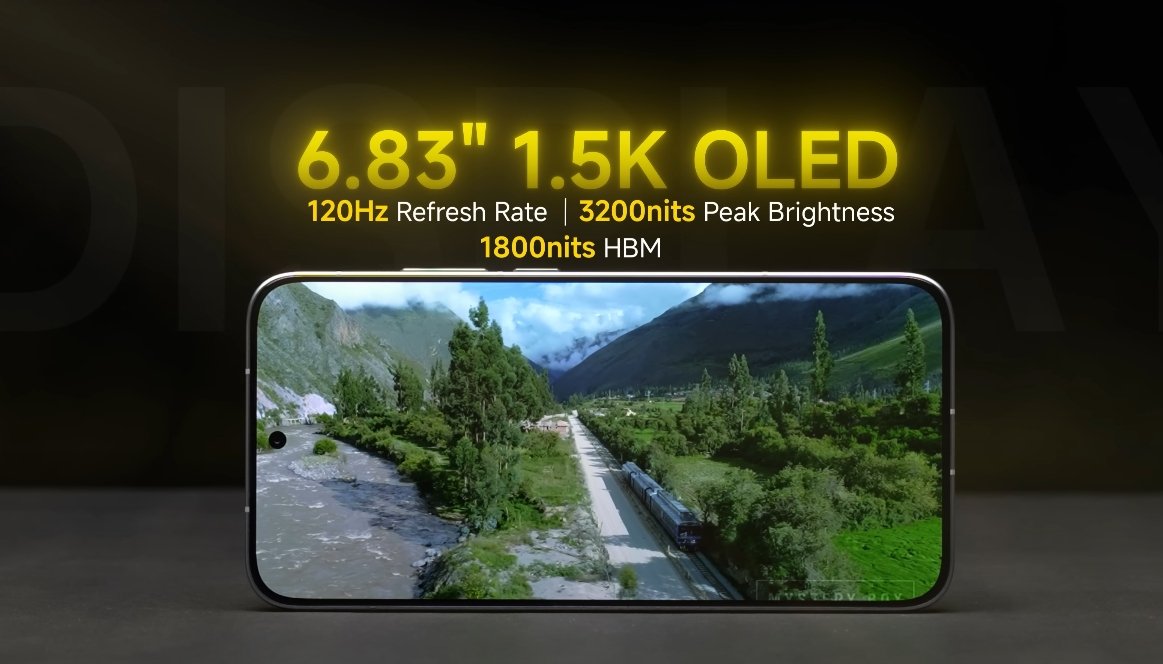
At under 450 Canadian dollars, the Redmi Turbo 4 Pro brings a Snapdragon 8s Gen 3 processor, a 1.5K AMOLED display with 120Hz refresh rate, a massive 5500mAh battery, and fast 90W charging. These features are normally found in premium segment phones. For Canadian users who want a performance-driven phone without paying over 1000 Canadian dollars, this device stands out.


Redmi Turbo 4 Pro Canada specs

The phone is also gaining attention for its long-term value. Its powerful chipset ensures good gaming and app performance for years, and the efficient cooling system keeps the phone stable even under pressure.


Final Verdict on Redmi Turbo 4 Pro Canada Pricing


The Redmi Turbo 4 Pro is now available in Canada at an aggressive price starting from 345 to 420 Canadian dollars for the base variant. Higher-end models with more RAM and storage can go up to 600 or more.


If you are looking for a future-ready smartphone with flagship-level internals and a mid-range price tag, the Turbo 4 Pro is worth considering. Just ensure that the model supports Canadian network bands and comes with a trusted seller or return option.

Also Read:  Tecno Camon 40 Premier Canada Price And Market Entry

Redmi Watch 5 And let’s See If It Is The Best Value Smartwatch Of 2025

The best value Smartwatch of 2024 has a new generation promising to be even better and more appealing than ever in 2025 is that.


The redmi watch 5 if you are the fan of the series then you probably have seen what has been released in China with LTE support and you wonder whether this transforms into the global version and if you’re to the world of the redmi watch line.


You certainly are wondering how many good Smartwatch features could be packed within this very modestly priced device. I have just a few minutes as an opportunity to show you that this is the right place to get all this information. Let’s get started Health tracking is what we’d like to assess first with the remark that majority of the wearables these days are not medically grade certified.


Redmi watch 5 can also measure spo2 steps sleep


It has the most advanced set of sensors and via the smartphone app you can decide how frequently your HR is going to be measured every minute every 10 or 30 minutes or you can stay with the default Smart Mode which captures depending on your physical state accuracy is decent and I’m going to show you more details in a moment as soon as we dig deeper with the workout modes redmi watch 5 can also measure spo2 steps sleep.


About the latter one concerning the Sleep accuracy still way to go in order to catch up with aura ring or Apple Watch series. but let’s say that the watch 5 is among the good ones detecting all the different sleep stages and rather close to being called reliable all the insights about the collected Health Data is as expected present in the smartphone app.


Track Outdoors can be accompanied by GPS tracking


It is the same place where we can check the sports activities most of the redmi ads materials are definitely going to make you focus on the amount of workouts. it’s the only way to know whether redmy watch 5 is good to be used as a sports Monitor and based on the heart rate responsiveness during workouts.


It is yeah absolutely excellent especially given the fact that here it is compared against the chest mounted tracker the polar h10 known to be among the really good ones the activities that you perform and track Outdoors can be accompanied by GPS tracking in fact we should call this genss.


It’s suppos the most popular five bands for satellite tracking signal is being locked very quickly and the GPS data seems to be reliable combined with a good amount of workouts the ability to customize some of them with parameters such as laps time duration. On the inbuilt courses and the option to export the tracks and so on yeah this happens to be among the best fitness tracker with GPS. At the given price point furthermore in terms of functionality comes close to the popular Boat watch fit 3. Now let us switch the dig deeper about the hardware Gems or disappointments the back looks good pretty much the same as what redmi ship with most of their smart watches in the past several years nice.


Normal video call calls are apparently supported


Design the display seems to get the curved glass treatment not as flat as it is with watch 4 which is definitely bad news in case you want to add a screen protector on top will still be possible just not that good looking the crown is now smaller but you can still rotate it.


It actually Scrolls up and down and this is a very helpful user interface enhancer still aluminium alloy frame sensors at the bottom appear to be the same as last year’s generation. There potentially is one more microphone which is probably the reason why redmi promis increased Clarity of the phone calls especially about the people that you talk to excellent Clarity and quality about the speaker and the great that even normal video call calls are apparently supported. Now on to some more of the text specs the display has close to diagonal it is AMOLED with very high peig brightness there are multiple sensors about health tracking.


Display looks like it’s way too big there also is an increase about the battery capacity


A large 550 Mah hour battery quick release straps it is 5 ATM water resist existant and connects to your smartphone via the Mi Fitness smartphone app clearly some of the specs are a step up from the previous generation other components are remaining about the same such as the system aoip. It let me give a clear answer to the big question unfortunately the global version of Ry watch 5 does not have e support there for LTE connectivity. It is in China but unfortunately the global version doesn’t support it.


Now among the improvements there’s a new vibration motor which makes the rotating Crown feel much more pleasant while we are doing the scrawling and um it’s also been slightly revamped. I would say fixed because with redmy watch 4, what I noticed, a year ago is that there are too many accidental presses of the power button. Now it’s smaller yet as functional as before there’s a new nicer brighter display with significantly higher Peak brightness.


It’s really a delight to use this display probably at some moments gives me the feeling that right me should think about a mini version of the series. Because for some people this display looks like it’s way too big there also is an increase about the battery capacity. It would consume a little bit more battery as it used to be with Generation 4 well we can say for sure is that each and every day if you really max out the tracking of everything understand hard R tracking all the time SPO tracking 24/7 sleep cycles GPS from time to time with your sport activities. And always on display this is going to consume about 15 to 20% a day.


Redmi Watch 5


Which in my opinion is a fantastic achievement giving you close to one week usage with just a single charge and the recharging that’s another good news well the cable specifications are exactly the same as they used to be with Generation 4 and Generation 3. If you have the redmi watch 5 and your brother is relying on the let’s say Mi band 9 or the Mi band 9 Pro you can share the same kind of cable, when you’re traveling makes things much easier.


The display is also among the features which most people will be happy with it is very bright with great visibility angles automatic brightness thanks to the ambient light sensor inside and supports always on display mode. But you can of course rely on the wrist gesture in order to prolong the battery life in terms of connectivity besides the GPS. It is all dependent on Bluetooth. One fact is the ability to add music to the watch but keep in mind that the space is limited. sort of enough for 30 to maybe 50 MP 3 files with good quality and hey also an option to connect earbuds which means that you can go full power smartphone free during workouts.


Smartphone app is called Fitness available for Android and iOS both


If you want to hear the bad part slow transfer speeds and no ability to connect other Bluetooth peripherals such as external trackers the software on the watch is fine they call it hyper OS but it has nothing to do with the operating system used by xiaomi and redmi on their smartphones. It’s a modification of RT with a typical for skin and their style of animations looks great works like charm already very functional and full of customization options.


If you ask me these little software tweaks such as the option to edit the quick settings or to better adapt the tiles or to customize the launcher. It is nice and stable xiaomi continuously enhance the functionality they adds new features but not yet as good as the app that used to be associated with most me devices years ago. The refined settings this all is the most significant Improvement of the series because vastly increases the satisfaction. Smartphone app is called me Fitness available for Android and iOS both.


Free trust me this really really matters a lot these days and another good fact about those of you that love sports sha and Google Fit are both supported. So before the wrap up let me throw some dirt in the good and constructive way of course yeah I know many of you are here namely because of this starting with a lack of actionable notifications.


The absence of Wi-Fi function for faster file transfers and maybe the too big display because some folks may prefer a bit more conservative sizing oh yeah and pity that there is no LTE edition globally in the end here’s my verdict from consumer standpoint.


This could be among the close to perfect SmartWatches of 2025


It’s a great buy however from a standpoint of a me fan or someone, who is part of their Community fan base. The point of view of someone who is critical about tech like myself. I feel that releasing something called a smartwatch in 2025. Such as the Huawei ban series and so on and so forth. I really hope that redmi are going to figure out a way to bring in the feature as part of the next for more updates.


If you already have watch 4, Yes the display is bigger and brighter the battery life is somewhat better a little bit more accurate about health tracking. I feel that it’s not such of a big upgrade. So probably you might want to skip it. But if you have any of the active or light or other variations of generations four or five this clearly is the best one among all of them that’s everything.

Also Read:  All About the New Samsung Galaxy Watch8 Classic

Redmi K90 Pro Max weekly software update arrives: what it brings

Redmi K90 Pro Max weekly software update arrives what it brings

Improvements, Fixes and User Experience Enhancements

The latest weekly software update for the Redmi K90 Pro Max has now begun rolling out, focusing on overall performance stability, camera optimisation and system responsiveness. This update continues Xiaomi’s pattern of refining its flagship-class devices through incremental improvements rather than major interface changes. Users who rely on smooth daily performance and consistent software behaviour will find this update relevant.

The update is part of the regular weekly build cycle that delivers ongoing refinements to the system. While the general interface and core features remain familiar, many underlying adjustments are designed to improve efficiency. The update aims to reduce minor background delays and enhance responsiveness during multitasking, particularly for users who run several apps at once. This aligns with the device’s positioning as a performance-driven model.

One of the notable areas addressed in this update is the camera performance. The update includes improvements to exposure handling and consistency between the main and ultra-wide lenses. Users may notice smoother transitions when switching focal lengths, especially in bright outdoor environments. Low-light image processing has also been fine-tuned, helping retain detail while reducing the risk of over-smoothing in night mode shots.

Redmi K90 Pro Max weekly software update arrives what it brings

The telephoto camera has received attention as well. The update refines clarity at 5x optical zoom and stabilisation when shooting handheld at distance. This ensures distant subjects appear more natural, with fewer small motion artefacts. For photography enthusiasts who enjoy capturing architecture, wildlife or portraits at range, this enhancement contributes to a more dependable shooting experience.

Battery management adjustments are also part of the update. The system now handles background processes more intelligently, focusing on reducing power consumption when multiple apps are open but not actively used. This does not change the device’s charging behaviour, but it may result in more consistent battery endurance across a typical day. The large battery capacity remains one of the device’s defining strengths, and these refinements help maintain that advantage.

Gaming performance has also been considered. The update includes minor frame stability improvements in high-performance situations, particularly during extended gaming sessions. While the device already handles demanding titles smoothly, these refinements help maintain performance consistency during longer play. The goal is not to boost peak performance but to reduce occasional dips that could occur under heavy thermal load.

System animation fluidity has been refined as well. Menu transitions and scrolling behaviour appear smoother, with reduced micro-lag in certain interface elements. These refinements help enhance the perception of fluidity and polish, especially on the device’s high-refresh-rate display. Users who value visual smoothness during daily navigation should notice a more cohesive feel.

The update also includes general bug fixes. These range from minor UI inconsistencies to occasional issues related to network switching and app compatibility. Such fixes help maintain reliability over time, especially for users who switch between Wi-Fi and mobile data frequently or rely on location-based services. Ensuring steady network performance is central to daily usage comfort.

Security patches are included in this weekly release, ensuring the device remains protected against recently identified vulnerabilities. Regular security updates are particularly important for users who use the device for personal accounts, mobile payments and online authentication. Maintaining up-to-date security status ensures that the phone continues to operate safely across apps and services.

Overall, the weekly update continues Xiaomi’s approach of refining performance and stability rather than introducing large visual changes. The improvements to camera behaviour, system responsiveness and battery management contribute to a smoother everyday user experience. For users of the Redmi K90 Pro Max, this update strengthens the device’s position as a high-performance option that benefits from ongoing software attention.

Those who prioritise photography, gaming stability and general fluidity should find that the update adds value without altering the device’s familiar layout or controls. As more weekly updates arrive, this pattern of progressive improvement is likely to continue, making the Redmi K90 Pro Max a device that evolves steadily over its lifecycle.

Revolutionise Your Laundry: Dry Clothes Indoors for Just 14p, Without the Damp

Revolutionise Your Laundry: Dry Clothes Indoors for Just 14p, Without the Damp

Mastering Indoor Laundry Drying: Efficiency Meets Economy

Your tumble dryer is likely one of the most expensive appliances to run in your home, especially with current energy prices. A single load of laundry can set you back a hefty £1.21, significantly impacting your household budget over time. Many Britons seek smarter, more economical ways to manage chores without compromising on convenience.


Drying clothes indoors is often seen as a necessary evil during colder months or wet weather, but it typically comes with its own set of problems. Traditional airers can take days to dry a full load, leaving clothes stiff and musty. Worse still, they contribute to condensation and dampness, leading to mould and unhealthy air quality.

However, what if there was a simple, affordable solution that not only slashed your drying time but also cost a mere 14p per load? This isn’t a pipe dream; it’s a clever, accessible combination of appliances many households are already considering. By making a strategic change to your indoor clothes drying setup, you can enjoy perfectly dry laundry without the financial strain or the dreaded damp.

The secret lies in harnessing the power of a heated clothes airer, working in tandem with an efficient dehumidifier. This dynamic duo creates an optimal microclimate for drying, accelerating the process dramatically while extracting excess moisture from the air. The result? Fast-drying laundry, a significantly lower energy bill, and a healthier home free from damp-related issues.

Let’s delve into the remarkable cost-effectiveness of this alternative. While a typical tumble dryer often demands around £1.21 for a single load, the combined operation of a heated airer and a modern, energy-efficient dehumidifier can bring your drying expenditure down dramatically. Many heated airers consume approximately 220-300 watts, costing mere pennies per hour to run, perhaps 7-10p at current energy cap rates.

Adding an energy-efficient dehumidifier, which might use a further 150-200 watts, contributes another 5-7p per hour. With smart usage, like thoroughly spinning clothes and drying smaller loads, the combined operation for around two hours makes the 14p per load cost entirely achievable. This synergistic approach offers substantial savings compared to the constant drain of a traditional tumble dryer.

A quality heated clothes airer forms the core of this efficient setup. These ingenious devices typically feature multiple rails that gently heat up, effectively warming the fabric and accelerating evaporation. Unlike conventional drying racks that rely solely on ambient air, a heated airer actively reduces moisture from garments, speeding up the process significantly.

When selecting a heated airer, consider models with foldable wings for larger items or tower designs for maximising space in smaller rooms. Look for features like low wattage for optimal energy efficiency and durable construction. Placement is also key; positioning your heated airer in a small, dedicated room can help concentrate warmth and improve drying speeds even further.

A good dehumidifier is crucial for addressing indoor drying’s primary drawback: moisture release into your home. A dehumidifier actively extracts water vapour from the air, collecting it in a removable tank and preventing condensation from forming on windows and walls. This safeguards your home against mould and mildew.

Opt for a dehumidifier with a ‘laundry mode’ if possible; this setting is specifically designed to remove moisture released by drying clothes more intensely. Even without this, ensuring the dehumidifier runs in the same enclosed space as your heated airer will dramatically improve drying times and maintain healthy indoor humidity levels, preventing that clammy feeling.

The combination works so effectively because the heated airer warms the clothes, encouraging moisture to evaporate into the surrounding air. The dehumidifier then diligently removes this moisture from the air, creating a continuously dry environment that encourages further evaporation from your laundry. This cycle of warming and extraction is far more efficient than passive air drying alone.

This method drastically cuts drying time, potentially halving it, and offers a gentler approach to fabric care. High-heat tumble drying can be harsh on delicates, leading to shrinkage or damage. The controlled, lower heat of a heated airer is far kinder to your clothes, extending their lifespan and preserving their quality.

To optimise your 14p drying experience, begin by giving your laundry an extra spin cycle in your washing machine. Removing maximum water before placing items on the heated airer is fundamental to faster drying and lower consumption. Overloading the airer should also be avoided; ensure sufficient space for air to circulate around each garment for maximum efficiency.

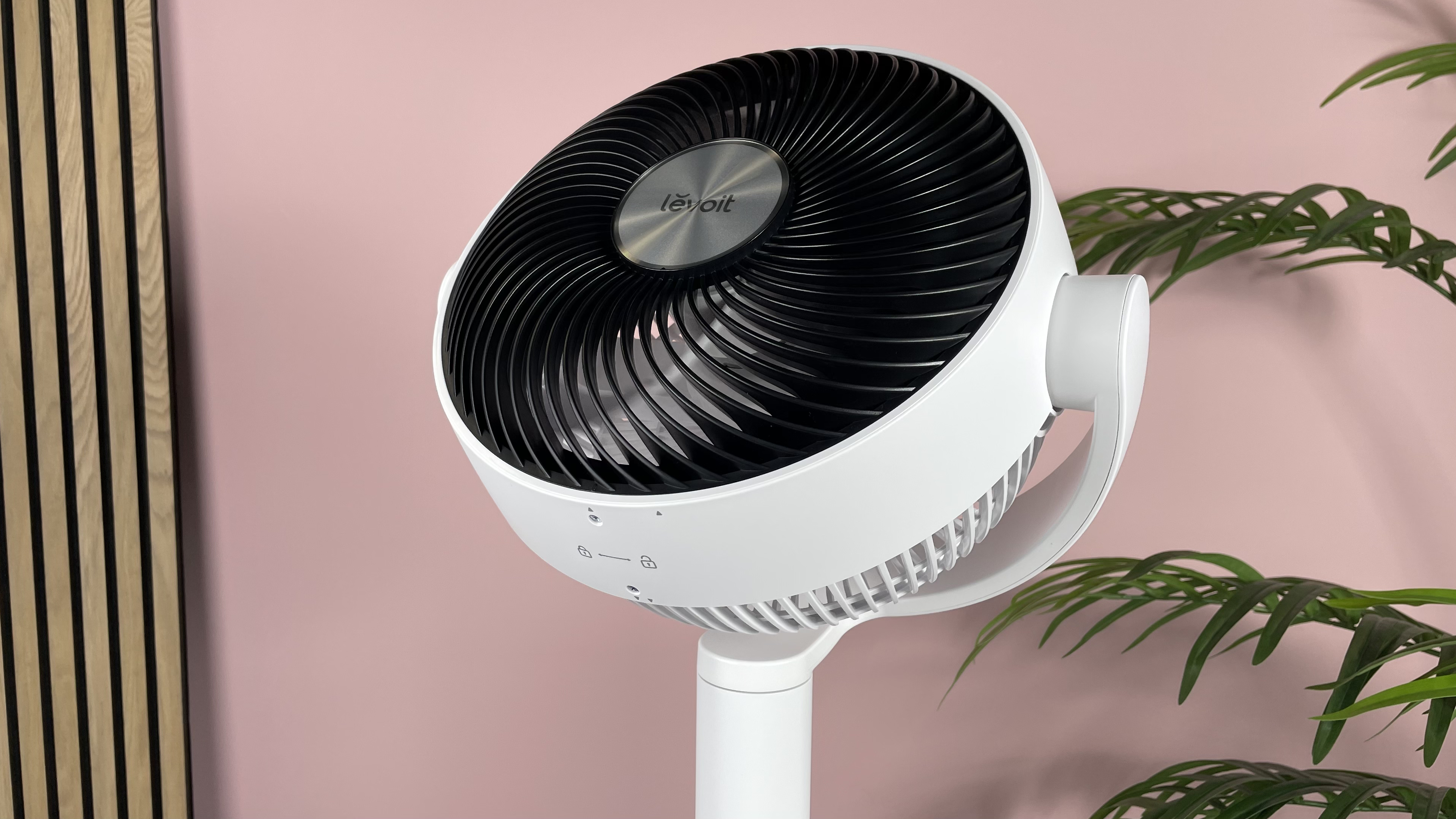
Furthermore, remember to keep the door of your chosen drying room closed while the heated airer and dehumidifier are operating. This creates a contained environment, allowing the dehumidifier to work most effectively. Good air circulation, perhaps aided by a small fan, can also enhance the process.

This smart indoor drying setup isn’t just about saving money; it’s about reclaiming control over your laundry routine, regardless of the unpredictable British weather. Imagine fresh, dry clothes in hours, not days, without sky-high electricity bills or the threat of mould and damp. It’s a game-changer for modern households.

Making this small but significant investment in a heated airer and a reliable dehumidifier can transform your laundry day. The initial outlay will quickly be recouped through substantial energy savings, offering peace of mind and a more sustainable household approach. Embrace this economical and efficient method; wave goodbye to expensive tumble dryer woes.


Also Read:  Avengers 5 Leaks: UK Fans Voice Disappointment Over Trailer Revelations and Loki’s Future

Samsung Galaxy A56 vs vivo V50 5G Comparison

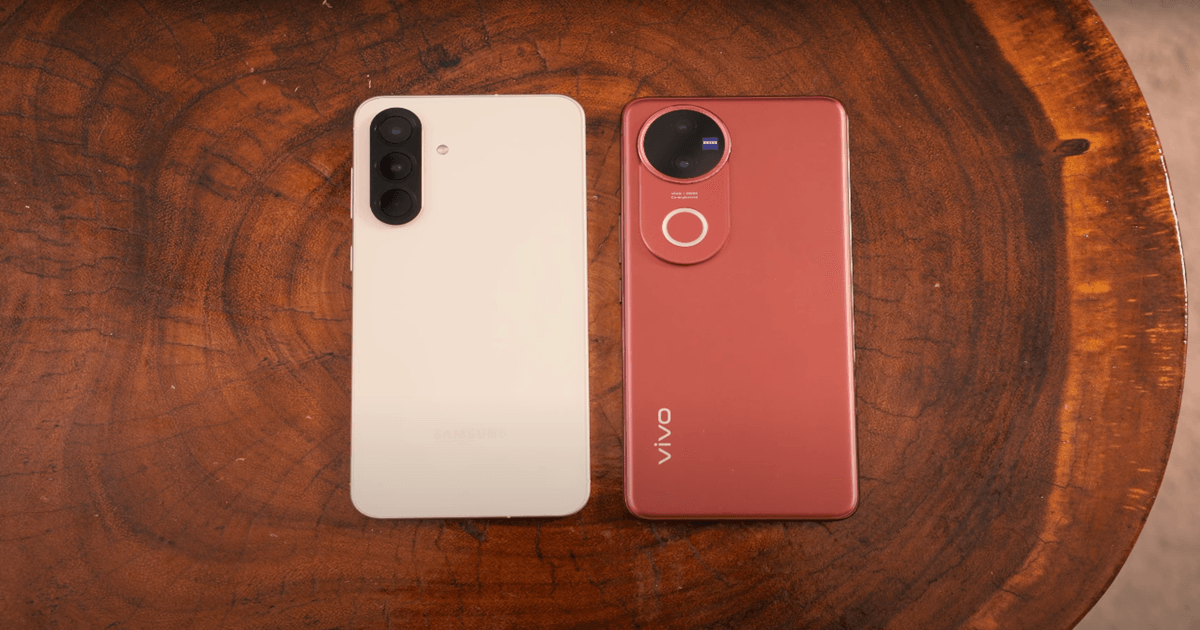
Samsung Galaxy A56 vs vivo V50 5G

We recently reviewed both the Samsung Galaxy A56 5G and the Vivo V50 5G. Two mid-range phones. They each bring their own strengths to the table, whether it’s Samsung’s trusted 1 UI experience or Vivo’s Zeiss Tuned cameras.


Build quality of both smartphones


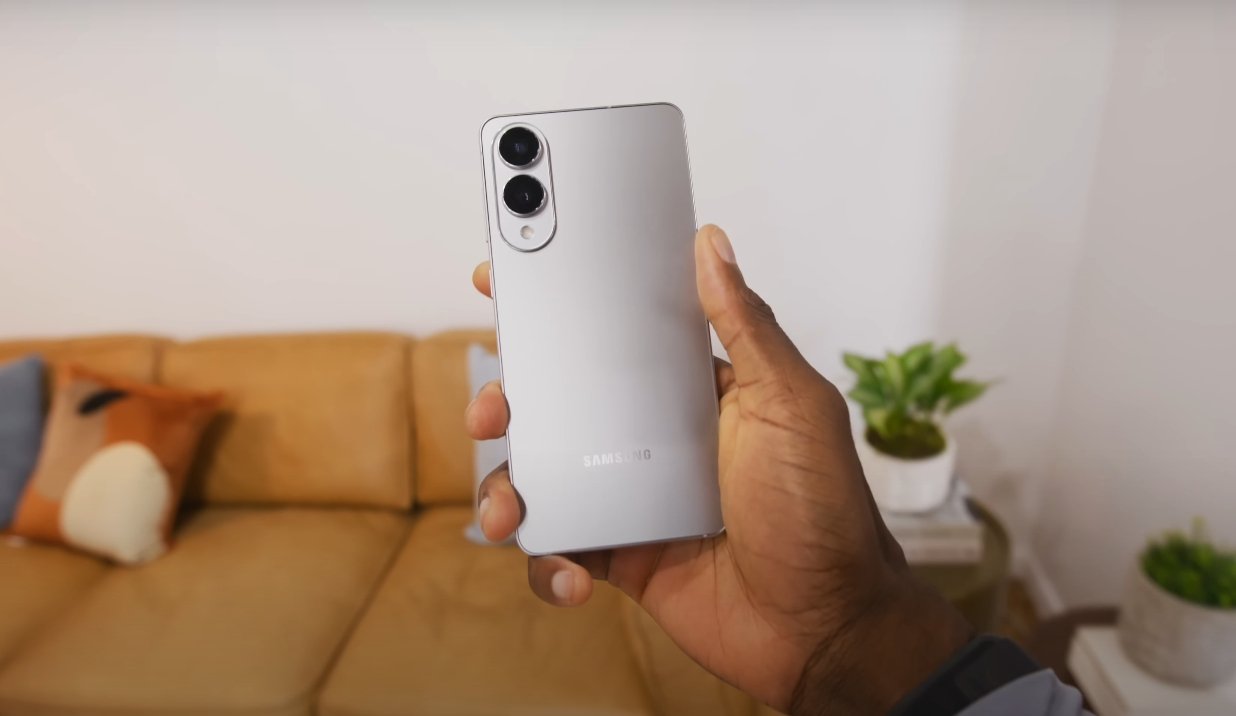
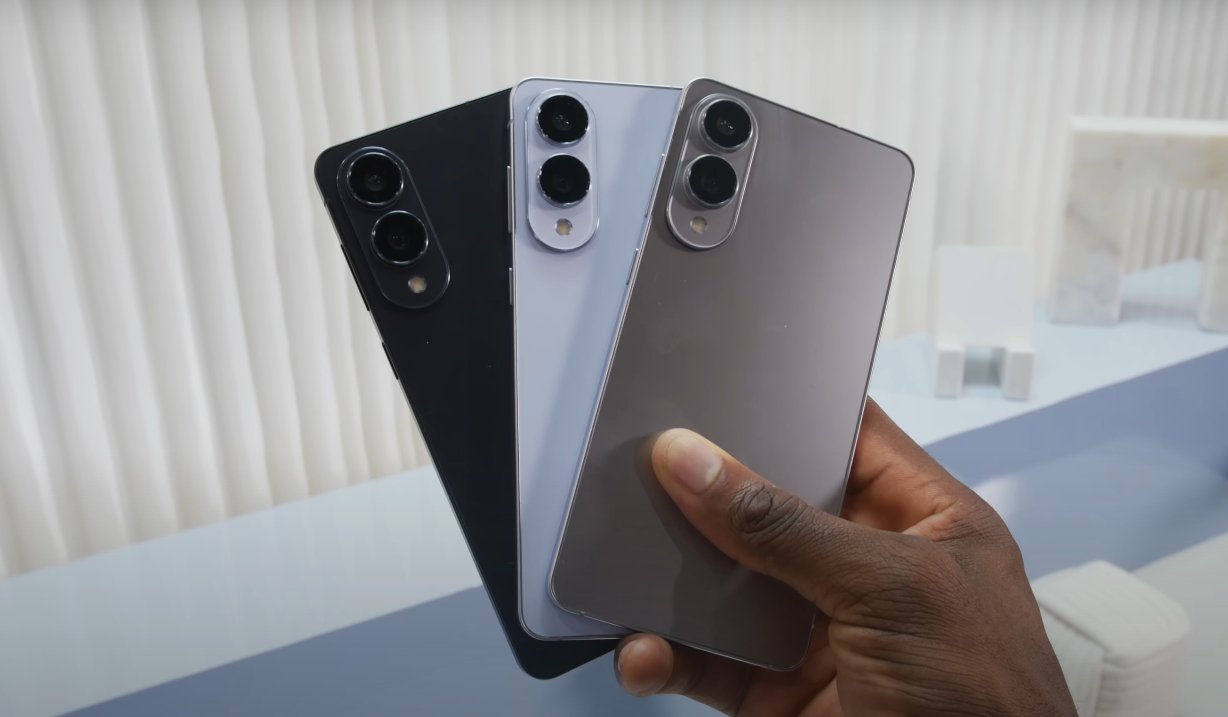
Starting with design, right off the bat, the Samsung Galaxy A565G sticks to a more traditional build with flat sides, sharp edges, and the modern minimalist Samsung aesthetic, featuring the triple camera layout and a flat back. Battery life is another crucial factor where the Vivo V50 shines with a 6,000 mAh battery and superior charging speed, while the A56 has a 5,000 mAh battery.


What’s nice about the A56 is it sports an aluminum frame and Gorilla Glass Victas Plus for both the front and back glass, giving it a sturdy feel in hand with some certified drop and scratch resistance. And yes, it still comes with IP67 water and dust resistance. Meanwhile, the Vivo V55G goes for an arguably sleeker, curvier approach. It features a satin-like finish with curved edges and a curved display in front. It’s lighter and in our opinion, more comfortable to hold. Unlike the A56.


Importance features on to make there are profesional smartphones


The V50 gets a higher IP69 water and dust resistance rating. IP67 offers protection against dust and water submersion of up to one meter for 30 minutes. IP69 on the other hand is designed to withstand high pressure and high temperature water jets. And on top of all that, Vivo also features a diamond anti-drop film and a 10 facet internal cushioning structure for added durability. So, for this round, yes, design is subjective to each person’s taste. But for this matchup, if we’re after a tougher, flashier, and more ergonomic design, the Vivo V55G edges ahead here.


Display types of both phones


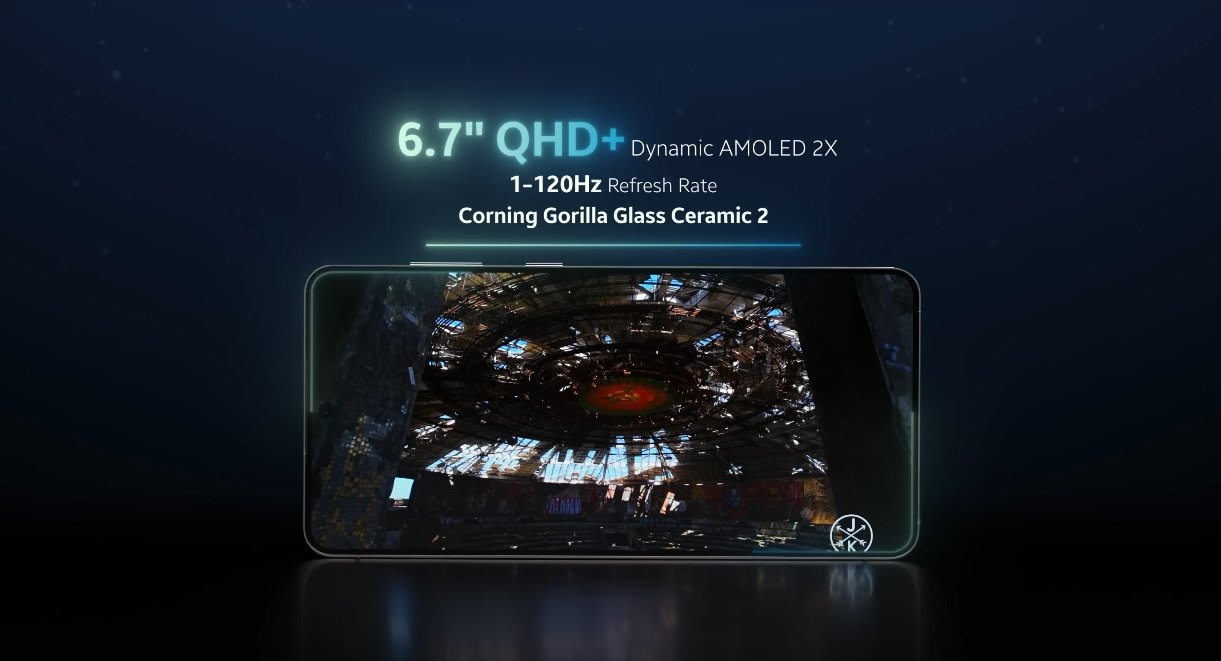
For display, the Galaxy A565G has a 6.7 in Super AMOLED panel with a full HD plus resolution, up to a 120 Hz refresh rate, and peaks at 1200 nits of brightness. It’s pretty color accurate, too, especially when set to the natural display profile. The Vivo V55G, on the other hand, sports a 6.77 in curved AMOLED display, also with a full HD plus resolution and a 120 Hz adaptive refresh rate. The display on the A56 is a 6.7-inch Super AMOLED with a full HD+ resolution, compared to the V50’s 6.7-inch curved AMOLED display. Both displays offer users inky, deep blacks with a vibrant punch if warranted.


The V50’s display can feel a bit more immersive when in actual use, thanks to its curved screen. We can even make a case that it actually feels a bit more premium while watching videos or playing games, especially when compared to the A56’s thicker display bezels, which have shrunken compared to its predecessor, but still thicker than the competition. Both displays are excellent, which means this round should result in a tie. The Vivo V50 has a higher IP69 water and dust rating compared to the A56’s IP67.


In our opinion who is best


The A56’s thicker bezels can sway a lot of users to the V50 side. And with that said, we’re giving this round to the Vivo V50 5G, giving it its second point. For hardware, the Galaxy A56 sports a Samsung Exynos 1580 chipset paired with 8 GB of RAM and either 128 gigs or 256 GB of UFS 3.1 internal storage. It’s good enough for casual use, multitasking, and a bit of gaming. Though, don’t expect it to go toe-to-toe with higherend chips.


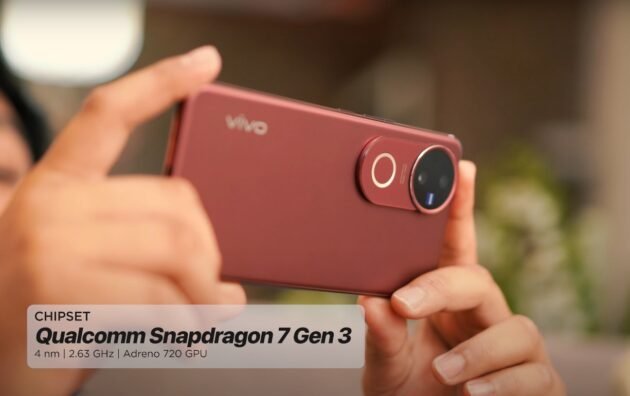
On the other hand, the Vivo V55G is powered by a Qualcomm Snapdragon 7 Gen 3 configured with 8 or 12 GB of RAM and 256 GB or 512 GB of UFS 2.2 storage. And for those wondering, neither handsets feature expandable storage via micro SD card. Performance can often be subjective; while benchmarks provide quantitative data, users may not notice significant real-world differences in day-to-day operations.


Peformance wise both compare


When it came to benchmarks, some of you may have already assumed storage speeds to be on the A56’s side. If so, you guys are right. It’s just the typical difference between the different UFS classes. In terms of performance, the A56 is powered by the Exynos 1380 with 8 GB of RAM, while the V50 uses the Snapdragon 7 Gen 3 chipset, which edges out in GPU performance.


Samsung Galaxy A56 vs vivo V50 5G


When it comes to general performance, the Exynos powered A56 beats the Snapdragon Riding V50 seen in both Anutu and PC Mark benchmark results. When it came to more GPU intensive benchmarks, the V50 takes the cake, albeit not by much, but still does anyway. In everyday use, the A56 can seem a lot snappier when navigating through the interface coming from a sleep state.


Camera capabilities


The competition in camera technology has reached a point where personal preferences in image processing like color tones, sharpness may outweigh the technical specifications of the sensors, prompting manufacturers to focus on user-centric camera capabilities.


Read Also: Samsung S24 FE vs Motorola Edge 60 Pro


RTX 5090, RTX 5080, RTX 5070 Ti and RTX 5070 Laptops are WILD

Let me share with you maybe a little bit of an eye-opening fact did you know that it’s been almost 2 years to the day since we have had a new GPU architecture launch into the gaming laptop Market. That’s right the RTX 4000 series have essentially been around for two full years.


That’s going to change a bunch of things, it’s because Nvidia is launching the RTX 5000 series laptop GPUs and not only that those things will be available right alongside brand-new CPU architectures from both AMD and Intel.


RTX 5090, RTX 5080, RTX 5070 Ti and RTX 5070  Next gen design


Now what I wanted to do is sort of sum things up here about what these combinations really mean for the 2025 gaming laptop Market basically devices like this and how things are evolving because it’s about to get very interesting basically manufacturers are throwing everything. They’ve possibly got at these new design’s new screens bigger cooling technology upgrades better keyboard and mouse a bunch of 18-in models the list just keeps on going on and on everything, we’ve been waiting for and some things that we didn’t even know we needed are coming in these new devices.


We have to start with the RTX 5000 series because that will be basically the Heart of any new gaming laptop and in a lot of ways this is a massive Step Beyond what the RTX 4000 series was ever able to offer. I’m not just talking about necessarily performance here but from a tech and features perspective this black wall architecture. While core counts yes they have generally gone up in some cases it might not be as much as you may have thought initially also Nvidia hasn’t really detailed core or memory frequencies on these new chips at least not on the laptop side either way.


That’s so important when you consider a lot of the flagship gaming laptops that use the 5090 and 5080 will be moving to high refresh rate 4K displays this year we’re also getting an RTX 5070 TI where there weren’t any TI class cards in the 4,000 series but speaking of memory. There’s some interesting things going on here like the RTX 5080 uses what’s essentially a desktop 5080 core but it gets 24 gigs of memory meanwhile on the desktop side, It only gets 16 gigs. It’s more disappointing in to see the 5060 sticking to an 8 gig 128 bit interface. When most if not all laptops it’ll be used in will have 1600p displays so higher resolutions where that kind of memory layout could provide a massive bottleneck in some cases there’s another thing that should jump out at you and that’s the RTX 570 other than the GDDR 7.


It is a literal carbon copy of the RTX 4070 at least in terms of Cuda core and You might have also noticed that there’s a pretty gaping hole in NVidia’s current RTX 5000 series lineup because, They have absolutely no Replacements at least right now for the RTX 4060 or 4050 that means at least initially anybody, who doesn’t want to spend like $2500 or more on a brand new gaming laptop they might have to sit out purchasing for a little while longer.


RTX 5000 power states


As a result of all of these architecture changes the RTX 5000 series of starting power has been raised Buy in some cases a substantial amount versus the RTX 4000 series though you might remember laptop GPU”s have completely configurable power levels between that bare minimum spec and the maximum value. Can essentially steal some of the overhead from the CPU and suck back a bit more power, It all depends how laptop manufacturers handle things like cooling power and temperature on individual models for example, The new revised g16 that’s coming out this year with its 5090. It will be running that GPU at a maximum of 130 wats, that’s because Asus’s Engineers they figured that is the maximum they could cram into here have it suck back while still delivering adequate temperatures and noise levels on the other hand.


We also got some time recently with the 2025 version of the Strick scar 16 and 18 those laptops feature a brand new heat sink with triple fans a massive Vapor chamber and liquid metal. That combination allows their RTX 90s to hit a maximum of 175 Watts with Dynamic boost while the CPU itself can get up to 65 Watts meanwhile, The MSI Titan 18hx also allows the RTX 1590 to flex upwards to 175 Watts. MSI was also able to push CPU power to constant 95 Watts at the same time and That’s one of the reasons the 2025 laptops will be so overall crazy with new GPU’s and CPU’s. Most manufacturers have finally updated their internals to the latest and greatest in cooling Tech that should lead to cooler temperatures more consistent performance and hopefully quieter running gaming laptops.


AMD’s more mid level to budget focused gaming laptop


We’re going to sort of shift gears here a little bit because I wanted to talk about the CPUs that these RTX 5000 series GPU’s are most likely to be paired up with and of course, The most logical answer is the Ryzen 9000 HX series which is technically called fire range since it’ll probably be the gaming King this time around and by a pretty wide margin too especially that x 3d chip but in general based on what we know about Zen 5. On the desktop side Intel will probably face a pretty big uphill battle in the gaming laptop Market too there’s also been a little bit of talk about something called the Ryzen 800 HX series. Now we don’t have official feeds and speeds about this quite yet, but it looks like this will take over.


I guess AMD’s more midlevel to budget focused gaming laptop lineup it’s basically a rebranded Ryzen 745 HX lineup but we’re just going to have to see how this shakes out and what kind of laptops. Since it’s rapidly becoming the go-to architecture for thinner and lighter gaming laptops whereas the higher-end processors mostly focus on desktop replacement systems. Intel’s Arrow Lake architecture is making its way to the gaming and Creator laptop side with a pretty wide range of a check series options none of which have hyper threading enabled. They replace also based on what we’ve seen the ultra 9 275 HX will be the one you’ll most likely see in most RTX 5000 series laptops meanwhile There’s also the standard H series, that should be rolled into more entry-level devices along with some Thin and light gaming laptops. To since these CPUs are meant to run at slight lower power limits than the HX series plus they get some LP cores thrown in too.


The reason why I’m bringing processors into this conversation is because When I started looking at the spec sheets for these new laptops from Asus Razer MSI and a few others, I noticed this weird Trend developing when it came to the utilization between AMD and Intel processors. now before I get too far into this, I don’t want to start any conspiracy theories here. I am just going to lay out the facts as They are right now first of all there are very few laptops from major manufacturers that combine an RTX 90 with the most logical CPU Choice a 9950 HX 3D or 9950 HX. There are a few exceptions though but those are mostly from smaller Brands but there might also be the MSI radar a 18 now.


I’m saying it might be simply because, We’ve had some feedback saying The RTX 5090 version may not actually happen but I’m crossing my fingers that it actually does anyways instead of that Flagship 90 most AMD based laptops typically max out at an RTX 580 or in the case of Asus’s g16 the x3d is matched up with at most an RTX 570 TI and Look to a lot of people that might be sort of like a a nothing Burger but Asus themselves. They set a precedent with the previous generation laptop the 7945 HX 3D which was launched in this thing the scar 17x 3D well straight from the get-go it came with an RTX 4090.


The lack of RTX 5090 option this time around it just feels off but despite that it’s not like Nvidia’s highest end GPU doesn’t get any AMD CPU options nope instead laptops like the Razor Blade 16 by the way props to Razer for going AMD on this one and MSI stealth and Vector series. They’ve all got it they’ve all got the 5090 EX except they’re pairing it with a Ryzen Ai 9 HX 370 likely due to those being, I guess more compact options.


AMD version with its 9950 x3d option


Another thing we’re starting to notice is that for the most part those high-end Flagship Gaming laptops, The ones where 5090 makes the most sense like the 2025 MSI Titan 18 Rog scar series well they don’t get any AMD CPU options whatsoever as a matter of fact while the 2025 version of the g16 and 18 gets.


It’s a brand new design the AMD version with its 9950 x3d option doesn’t see any design upgrade whatsoever it’s been the same for the better part of 2 years and look yes it absolutely feels like there’s something going on and I think that there is but this isn’t about some vast conspiracy theory at least not in my opinion, let’s be honest here even after years and years of AMD having such a competitive laptop CPU lineup well a lot of people just don’t have The name AMD in their lexicon when it comes to ultra high-end Ultra expensive Gaming devices the other problem.


That we might be seeing here is that AMD unfortunately has a pretty spotty track record when it comes to supplying volume of their CPUs in a timely manner to laptop manufacturers. So naturally a lot of laptop manufacturers, they’re going to say look we want to get those Halo devices out there because they have massive prices and probably massive profit margins. So why not go with Intel who can guarantee us a supply from day one but hopefully at some point maybe in the near future, There’s confidence in AMD processors and corresponding supply of them in order for us to see more customer choice in some of these higher-end laptops. I want to be able to go out and buy a Titan 18 with either an AMD or an Intel processor it’s not that hard to ask.


Thunderbolt 5 whereas AMD devices make do with the still perfectly fast


I guess Intel exclusive for those high-end 2025 laptops and that’s Thunderbolt 5 whereas AMD devices make do with the still perfectly fast but a bit less capable USB 4. We should start seeing in these 2025 laptops from both AMD and Intel is pcie Gen 5 SSD’s because, This is actually the first time that this has happened that SSD suppliers and the controllers that they use are not going to be sort of like burning the house down. I mean do you remember what we saw that year at Computer.


It it was just these towering heat sinks well That’s not necessary. There’s also a few other trends that you’ll see in these 2025 gaming laptops like a move to 16 10 UHD plus 1600p screens on almost every single model as a baseline configuration which should really make you wonder how those 8 gig cards will Faire at their native resolutions mini LED panels meanwhile will also see a lot more use in higher-end laptops rather than being reserved for those Ultra Niche products. And from what we’ve experienced during Hands-On time with a few of these 2025 models over the last few months well, there’s a general Push by every sing Le company to improve overall build quality and finally bring their keyboards up to today’s standards.


Nvidia has divulged A few very Choice numbers


So, the last thing I want to touch on here is performance and unfortunately, I don’t really have much for you at this point in time while Nvidia has divulged A few very Choice numbers here and there for the discrete desktop side it’s not the same with the laptop market and there’s probably a simple reason behind that right.


It’s because laptop performance from model to model is so V variable it’s all dependent on what I said before power limits thermals and A bunch of other factors so doing AB testing and ab comparisons is extremely difficult but we’ve had some off the record conversations with a lot of Partners about their new designs and when you combine the CPU upgrades alongside the RTX 5000 series GPU’s, New laptops to offer between 25 and 40% better gaming performance than 2024 models while running at identical power levels.


There will also be new power saving features rolled out as part of the max q technology stack that should see notebooks with these GPU’s get much better overall battery life. So I guess that covers pretty much everything and this 2025 is going to be a banging year on the gaming laptop side after what was essentially two years of stagnation the only thing is that. We’re going to have to wait a while for it because the new RTX 5000 series is only starting to roll out in March of this year but until that point well. We have a lot of Re benchmarking to do and We will be with you guys along for the ride while we expand our laptop coverage throughout this year.


Samsung Galaxy S26 Edge Latest Leaks Reveal

Samsung Galaxy S26 Edge Latest Leaks Reveal

The Samsung Galaxy S26 Edge is making headlines even before its official announcement. According to the latest leaks, Samsung is preparing to bring back the curved-edge design with a powerful twist.


The S26 Edge is rumored to replace the S26 Plus, offering a flagship experience with top-tier specs, advanced AI features, and a sleek ultra-thin build. As anticipation builds, these leaks have given users a detailed look into what might be Samsung’s most premium non-Ultra phone yet.

Samsung Galaxy S26 Edge Latest Leaks

Sleek Design and Curved Display Make a Big Comeback


One of the most talked-about features in the leaks is the return of the edge display. The Samsung Galaxy S26 Edge is expected to feature a large 6.8 inch curved AMOLED display with Quad HD Plus resolution.


The display will support 120Hz refresh rate and HDR10 Plus, providing a smooth and vibrant visual experience. Leaks also suggest that the phone will be extremely thin, possibly measuring just 5.8mm in thickness, and built with a titanium frame that keeps it lightweight yet strong.


The ultra-thin design combined with curved edges will not only enhance the aesthetics but also improve grip and usability. This change is likely to attract users who have missed the edge series and prefer phones with a premium curved screen.


Camera Leaks Suggest Powerful 200 MP Sensor


Another major leak reveals that the Galaxy S26 Edge could feature a massive 200MP primary camera. This sensor is expected to offer high clarity, improved low-light performance, and enhanced digital zoom.


While there may not be a dedicated telephoto lens, the leaked reports suggest that Samsung could rely on powerful AI-based zoom and image enhancement to deliver clear shots even from a distance.


Samsung Galaxy S26 Edge Latest Leak

Along with the main sensor, the phone is expected to include an ultra-wide lens. The camera will likely support 8K video recording and 4K at 60fps, making it ideal for users who love content creation.


Galaxy AI and Perplexity Integration Could Change Everything


Leaks also point towards deeper AI integration in the Galaxy S26 Edge. Samsung may move away from Google Gemini and instead use its own Galaxy AI, powered by Perplexity.


This change could introduce smarter on-device search, advanced voice commands, and improved personalization. AI may also play a major role in camera processing, battery management, and productivity tools like Samsung Notes and DeX.

Also Read:  Samsung Galaxy S26 Edge 15 Days Usage Review


With AI at the core, users can expect features like live call translation, smart reply suggestions, and real-time image editing. These tools could offer a more seamless and intelligent user experience across apps and settings.


Performance Boost with Snapdragon Chipset and Massive RAM


The Galaxy S26 Edge is expected to run on the upcoming Snapdragon 8 Gen 4 or Snapdragon 8 Elite 2 chipset, based on a 3nm process. This means faster performance, better efficiency, and improved thermals.


RAM options may go up to 16GB, while storage could start from 256GB and go up to 1TB. Leaks suggest that the phone will launch with Android 16 out of the box and One UI 8 layered on top. Samsung is also expected to offer at least five years of software support and regular AI feature updates.


Battery and Charging Capabilities Will Impress Power Users


Power users will be happy to hear that the Galaxy S26 Edge may pack a 4700mAh to 5000mAh battery. This should provide all-day usage even with heavy multitasking and gaming.


Fast charging is expected to go up to 45W wired, along with support for wireless charging and reverse wireless charging. The addition of a new silicon-carbon battery technology could allow Samsung to maintain large battery capacity despite the thin body design.


Final Thoughts on Samsung Galaxy S26 Edge Leaks


With its curved display, AI-powered features, and impressive camera specs, the Samsung Galaxy S26 Edge is shaping up to be a top-tier device for 2026. If these leaks turn out to be true, the S26 Edge could fill the gap between the base Galaxy S26 and the S26 Ultra, offering a stylish and powerful option for users who want a balance of design and performance.


As more details emerge in the coming months, excitement around the S26 Edge is only expected to grow. Keep an eye on official announcements, because this could be the most talked-about Galaxy Edge phone in years.

Samsung Galaxy S26 Edge UK Price and Variants

Samsung Galaxy S26 Edge UK Price and Variants

The Samsung Galaxy S26 Edge is expected to launch in the UK market with a starting price of around £1,099 for the base variant. This model will likely include 12 GB of RAM and 256 GB of internal storage, offering users a premium flagship experience without stepping all the way up to the Ultra series.


Samsung has positioned this Edge variant as a design-forward alternative for users who value slimness and curved display aesthetics but still want top-tier specs and long-term support. In the UK, this pricing places the S26 Edge above the standard Galaxy S26, which is expected to cost about £859 for the same storage configuration.


Samsung Galaxy S26 Edge UK variant

However, the Edge version offers a different appeal with its edge-to-edge display and ultra-thin profile, which could attract buyers looking for both power and premium design in a more manageable form factor. This makes the S26 Edge a compelling middle ground between the regular S26 and the much larger and more expensive S26 Ultra.


Premium Variant May Also Arrive


While the base model is expected at £1,099, Samsung might also introduce a higher-end variant of the S26 Edge with 512GB of storage. If launched in the UK, this premium model could carry a price tag of around £1,199.


This version would target power users who need extra storage for videos, high-resolution photos, and gaming. With UFS 4.0 storage and LPDDR5X RAM, performance should remain fluid regardless of variant, but the added space would appeal to professionals and heavy content consumers.


Samsung Galaxy S26 Edge chat assist

Samsung has a pattern of offering multiple variants to cater to different market segments, and this pricing strategy would align with previous launches. If the 512GB model becomes available, it would still be cheaper than the anticipated Galaxy S26 Ultra, which may start at £1,299 or higher. This gives the S26 Edge more breathing room as a flagship-tier option without reaching the most expensive tier.


Is the Galaxy S26 Edge Worth Its UK Price


At £1,099, the Galaxy S26 Edge will be seen as a premium investment. But considering the hardware and design Samsung is offering, many users may find the price justified.


The Edge series has always focused on style and performance, and this version is expected to continue that tradition. With a curved AMOLED display, flagship chipset, titanium frame, and ultra-slim build, the S26 Edge brings elegance and power together in one package.

Also Read:  Infinix GT 30 Pro pricing in the UK market


For users in the UK who are upgrading from older Galaxy models or switching from other Android brands, the S26 Edge could offer an ideal balance between design and performance. It is especially appealing to those who want something different from the bulkier Ultra or the more traditional standard model.


Conclusion on UK Pricing and Value


The Samsung Galaxy S26 Edge is shaping up to be a premium smartphone in the UK market, launching at an expected price of £1,099 for the 12GB RAM and 256GB storage variant.


A 512 GB version may follow at around £1,199, giving users more flexibility based on their storage needs. With this pricing, Samsung is clearly targeting users who want top performance in a stylish and modern form factor, without paying the higher price attached to the Ultra series.


Whether the Edge is the right choice will depend on what buyers prioritize most. But for those looking for a flagship phone that stands out in both design and capability, the S26 Edge at this price is likely to be a strong contender in the UK smartphone landscape.