Microsoft Expands Azure AI Foundry Model Router at Ignite 2026
Microsoft has significantly expanded its Azure AI Foundry model router during the Microsoft Ignite 2026 conference, introducing a curated pool of the top 50 artificial intelligence models to help enterprises navigate the rapidly evolving generative AI landscape. This strategic move comes as industry analyst Gartner warns that agentic AI inference costs could surge fivefold by 2028, creating urgent pressure on organizations to optimize their model selection and deployment strategies.
Microsoft Unveils Expanded Foundry Model Router at Ignite 2026
At the annual Microsoft Ignite 2026 event in Seattle, the company announced that its Azure AI Foundry model router now supports a diverse portfolio of 50 leading foundation models from major providers. This expansion aims to give developers and enterprises a unified interface to evaluate, compare, and deploy the most suitable models for specific use cases without managing multiple vendor relationships or API integrations.
The enhanced router includes advanced routing logic that automatically directs prompts to the optimal model based on performance benchmarks, latency requirements, and cost constraints. Microsoft executives emphasized that this capability is critical as organizations increasingly adopt multi-model strategies to balance quality, speed, and budget across different applications.
Top 50 AI Models Now Available Through Azure AI Foundry
The new model pool features flagship offerings from across the AI ecosystem, including OpenAI GPT-5, Google Gemini 2.0, Anthropic Claude 3.5, and Meta Llama 4, alongside specialized models from Cohere, Mistral AI, and Microsoft’s own Phi-4 series. Each model has been pre-evaluated on standardized benchmarks covering reasoning, coding, multilingual support, and safety metrics.
Developers can now access these models through a single Azure AI Foundry endpoint, with built-in support for model versioning, A/B testing, and gradual rollout capabilities. The platform also provides detailed cost tracking per model, enabling teams to monitor spending in real time and set budget alerts before expenses escalate.
Gartner Warns of Skyrocketing Agentic AI Inference Costs
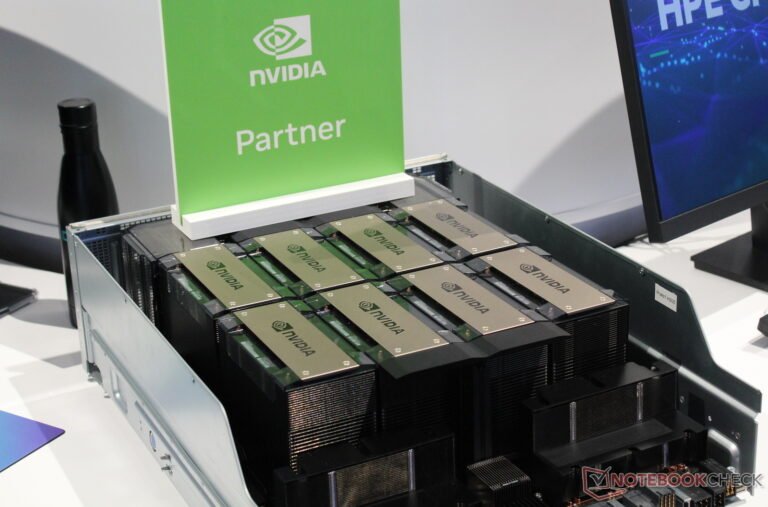
According to a new Gartner report released alongside Ignite 2026, the computational demands of agentic AI systems — which chain multiple model calls to complete complex tasks autonomously — could drive inference costs up by 500 percent by 2028. The analyst firm estimates that enterprises deploying agentic workflows at scale may see their AI infrastructure budgets consume a disproportionate share of IT spending unless proactive optimization measures are implemented.
Gartner highlights that agentic architectures typically require 10 to 50 times more model invocations than single-turn chat applications, compounding token consumption and GPU utilization. The firm recommends that organizations adopt model routing, caching, and distillation techniques to mitigate cost growth while maintaining performance.
Implications for Enterprise AI Development
The convergence of Microsoft’s expanded model router and Gartner’s cost projections underscores a pivotal moment for enterprise AI strategy. Companies that invested heavily in single-vendor model contracts during 2024 and 2025 now face pressure to diversify and optimize. Azure AI Foundry’s vendor-agnostic approach positions Microsoft as a neutral orchestration layer, potentially reducing lock-in risk while simplifying procurement.
Early adopters in financial services, healthcare, and manufacturing report that multi-model routing has already reduced inference costs by 30 to 45 percent compared to static model assignments. These savings stem from directing routine classification tasks to smaller, cheaper models while reserving premium models like OpenAI GPT-5 for high-stakes reasoning.
Microsoft Copilot Integration and Developer Tools
Microsoft also announced deeper integration between Azure AI Foundry and Microsoft Copilot Studio, allowing low-code creators to leverage the model router directly within custom copilot workflows. GitHub Copilot Enterprise customers gain similar access, enabling code generation tasks to route dynamically between specialized coding models such as Meta Llama 4 Code and OpenAI GPT-5.
New developer tooling includes an automated model selector that analyzes prompt characteristics and recommends the optimal model from the top 50 pool, complete with projected cost and latency estimates. This feature integrates with Visual Studio Code and Azure DevOps pipelines, embedding cost-aware model selection into the standard development lifecycle.
As agentic AI adoption accelerates, the ability to dynamically route workloads across a diverse model portfolio will become a core competitive differentiator. Microsoft’s Ignite 2026 announcements signal a clear recognition that the next phase of enterprise AI will be defined not by access to the single best model, but by the intelligence to choose the right model for every task.