Mixpanel breach: API user IDs and browser metadata exposed

Mixpanel breach API user IDs and browser metadata exposed

What the Latest Vendor Breach Means for API Users

The recent Mixpanel security incident has raised fresh concerns across the tech community, particularly among developers and organisations relying on OpenAI’s API platform. While the breach did not involve OpenAI’s core infrastructure, the exposure of API user IDs, browser data and other analytics-level information has highlighted the growing risks associated with third-party services. For UK developers and businesses increasingly dependent on AI tools, the incident serves as a reminder that supply-chain vulnerabilities remain a serious part of today’s security landscape.

Early reports indicate that Mixpanel, which provided analytics for parts of the OpenAI API dashboard, detected unauthorised access to a dataset containing identifiable metadata. The exposed information included names tied to API accounts, email addresses, user IDs, browser details, operating systems and approximate location data inferred from user sessions. Although no API keys, passwords or content data were accessed, the breach has been taken seriously due to the potential for targeted phishing attempts.

OpenAI has moved quickly to distance its systems from the vendor, removing Mixpanel from production and initiating a review of all affected datasets. Organisations in the UK using the API have begun receiving notifications detailing what information may have been exposed. For many teams, the concern isn’t the data itself but how cybercriminals could exploit it. Knowing that an individual or company uses OpenAI’s API makes tailored attacks far more convincing, and this nuance has driven much of the recent caution.

Mixpanel breach API user IDs and browser metadata exposed

Security experts across the UK point out that metadata breaches are increasingly common, particularly when analytics tools collect more information than necessary. In this case, the type of browser, operating system and location may not seem sensitive, yet these details can help attackers craft messages that appear authentic. A phishing email referencing a recent login or device can easily convince a developer to reveal credentials or rotate keys via a malicious link.

Developers have also been reflecting on how widely analytics services are embedded within modern API platforms. Many organisations integrate third-party trackers for dashboards, onboarding flows and usage insights. While these tools deliver convenience, they also expand the attack surface in ways that are not always obvious. The Mixpanel breach has prompted UK companies to review their own vendor lists, with several already reconsidering the need for certain analytics integrations.

Another concern arises from the exposure of API user IDs. Although these identifiers cannot directly access systems, they act as reliable anchors that attackers can link to email addresses and organisation names. This combination of identity signals raises the stakes, particularly for UK firms developing sensitive AI workflows or managing confidential datasets. Even without direct access to usage data, attackers may try to impersonate internal teams or service providers to steal login credentials.

Industry analysts expect the incident to reshape how AI service providers communicate around third-party tools. Many UK businesses have already begun asking for more transparency around what analytics are collected, how long metadata is retained and whether external partners have access to identifiable information. The broader conversation now centres on minimising the need for external trackers in security-sensitive environments.

Looking ahead, the breach is likely to influence policy discussions within the UK’s growing AI regulatory ecosystem. As government bodies examine the reliability of AI supply chains, incidents like this strengthen calls for stricter controls on data sharing, clearer vendor-risk disclosures and improved governance for platforms working with corporate and public-sector clients. The focus is shifting from core service security to full-stack resilience, including all tools surrounding the API experience.

Despite the seriousness of the breach, early indications suggest that real-world impact remains limited. There is no evidence that attackers accessed any API content, billing information or authentication details. Most of the risk lies in the potential for sophisticated social-engineering attacks, something UK cyber agencies have already issued reminders about. For now, vigilance remains the strongest defence, and many teams have begun reinforcing internal training around phishing awareness.

For developers and organisations across the UK, the Mixpanel breach underscores an essential lesson: security is only as strong as the least-protected link in the chain. As AI adoption accelerates, businesses must not only secure the models and data they work with but also scrutinise every supporting service involved in their workflow. The incident may not have exposed critical secrets, but it has starkly highlighted how even minor metadata can become a powerful weapon in the wrong hands.

Moto Book 60 performance test

Moto Book 60

I have reviewed so many smartphones but whenever it comes to laptops, my condition becomes very bad because the testing that goes into it, oh brother, look here brother, you will find different types of companies when it comes to laptops.


There is nothing different in those laptop companies, after that the environment changes, then it becomes a baby. I have given a little different hint and punch. if you see, there is no revolutionary company, what is happening there is becoming a little different gradually, but when a smartphone brand jumps into the laptop market. Well, I am talking about the new Motorola laptop which is Motobook 60 and I have been using this laptop for the last few days. The team brother tested it well.


I tested it myself and brother, there are some things that I felt should be told to you people. Now look friend, smartphone is a different segment. But when a smartphone company makes a laptop, then my curiosity increases. And why shouldn’t I tell you guys too. So today you will know whether you should buy this laptop or not? How is it? How is it not? I will tell you everything. And if you are coming on the channel for the first time, then definitely like and subscribe to the channel because your brother is very close to a family of 7 lakhs. And the first thing we will start with is pricing. So if you guys go to buy this Moto Book, then after discount it will cost 6199.


Moto Book 60 performance test
Moto Book 60


You will get discount on different cards. But if you look at one segment of this, then it is of thin and light laptops. And thin and light laptops mostly target college students, specifically students. And along with this, all the people who are doing corporate jobs, whose work is not dedicatedly heavy like this. But still they need a very powerful machine. But at the same time it should be light weight because they will have to carry it daily from their home to office.


Also Read:

Macbook Air M4 Game FPS test

Msi stealth A16 Ryzen Ai 9 laptop gaming test


I have seen people carrying huge laptops. Although they do not have power but they are still old. That is why we have to carry them because that is what we have got from the company. And with that you get a 65 W charger included in it which is more than sufficient for this laptop. If you look at the tagline of Motorola. This thing has changed a lot now but still here when Moto launched it I thought I should tell you. We will start with the overall boxing of this laptop. So the content that you get inside the box is obviously the laptop.


Colour quality and display look of Moto Book 60


They play a lot with colors and in this laptop they have played a bit with colors. The one I have is their PTO Wedge Wood and with this they have another one which is PTO Bronze Green. Now you can select according to your needs which one you want. Which one goes best with which characteristic and which one gives a mature feel. Well, here the color is a different thing but the overall build quality of this laptop is one of the best.


Here the entire body is made of aluminum. You don’t see any flex. If you see the top flex from the top, there is not much of that. And even if you see the keyboard flex, that too is not much, which makes this laptop really good. If you see any other laptop, most of them come in plastic build and then there is more flex in it. And here we also tried to flex its display like this. There was not much flex here either.


Whenever I get a laptop, I check one thing inside Windows specifically that whether its hinge opens with one hand or not. This is not the case in most laptops. Earlier, it was not there at all. 5 years ago, 6 years ago. I have never seen that the hinge opens with one hand in a Windows laptop.


Build quality of Moto Book 60


Due to which the build quality really surprised me. And one more thing which surprised me, it doesn’t happen normally and that is the military standard 8 10H rating. Now brother, it is needed inside the laptop and also not because we keep it with such care. But there are some people who drop their laptops. And Seriously, I drop my laptop many times. I don’t do it intentionally. Sometimes you start abusing in the comments. So here you get a rating inside the laptop. It stays in the mind that it is okay, it is good. Now what more do I need. So it has a good rating of military standard.


Now this does not mean that you go and start banging it, start throwing it. It is okay, it will fall and you will survive. But be careful, it is an expensive thing. Talking about the overall weight, it gives you almost 1.35 kg weight after having an aluminum body, which is a good thing. Along with this, the thickness of the laptop is also around 16.9 mm. It is not too thick either, Like I told you in the beginning that it is thin and light. Are you understanding? We are carrying forward the same scheme.


Also Read: Macbook Air M4


Moto Edge 60 Fusion camera test and propar Buyer’s Guide

This is the world’s first 6.67-inch 1.5K P-OLED Quad Curved display with a 120Hz refresh rate, 4500 nits peak brightness, and HDR10+ support. And this smartphone with a panone validated display and protected pyora glass 7i. Even if you open human subjects in this phone, the skin tone is also panone validated. This is the all new Moto Edge 60 Fusion 5G with a curvature of 45°.


Specification of Moto Edge 60 Fusion


This smartphone goes up to 4,500 nits of peak brightness. Even under direct sunlight, the visibility is good. It has around,400 nits of high brightness mode. This has a 6.7 in pled super HD display. If you are into editing, then this might be good for you because Moto Edge 60 Fusion has 100% DCIP3 color gamut and even supports HDR10 plus. It’s a 10- bit display with 300 Hz of touch sampling rate and 120 Hz refresh rate. Even if your hands are wet, you can still use a display. It has smart water touch 3.0.


At the bottom of the screen, you have an indisplay fingerprint scanner. And it seems fast. World’s first true color Sony Lydia 700C camera. It’s a 50 MP main camera with optical image stabilization. And I’ll show you some of the camera samples taken. What I felt is that the outputs are really eye pleasing.


You can see that it covers almost a dramatic feel and maintains the natural color and the brightness of the image. Moto Edge 60 Fusion almost similar to a true-to-life photo even if you’re taking photos with a 2x cropped in. And yes, this camera is also validated by panone. So you have a panone validated camera with a panone validated display making sure that whatever you’re capturing is how you are seeing it.


Moto Edge 60 Fusion Camera Test


As I said even when you’re taking photos of human subjects the skin tones are also maintained naturally. With this you also get a 13 megapixel ultra wide camera. And these are few of the photo samples taken and I can see that there is no major color shift when comparing with the primary camera.


Now even this particular ultra wide camera can also act as a macro camera. Here are few sample macro photos, that I have shot with this device. And yes, you’re getting a 13 MP macro camera, which is nice. And the next one is not a camera. And It’s a 3in 1 ambient sensor, which is used to maintain the balance between the light, the contrast, the brightness, etc.


When you’re capturing a photo, then this data is taken to calibrate that. In the front, we have a 32 MP selfie shooter. Here you can see few of the selfie photo samples. And again, here also the skin tones are maintained. And these also seems to be panone validated. This time what I felt is Moto has really improved its camera segment. When you open camera application, I have noticed that there is a slight jitter in opening but apart from that I did not face any issues with the cameras.


Video recording quality


I have to really emphasize on is its 4K recording capabilities. All the cameras in this smartphone supports 4K 30fps video recording. You can also take 4K videos with the ultra wide camera. Here you can see a 4K 30 fps video recorded using the back camera of the smartphone and yes it has optical image stabilization and the footages are really stable. And here is a sample of a 4K video shot with the 32 MP selfie shooter. This time they have used AI to improve the adaptive stabilization and even enhance the photos taken.


You also get a horizon lock feature in this smartphone which is kind of cool. Because it’s a Motorola smartphone, there is no specific gallery. It’s just the Google Photos app. So all the editing things that you get with the Google photos app like the AI magic eraser, a photo unblur, a magic editor, all the things it is available for free in this smartphone.


The device looks absolutely slim from the side yet the device is very well built. When you take it in hand it seems very lightweight but Moto Edge 60 Fusion is IP68 and IP69 certified. You can directly pour water on this, put a jet spray or even drop it down and nothing will happen to your smartphone. And yes, this device is also military grade durable. As you know, normally when people buy smartphones which are having curved display, they do tend to have a little bit of concern. What if the device just accidentally falls down and I just break it? So, you have one less thing to worry about right now. And like every other company, Moto also wasn’t the AI race.


Ai features in Moto Edge 60 Fusion


It has the Moto AI. They brought in some interesting features like say you have the AI magic canvas wherein you can just give it a prompt and then it will use AI to generate whatever you have given in the prompt. Just take a photo of whatever dress you’re wearing and then with the AI, it just creates a wallpaper that matches to your outfit. When you’re holding a smartphone, just double tap on the back of the phone to activate the A features.


There is a feature called catch me up or update me which will just go through all of your notification and then just summarize and give a insight of what just had happened so that you don’t have to go scroll through all the notifications. There’s a feature called pay attention wherein you just take a recording and then it just does the transcript thing in the background so you can pay attention to what you’re doing.


Moto Edge 60 Fusion


There’s a remember this function wherein you take a screenshot and then you can note down what thing you want to remember. And there is a recall feature or a journal feature wherein you can see all the summaries of whatever you have told it to remember all the notes and stuffs like that so that you can go back and recall whatever you have did. When you press and hold the power button, yes, the Google Gemini activates and if you double press on the power button, it activates the Moto AI. So, it’s another way of activating it. And you can use the assistant to say plan your trip, etc.


Ram and storage of Moto Edge 60 Fusion


Moto Edge 60 Fusion has a max of up to 12 GB of LPDDR4X RAM. Available in 8GB/12GB RAM variants with 256GB/512GB internal storage, expandable via microSD up to 1TB. And from design perspective, I do not feel that there is a major change, but they have still kept their Moto signature design, but yes, improving all the other hardware stuffs. It’s just that last year the displays two sides were curved.


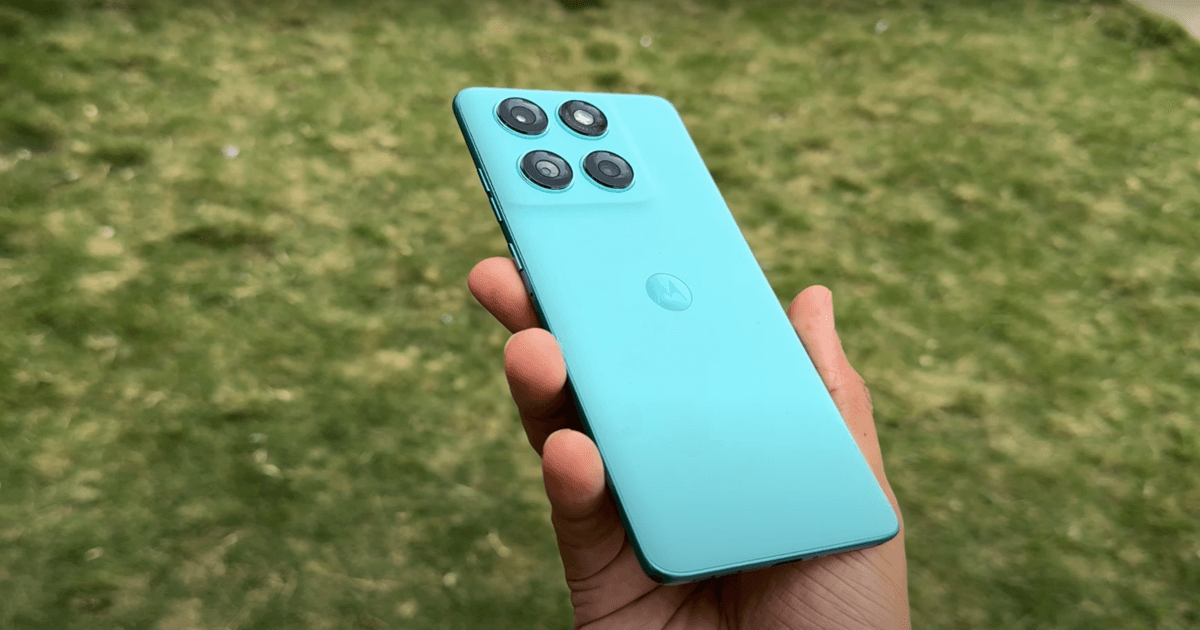
This time they have went with all curved display design. But yes, the device feels very slim, very lightweight and even the vegan leather they have given in the back also feels premium while holding in hand. But when you just take a look at the camera module, it feels that it is embossed inside kind of like a concave shape. But actually it’s not. It’s just flat. It’s an optical illusion. You can see it weighs around 180 g and it’s around 8.2 mm thick. It comes in three interesting colors. The naming of these colors are a bit weird. The one which I have here is the Amazon 8 canvas inspired finish.


Performance & Battery Review of Moto Edge 60 Fusion


You also get a cipher vegan suede finish and a slipstream finish. The phone comes with India’s first MediaTek demenity 7,400 processor. It scores around 6.6 lakhs of 122 scores. This is a 4 nanome chipset and it mainly focuses on day-to-day tasks. 5,500mAh battery with 68W wired fast charging. Getting your everyday things done, YouTube, Facebook, social media. This mainly focuses on getting the image processed better, giving you a better multimedia experience, all those sorts of things. I’ve seen people getting around 7 7.25 lakhs on22 score. So, it feels like an all-rounder chipset which you can get in this price point. MediaTek Dimensity 7400 (India variant) built on a 4nm process, featuring four Cortex-A78 cores and four Cortex-A55 cores.


So, you have one variant which has a 12 GB of LPDDR4X RAM and a 256GB of UFS 2.2 storage.The device features dual stereo speakers with Dolby Atmos. There’s one more base variant which comes with 8 GB of LPDDR4X RAM and the same 256GB of UFS 2.2 storage. It supports micro SD card of up to 1TB and has 16 5G bands. The slim device contains 5,500 mAh of battery. And if the battery lasts long, you can easily make it through a day.


In the box, you get a 68 watt turbo per charging adapter. With that, you can charge this in less than an hour. And let’s hear a audio sample. [Music] It runs on hello UI based on Android 15. It gives you 4 years of security updates and 3 years of OS updates. if you want more specification in motorola smartphone so hopefully checkout our motorola razr 60 ultra folding phone review.


Finel thoughts and Motorola Edge 60 Fusion Buyer’s Guide


So as youknow like how you get in the normal Moto phones. There is no plot waves. There is no ads. You get few of the Moto suits like the family spaces, Moto Hub, Moto Secure and it even comes with a thing shield security.


Normally I’ve heard that Moto phones lack a bit in their service. But if you’re taking an Edge phone, you might know that if you are an Edge customer, you get a little bit of extra care or a premium care wherein if you want to service it, Moto just picks it up from your house and drops it back for free. And when your phone is gone, you get a standby device while it is in repair.

Moto G67 Power camera review: better than expected

Moto G67 Power camera review better than expected

Impressive imaging in a mid-range package

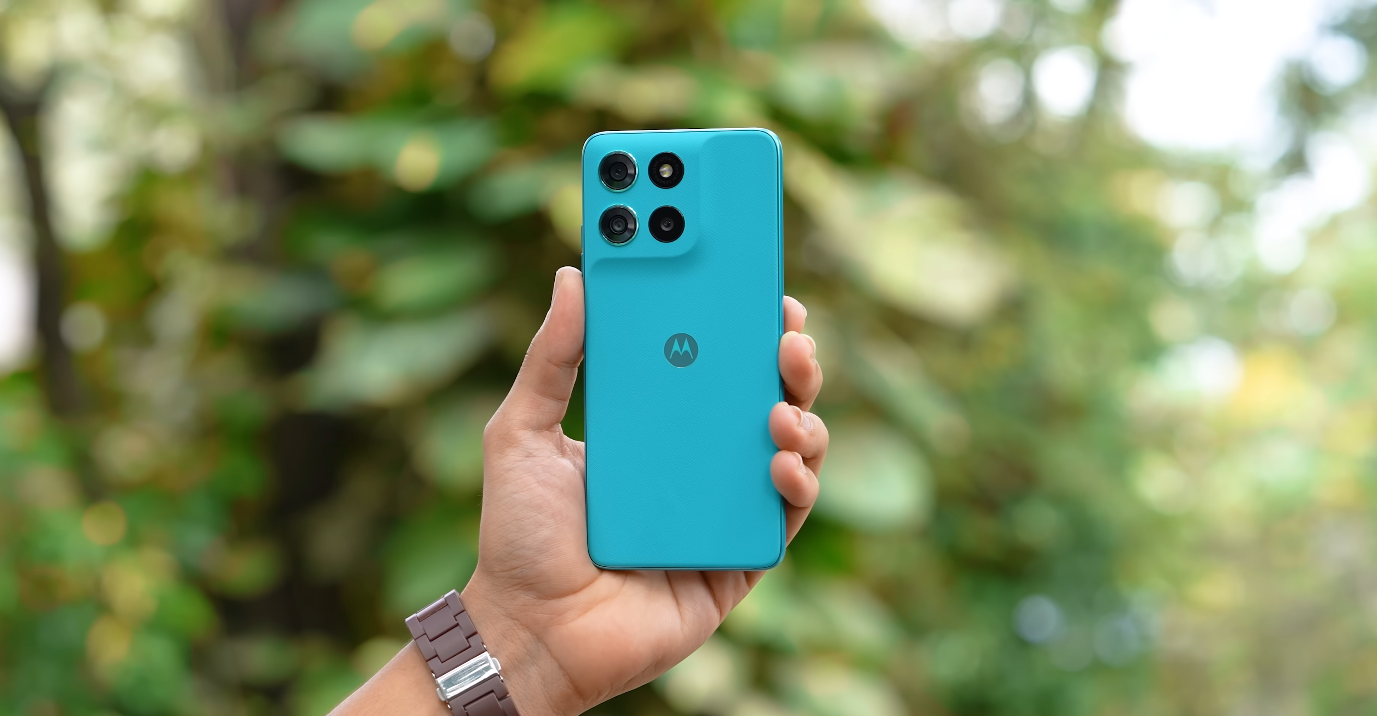
The Moto G67 Power surprises with its camera performance, going beyond what many users might expect from a smartphone in its class. Right from its first shots, it’s clear that Motorola has focused not just on hardware, but on real-world image quality—particularly in daylight and portrait scenarios. The results suggest this device might be a serious contender for those who prioritise photography without breaking the bank.

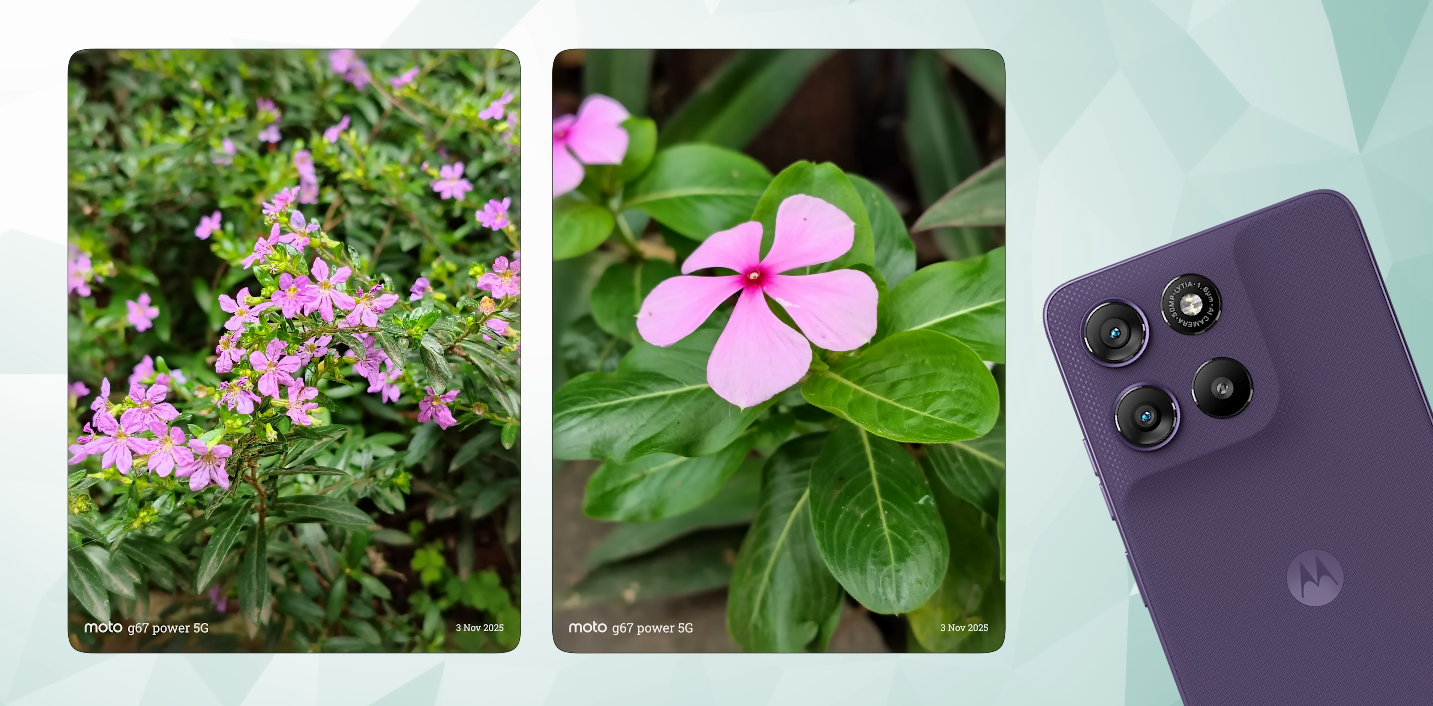
The rear camera setup centres around a 50-megapixel main sensor, which is paired with an 8-megapixel ultra-wide lens. In good lighting, this configuration delivers vivid colours, good dynamic range and sharp details. Real-world tests show that fine textures—like those of leaves or fabric—are well-resolved, and autofocus works reliably. Users who enjoy outdoor photography or capturing travel snapshots will find the experience satisfying.

Portrait mode is handled impressively. Depth separation in subject shots is better than many peers in the segment, and edge detection around hair or foliage is clean. The background blur feels natural rather than excessively artificial, making subject-focused photos look more premium than expected. Natural skin tones and balanced contrast give the impression of a higher-tier camera than what the spec sheet might suggest.

Moto G67 Power camera review better than expected

Low-light performance is competent for its class. While it’s not quite flagship level, the Moto G67 Power does a commendable job handling indoor scenes and dim lighting. The main sensor applies multi-frame processing to reduce noise, and resulting images retain reasonable detail. Ultra-wide lens performance drops off in low light as expected, but the main camera manages acceptable results for casual nighttime use without the need for a tripod.

Selfies are handled by a front-facing 32-megapixel camera. It produces crisp images with good clarity for video calls, social media and everyday self-portraits. In bright outdoor conditions the results impress, with accurate skin tones and balanced exposure across faces. Users might still notice some smoothing in detail when zooming into selfies, but overall the performance is very competitive for this price bracket.

Video capture offers another pleasant surprise. The device supports 4K recording with the main camera, delivering stable and usable footage for casual content creators. Electronic image stabilisation helps smooth out handheld motion, and users report that the colours remain consistent while recording. While not as advanced as premium systems with optical stabilisation, the video quality is more than acceptable for everyday vlogging or capturing moments on the go.

For users who like exploring creative modes, the Moto G67 Power includes features like time-lapse, slow-motion and dual-capture. These options add to the flexibility of the camera system and make it appealing for social media enthusiasts or casual creators. The software interface remains user-friendly, with minimal clutter and quick toggling between modes.

In terms of trade-offs, the ultra-wide camera has slightly less performance than the main sensor, especially under low-light conditions and fine detail shooting. Also, aggressive post-processing might lead to a slightly synthetic look in some scenarios—users who prefer very natural images may wish to explore manual settings or third-party apps. But considering the overall value, these are minor compromises.

In summary, the Moto G67 Power’s camera system significantly outperforms expectations for its segment. With strong main camera performance, capable front camera, useful video features and a camera app that delivers real-world quality, it is well-positioned for users who value photography within a budget. For anyone looking for a smartphone that does more than just the basics in imaging, this Motorola model deserves serious consideration.

Moto G67 Power benchmark results surprise fans

Moto G67 Power benchmark results surprise fans

Early performance scores show strong capability for a mid-range phone

The Moto G67 Power 5G has made its way into performance benchmark listings following its official announcement, and the results are impressing many smartphone enthusiasts. While the device is positioned as a mid-range option focused on battery endurance, the latest scores indicate that it can also deliver stronger performance than many expected. These early numbers suggest the phone may compete more closely with higher-priced models in the same category.

On the popular Geekbench benchmarking platform, the Moto G67 Power 5G has recorded single-core scores of around 1,000 points and multi-core results nearing 2,900. These figures place the new Motorola device ahead of many mid-range phones using older chipsets, which typically score lower in both categories. The results reflect the efficiency of its Snapdragon 7s Gen 2 processor, which is built using a 4nm architecture designed for better speed and reduced power consumption.

The AnTuTu benchmark scores for the phone are also gaining attention, with listings showing an overall result of around 678,000 points. This score indicates a noticeable jump in all-round performance including CPU and GPU tasks, memory operations and general responsiveness. In real-world scenarios, this should help users experience smoother app multitasking, quicker response times and improved stability during extended usage.

Moto G67 Power benchmark results surprise fans

Motorola’s combination of the Snapdragon chipset with 8GB of RAM plays a major role in the smooth performance shown in these benchmark tests. The company has also enabled virtual RAM expansion, which can add additional memory when needed. The inclusion of a 120Hz display further supports a fluid user experience, allowing animations, scrolling and gaming visuals to appear more seamless. These hardware and software optimizations together help justify the strong benchmark numbers.

The Moto G67 Power 5G stands out especially because it prioritizes battery endurance with its massive 7,000mAh battery. Typically, phones with such a large battery focus primarily on longevity and compromise performance to keep costs lower. However, Motorola seems to have made a clear effort to balance long running time with capable processing power, making the phone more appealing to users who want both longevity and speed.

Benchmark performance also matters when it comes to gaming, particularly as more players in India rely on mid-range devices to enjoy popular titles. While the Moto G67 Power 5G does not feature a flagship-level GPU, the tested scores suggest that it can comfortably handle most mainstream games at stable frame rates. The results also indicate that users could expect fewer slowdowns when switching between apps or running background tasks.

Although the numbers are impressive, experts note that benchmarks are just one part of evaluating overall performance. Sustained workload tests, thermal management and power efficiency under stress are expected to provide a more complete picture once the phone reaches more users. The large battery and efficient chipset may help it maintain stable performance over longer periods without overheating, but full testing will reveal how well it handles heavy usage daily.

The strong benchmark results have helped build early excitement around Motorola’s latest Power-series device. Fans who were initially attracted by the battery size are now showing more interest due to the unexpected performance advantages. This gives the Moto G67 Power 5G a stronger competitive edge against rival smartphones in the budget-friendly 5G category.

Overall, the Moto G67 Power 5G’s benchmark numbers suggest that Motorola has delivered a device that offers more than just extended battery life. With its modern chipset, high refresh rate display and balanced memory configuration, it shows clear potential to perform well beyond basic everyday tasks. As more testing becomes available after sales begin, users will have a clearer idea of how these promising early results translate into real-world performance.

Moto G67 Power durability test shows strong build

Moto G67 Power durability test shows strong build

How Tough the Moto G67 Power Really Is

Durability tests for the Moto G67 Power indicate that Motorola has focused heavily on making this device more resilient than the average mid-range phone. For UK buyers who prioritise long-term toughness, the results show a solid mix of reinforced materials, practical protections and resistance to everyday wear.

The phone’s front protection is a major highlight. It uses Gorilla Glass 7i, a newer glass formulation designed to handle scratches and minor drops better than older versions. This gives the display a stronger defence against accidental knocks, pocket friction and minor falls, making it more suitable for daily UK commuting and outdoor use.

Durability tests also confirm that the Moto G67 Power meets MIL-STD-810H certification, a military-grade standard that simulates harsh conditions. This includes exposure to temperature changes, humidity, shocks and repeated drops. While this doesn’t mean the phone is indestructible, it does show that the overall construction is built to withstand more physical stress than typical budget devices.

Moto G67 Power durability test shows strong build

The device also carries an IP64 rating for dust and splash resistance. This helps protect against common UK situations like light rain, damp environments and dusty outdoor conditions. It’s not a full waterproof rating, but it provides added reassurance for everyday handling, especially in unpredictable UK weather.

Early durability impressions note that the frame and rear design feel sturdier than expected for its price category. The phone holds up well during general bend, pressure and impact tests, suggesting good internal reinforcement. This helps prevent structural flexing and gives the device a more premium sense of solidity in the hand.

Scratch resistance around the body and camera housing is also improved thanks to the materials used. While a case is still recommended for maximum protection, the phone’s outer shell can handle routine wear more comfortably than many competing models. Frequent bag or pocket use is less likely to produce significant cosmetic damage.

The large battery, often a potential weak point in durability for some phones, does not compromise the frame integrity. The Moto G67 Power’s internal layout appears to support the battery securely, helping the device maintain rigidity under pressure. This adds stability and reduces the risk of internal stress when the phone is accidentally dropped.

For UK users who carry their phone all day—across public transport, workplaces and outdoor areas—the G67 Power’s combination of toughened glass, reinforced chassis and splash protection makes it a practical choice. It suits buyers who need a reliable phone that can take more physical challenges without quickly showing wear.

Overall, the Moto G67 Power’s durability test results show a device built with longevity in mind. Its strong glass protection, military-grade certification and everyday resistance rating provide reassurance that it can handle the bumps and scrapes of real-world use. For UK buyers seeking a sturdy, dependable mid-range phone, the G67 Power stands out as a tough and trustworthy option.

Moto G67 Power to include stereo speakers setup

Moto G67 Power to include stereo speakers setup

Audio Upgrade in Motorola’s New Power Series

The Moto G67 Power is set to launch with a stereo speaker setup, marking a noticeable improvement for buyers looking for strong audio performance in a mid-range device. This addition aligns with Motorola’s recent push to enhance entertainment features across its G-series lineup, making the phone more appealing for everyday media use in the UK.

Stereo speakers provide a more immersive sound experience than single-speaker designs found in many budget phones. With two speakers working together, audio separation becomes clearer, offering better left-right balance when watching films, playing games or streaming music. For UK users who rely heavily on their phone for entertainment, this setup enhances overall sound quality without needing external accessories.

The inclusion of Dolby Atmos support further refines the listening experience. Dolby tuning typically adds depth and clarity, improving vocal sharpness and boosting the sense of space in audio playback. This can be particularly noticeable in action scenes, music tracks or gaming environments where layered sound makes a difference. It’s a welcome feature at this price point.

Moto G67 Power to include stereo speakers setup

Motorola’s recent devices have shown steady improvement in speaker loudness, and early information suggests the Moto G67 Power will follow the same path. While it may not match flagship devices in peak output, the stereo arrangement ensures more balanced performance at higher volumes. This helps reduce distortion and keeps dialogue and effects crisp during regular use.

For UK buyers who consume content on public transport or while travelling, stereo speakers offer practical advantages. The enhanced clarity means you can listen comfortably without pushing the volume to its maximum. Group viewing or casual playback in shared spaces also benefits from wider audio coverage and a stronger overall presence.

The stereo setup pairs well with the expected large battery of the Moto G67 Power. Since this line is known for extended endurance, users can watch longer videos or play extended gaming sessions without worrying about rapid battery drain. The phone aims to deliver both longevity and enjoyable multimedia performance.

This feature may also appeal to users stepping up from earlier Moto G models that relied on single loudspeakers. The improvement makes the G67 Power a more complete device for those wanting better everyday usability without paying flagship prices. It adds value for buyers who prioritise entertainment but still want a practical and reliable phone.

While stereo speakers are confirmed, real-world performance will still depend on tuning and software optimisation. Volume levels, bass depth and clarity can vary between markets, but Motorola’s track record suggests a balanced output suitable for everyday UK usage. Once the device officially launches, local impressions will reveal how well the audio holds up.

Overall, the Moto G67 Power’s stereo speaker setup positions it as a stronger mid-range option for UK users. By offering better audio balance, Dolby Atmos enhancement and practical loudness, it brings a meaningful upgrade to one of the most frequently used features on any smartphone.

Moto G67 Power storage and RAM variants leaked

Moto G67 Power storage and RAM variants leaked

Early Look at the Moto G67 Power Configurations

The Moto G67 Power has surfaced through early leaks ahead of its official debut, giving UK buyers an initial idea of what memory and storage variants to expect. While the phone has not yet been formally announced, multiple listings and pre-release reports point toward two primary configurations designed to offer solid mid-range performance without pushing costs too high.

According to the leaks, Motorola is preparing the Moto G67 Power with a single RAM option across all models. The phone is expected to ship with 8GB of physical RAM, which aligns with recent trends in the brand’s G-series devices. This level of memory is increasingly considered the baseline for smooth daily performance, allowing multitasking, app switching and social media use without noticeable slowdown.

Alongside the RAM, the storage options appear to be split into two tiers. The first variant includes 128GB of internal storage, which should satisfy typical users who rely on streaming, cloud backups and moderate local downloads. This is consistent with Motorola’s strategy of offering an accessible starting point for budget-conscious buyers while still providing enough room for apps, photos and system updates.

Moto G67 Power storage and RAM variants leaked

The second leaked configuration features 256GB of storage. This option is positioned for users who prefer to keep media offline or install a wider library of apps and games. For UK customers who record more video content or use their phone as a primary device for work and travel, the larger storage tier could offer better long-term flexibility without requiring frequent clean-ups or cloud dependency.

The leaks also point to software-based RAM expansion, a feature found on many modern Android devices. This function temporarily allocates part of the storage to behave like additional RAM, offering a performance boost when handling heavier workloads. While virtual RAM cannot replace the capabilities of physical memory, it can improve responsiveness during short bursts of activity, making the device feel smoother in demanding scenarios.

Given the phone’s “Power” branding, battery capacity is expected to be one of its standout features, although exact details remain unconfirmed. Motorola’s Power models typically prioritise large batteries and efficient hardware, making them appealing for users who spend long hours away from chargers. If the G67 Power follows this trend, the memory and storage variants will complement a device aimed at longevity and everyday reliability.

For UK buyers, the leaked configurations follow a familiar pattern seen across Motorola’s recent mid-range portfolio. The simplified lineup keeps choices straightforward: one RAM level and two storage levels. This approach reduces confusion and helps shoppers decide based on budget and storage habits rather than navigating a wide array of complex variants.

The UK market often benefits from Motorola’s globally consistent hardware strategy, so it is likely that the same 8GB RAM baseline will appear locally. The main question is whether both storage tiers will reach the UK or whether Motorola will prioritise the 128GB model for carriers and retail partners. Historically, the company has introduced higher-storage variants either online or through specific retail channels.

Until Motorola issues an official announcement, all specifications remain subject to final changes. However, the leaked variants give a solid early indication of what the Moto G67 Power will offer. UK consumers looking for a practical, long-lasting mid-range handset may find these configurations well suited to everyday needs, especially if pricing remains competitive.

Overall, the Moto G67 Power appears set to continue Motorola’s strategy of delivering balanced hardware with reliable performance. The combination of 8GB RAM, two sensible storage options and expected battery strengths positions it as an accessible option for UK buyers once it officially launches.

Moto G67 Power to get Android 15 update soon

Moto G67 Power to get Android 15 update soon

Motorola’s software rollout plans gain attention

The Moto G67 Power has come into focus again as reports indicate that its next major software rollout is nearing readiness. The device already launched with Android 15 out of the box in several regions, but the upcoming update is expected to refine system performance, improve stability, and bring additional feature optimisations tied to Motorola’s Hello UI. This has drawn attention among users who prioritise consistent improvements after purchase.

Motorola had earlier outlined its software roadmap for the Moto G67 Power, confirming one major OS upgrade along with three years of ongoing security patches. While the device is already running Android 15, the upcoming update is still relevant because it includes incremental enhancements and firmware-level improvements that typically follow a launch cycle. These post-launch stabilisation updates are important for ensuring that the system maintains smooth operation across wider usage conditions.

The Moto G67 Power features a large battery and display technology designed for daily reliability, and upcoming firmware updates often fine-tune battery endurance, background app behaviour, and network performance. Early rollout builds being tested internally suggest that optimisation work is underway to balance power consumption with device responsiveness. Such refinements usually appear within the first few months of a phone’s market availability.

Moto G67 Power to get Android 15 update soon

Users in the UK and other international markets have shown interest in how quickly mid-range devices receive software support. In this case, the Moto G67 Power benefits from launching on the newest Android version rather than waiting for an upgrade. This means users already have access to the latest system-level privacy features, enhanced permission controls, and interface improvements that come standard with Android 15. The coming update is expected to further stabilise these enhancements.

There has also been discussion surrounding region-based update rollouts. Motorola typically deploys updates in phases, beginning with select batches before expanding to all supported markets. This approach is designed to monitor performance feedback and ensure compatibility across varied carrier configurations. Users may notice the update appearing at different times depending on their region and device variant, which is a standard procedure in over-the-air software distribution.

The Moto G67 Power’s update schedule reflects the broader trend in which manufacturers are expected to maintain consistency in post-launch support for mid-range handsets. As more consumers hold onto their devices for longer periods, the role of timely updates becomes increasingly significant. Ongoing patches, feature refinements, and system-level improvements contribute to a longer usable lifespan, which is a major purchase consideration in this segment.

Motorola’s decision to offer one major OS upgrade, in addition to the base Android 15 that the device ships with, provides users with clarity about the long-term experience. While some competitors in the mid-range category now offer extended OS upgrade cycles, Motorola’s approach focuses on stable performance and prolonged security maintenance rather than frequent version transitions. The upcoming software update aligns with this philosophy by improving the existing system environment rather than introducing large changes.

Buyers have also shown interest in the brand’s performance history with update reliability. Motorola has recently made efforts to improve the consistency of security patch delivery across its product range, and the Moto G67 Power is being watched to see how closely the company follows its stated timeline. Early security patches that arrived shortly after launch suggest a more proactive approach than in some previous cycles.

In practical terms, the upcoming Android 15-based update will likely be most visible in the smoothness of navigation, background process handling, and battery efficiency. These areas are commonly tuned after manufacturers collect broader usage data from real-world conditions. For everyday users, the benefit is a device experience that gradually becomes more refined rather than remaining static after purchase.

As anticipation builds for the rollout, the Moto G67 Power remains positioned as a reliable mid-range option that emphasises endurance and stable performance. The forthcoming update highlights Motorola’s commitment to maintaining the device’s software experience beyond its launch window. For users evaluating long-term usability, the continued refinement of Android 15 on this handset strengthens its appeal in markets where value and performance carry significant weight.

Moto G67 Power retail pricing surprises buyers

Moto G67 Power retail pricing surprises buyers

Competitive positioning raises interest among mid-range shoppers

The Moto G67 Power has attracted widespread attention following its retail availability, largely because its pricing strategy has turned out to be more competitive than expected. Motorola’s G-series devices have traditionally served the mid-range segment, offering a balance between everyday usability and affordability. However, early retail listings for the Moto G67 Power show that the company is pushing more aggressively into the value-driven market, surprising buyers who anticipated a higher entry cost given the hardware on offer.

The device features a large-capacity battery, a fast refresh rate display, and a design that aligns with the practical use-cases of long-term daily users. These specifications have generally been associated with phones positioned at higher price tiers. When retail channels in the UK began listing the handset for sale, many consumers and reviewers noted that its positioning placed it within an accessible bracket, rather than competing against higher-priced mid-range models. This shift has contributed to heightened discussion around Motorola’s evolving market approach.

For UK buyers, the Moto G67 Power’s pricing is particularly notable because the market is highly competitive in the £100–£300 smartphone space. Numerous manufacturers offer incremental variations of battery life, camera performance, or display quality. The Moto G67 Power enters this environment delivering several capabilities in combination, rather than prioritising only one feature category. As a result, the retail pricing has been interpreted by some analysts as a strategic move to differentiate on overall value rather than on individual specifications.

Moto G67 Power retail pricing surprises buyers

Retailers in the UK have positioned the device as an appealing choice for students, casual users, and professionals seeking a durable daily driver. The extended battery life in particular has been highlighted as a defining advantage. Combined with the build quality and the steady software support timeline that includes one major OS upgrade and multiple years of security patches, the Moto G67 Power presents a measured approach to longevity. The pricing enhances this perception because it suggests a low total cost of ownership over several years.

One of the recurring points of conversation among buyers has been how Motorola is balancing its hardware and software commitments. While the handset delivers robust physical features, its software update roadmap is more conservative than some competitors that promise extended OS upgrade cycles. The pricing therefore appears to account for this, presenting the device as strong value at purchase while maintaining clear expectation boundaries for long-term platform updates. The early security patch rollout that followed release further supported confidence in Motorola’s current software management practices.

Reviewers have also noted that the retail pricing strategy appears aligned with broader industry trends, where manufacturers are increasingly responding to extended replacement cycles. With users upgrading smartphones less frequently than in previous years, affordability and sustained function have become key purchase drivers. By launching the Moto G67 Power at an accessible price point, Motorola positions itself to appeal to those who prioritise reliability and practicality over premium-tier novelty features.

The buyer response has reflected this positioning. Early retail traction suggests that the device is appealing to individuals who require dependable performance but are not seeking flagship-level camera systems or specialised hardware. The inclusion of a high-refresh-rate display and durable exterior elements contributes to day-to-day convenience, while the restrained pricing allows buyers to avoid premium mark-ups typically associated with such features. This has led to positive sentiment among customers evaluating options within the mid-range.

From a broader market perspective, the Moto G67 Power’s pricing and feature set contribute to increasing pressure on rivals within the same category. Manufacturers competing for the same demographic will likely be monitoring how buyers respond over the coming months. Should the device continue to perform well through retail and carrier channels, it may influence how mid-range smartphones are positioned in future product cycles. The emphasis on value without significant feature compromise may become more widely adopted.

In summary, the Moto G67 Power’s retail pricing has generated meaningful interest because it provides a combination of high-utility features, practical durability, and extended usability at a level that undercuts expectations for devices in its class. For UK buyers evaluating long-term smartphone reliability and daily performance, the handset offers a compelling balance of specifications and affordability. As market competition continues to evolve, this pricing approach may help solidify Motorola’s presence in the segment where value and dependability drive purchasing decisions.

Also Read:  How UK users can maximize battery efficiency on Origin OS

Moto G67 Power’s display performance under sunlight

Moto G67 Power’s display performance under sunlight

Outdoor Visibility and Real-World Brightness

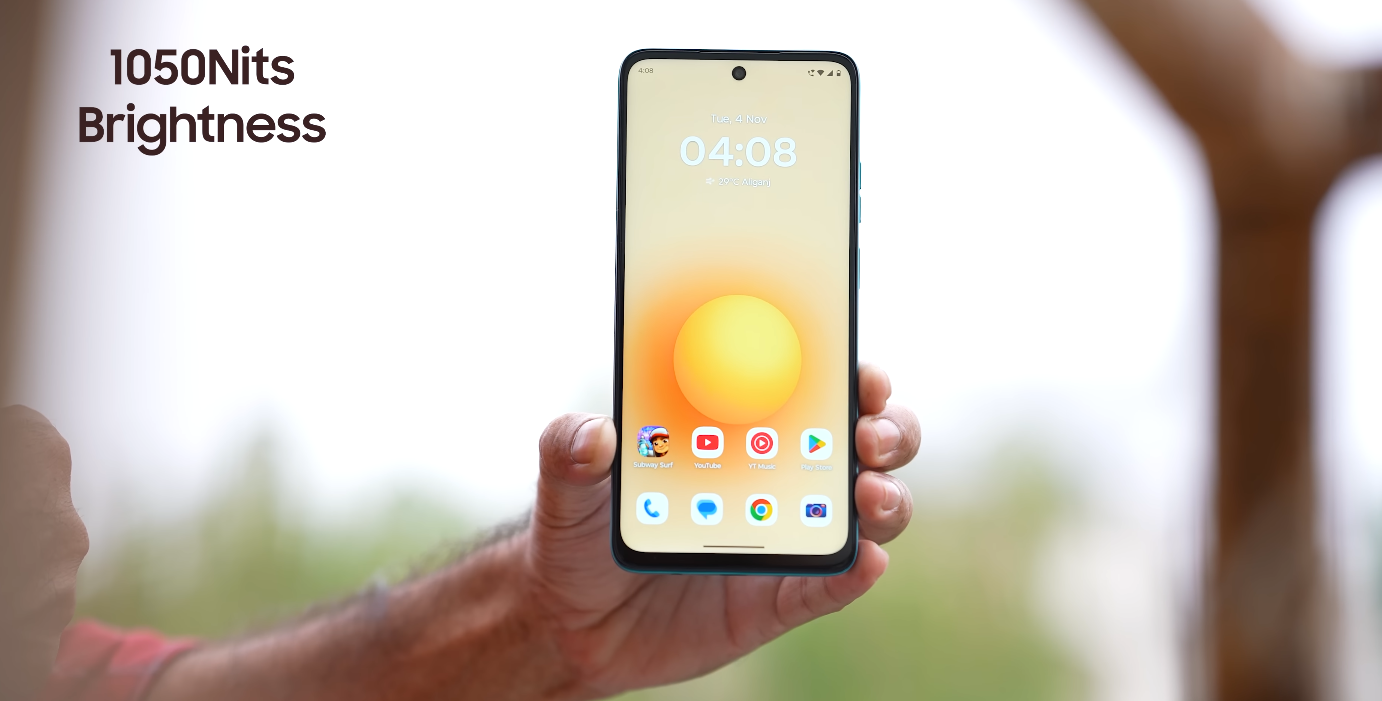
The Moto G67 Power is designed to offer good visibility outdoors, and early testing shows that its screen holds up well under direct sunlight. For a mid-range device, the display performs reliably when brightness is pushed to its upper levels, making it suitable for UK users who spend time outside or frequently move between indoor and outdoor environments.

The phone features a high-brightness mode that allows the screen to reach strong peak levels, helping text and images remain readable even when glare is present. This boosted brightness ensures that the display does not wash out easily, keeping essential on-screen content visible during tasks like navigation, messaging or browsing outdoors.

Colour reproduction remains relatively stable under sunlight, with contrast holding up better than typical budget panels. This helps maintain clarity in photos, videos and app interfaces, even when the display is exposed to bright daylight. It also supports comfortable viewing during commutes or outdoor activities where lighting conditions can shift quickly.

Moto G67 Power’s display performance under sunlight

The smooth refresh rate contributes indirectly to usability in bright environments. Scrolling through menus and apps feels responsive and fluid, which helps when the screen is more difficult to see due to reflections. The combination of brightness and performance keeps interactions consistent across lighting scenarios.

Reflection handling is decent for its category. Although not on par with high-end OLED panels found in premium phones, the Moto G67 Power manages glare reasonably well with its coating and calibration. For most typical UK sunlight conditions, the screen remains usable without needing excessive shading.

When brightness is set to automatic, the phone reacts quickly to changes in ambient light. Moving outdoors triggers a noticeable adjustment, allowing the display to push to its maximum levels. This ensures the device remains practical for outdoor reading, map usage and general productivity.

As with any mid-range phone, extreme conditions such as very bright midday sun or reflective surfaces may still challenge the display. In those situations, manually pushing brightness to maximum or adjusting viewing angles helps retain readability. However, for the majority of outdoor conditions in the UK, the screen performs more than adequately.

The display’s overall daylight performance complements the phone’s positioning as a long-lasting, practical device. Paired with its strong battery life, users can comfortably rely on the Moto G67 Power for extended outdoor use without worrying about visibility issues.

In summary, the Moto G67 Power offers solid sunlight performance with strong peak brightness, good colour retention and dependable clarity. It may not reach flagship-level outdoor visibility, but for its class it delivers a bright and functional display that works well across most UK lighting conditions.

Moto G67 Power vs Realme 12 — specs comparison

Moto G67 Power vs Realme 12 — specs comparison

How both brands are positioning their mid-range contenders

Motorola and Realme both now treat the mid-range space as a serious battleground because this slice of the market drives volume and long-term loyalty. The Moto G67 Power represents Motorola’s endurance-focused identity in this segment, while the Realme 12 5G tries to represent bold camera numbers and aggressive spec positioning. Both devices sit in the same competitive window, and each represents a different interpretation of what mainstream buyers value most in daily phone usage.

Battery life has always been central to the Power branding in Motorola’s portfolio. Motorola continues that reputation by offering a very large battery capacity in the G67 Power, which industry watchers view as one of the largest in its immediate price class. In recent Power models, multi-day battery usage became a realistic talking point for real-world users rather than just marketing text, and this new model continues to push that endurance-centric philosophy forward. On the Realme 12 5G side, the battery capacity is more conventional, matching typical expectations in modern mid-range devices rather than trying to break endurance records.

Processing hardware is another clear point where the philosophies diverge. Motorola selected a Snapdragon chipset from the newer 7-series range for the G67 Power, signalling a bigger push towards consistent responsiveness and headroom during mixed everyday tasks. The Realme 12 5G, on the other hand, targets value through a Dimensity platform that aims at efficiency and streaming-friendly performance rather than compute-heavy tasks. Both chipsets are modern, but Motorola’s selection positions the G67 Power slightly closer to premium behaviour in multi-threaded loads, at least on paper.

Moto G67 Power vs Realme 12 — specs comparison

Display expectations in the mid-range today are very different compared with earlier cycles. 120Hz is now practically normal instead of aspirational, and both phones reflect that shift. The G67 Power presents high refresh responsiveness as a natural part of the scrolling experience, not a special feature needing a marketing badge. Realme also matches the 120Hz tier in the 12 5G, reinforcing the idea that the market now treats fluid screens as a baseline requirement in 2025. Screen smoothness is no longer a top-tier exclusive — both phones demonstrate that.

Cameras remain a core decision trigger, and this is where Realme signals a louder message. The Realme 12 5G uses a higher megapixel main sensor, which gives it a numbers advantage in spec comparison sheets and retail listings. Motorola takes a more balanced tuning-first approach instead of a megapixel headline race. In recent G-series models, reviewers observed more focus on natural colour, stable shutter, and cleaner low-noise output than dramatic oversharpening. Realme prioritises the visual wow factor of 108MP, while Motorola leans on consistency and natural output behaviour.

Software policy and update continuity have grown more important, particularly in markets where users hold onto devices longer. Motorola has widened its commitments on system upgrades and security patches on recent G-series releases, and this has become a larger talking point in buyer communities. Realme also offers long-cycle update support, though exact cycles sometimes differ by region and carrier partnerships. For long-term retention, policy clarity plays a significant role, and Motorola has been vocal about improving the predictability of its roadmap.

Connectivity is now standardised around 5G across mainstream tiers, and both devices reflect that reality. Early mid-range 5G launches once felt experimental, but today 5G compatibility simply confirms a phone is up to date. The G67 Power and Realme 12 5G both meet that modern baseline, meaning users do not need to weigh connectivity as a deciding factor anymore. Instead, the decision shifts toward runtime, tuning profile, and user experience priorities.

Ultimately this comparison comes down to identity. The Moto G67 Power is aimed more at people who value long-lasting battery life, near-stock Android fluidity, and predictable hardware behaviour. The Realme 12 5G appeals more to buyers who respond to headline camera figures and spec sheet boldness, especially in markets where marketing emphasis leans heavily on high megapixels. Both devices are modern mid-range options, but the G67 Power invites users who want endurance and clean UX, while the Realme 12 5G aims toward those who like the bragging rights of bigger camera numbers.