MSI Overtakes Samsung OLED Monitor Market Share Q3 2026 Analysis
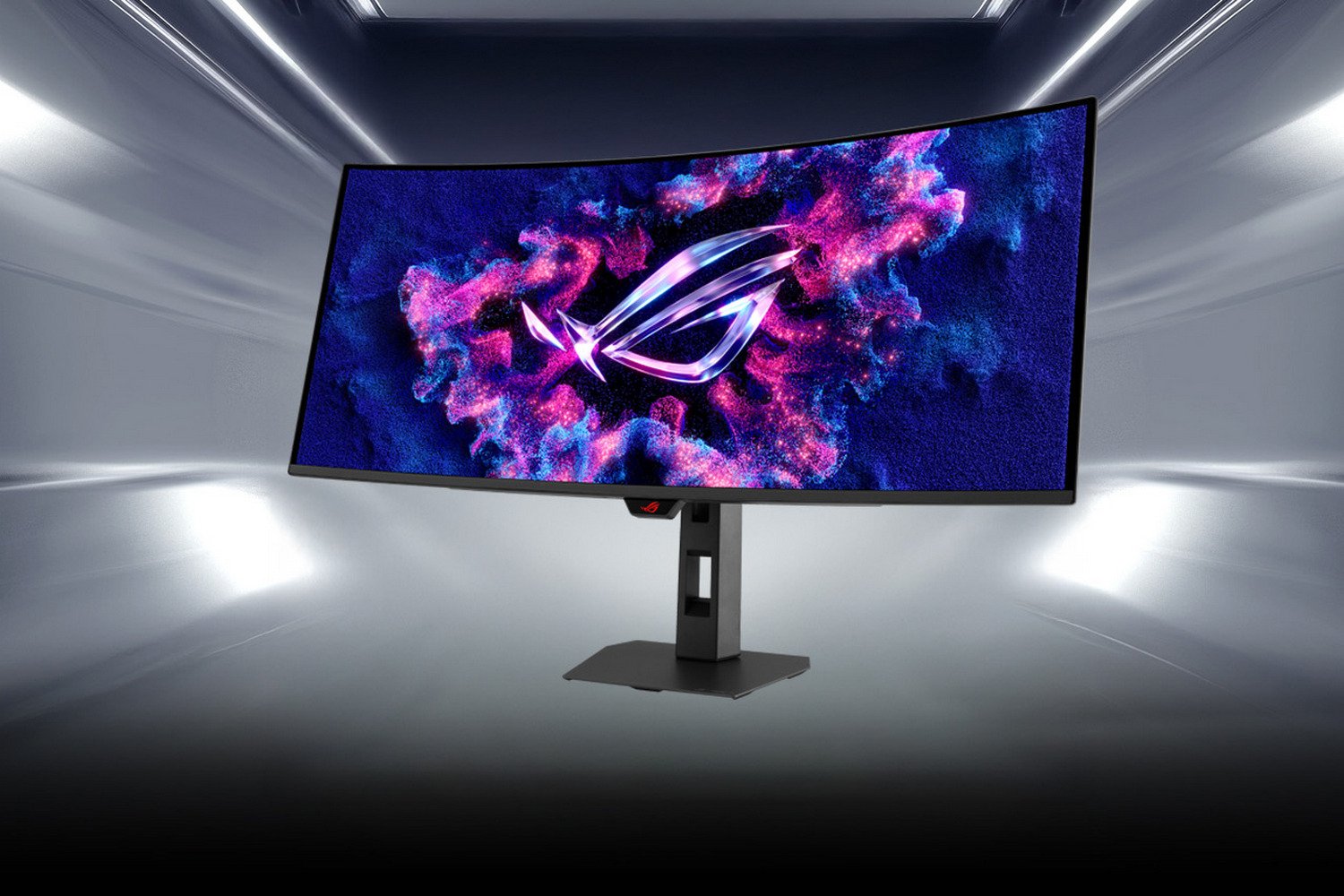
OLED Monitor Shipments Double Year Over Year in Q3 2026
The global OLED monitor market achieved a historic milestone in the third quarter of 2026 as total shipments doubled year over year, signaling mainstream adoption of premium display technology. This dramatic growth reflects maturing manufacturing processes, increased panel supply from Samsung Display and LG Display, and an unprecedented wave of new product launches across every price tier. According to fresh industry data from market research firms, the competitive landscape has shifted significantly, with MSI overtaking Samsung to claim second place in global OLED monitor rankings for the first time, while ASUS maintained its dominant lead at the top.
ASUS Extends Market Leadership with Comprehensive ROG Swift OLED Portfolio
ASUS continued its stranglehold on the OLED monitor market, powered by its extensive and well-differentiated ROG Swift OLED lineup that spans multiple form factors and use cases. The company’s strategy of covering every premium segment-from competitive esports to professional content creation to monitor-TV hybrids-has created a formidable moat.
The ASUS ROG Swift OLED PG27AQDM, a 27-inch 1440p 240Hz model, remains a bestseller among competitive gamers who prioritize motion clarity and low input lag. Its 0.03ms response time and 99% DCI-P3 color coverage make it a reference standard for 1440p high-refresh gaming. Meanwhile, the flagship ASUS ROG Swift OLED PG32UCDM, a 32-inch 4K 240Hz QD-OLED panel, has attracted professional content creators and enthusiasts alike with its exceptional color volume and HDR performance. The larger ASUS ROG Swift OLED PG42UQ, a 42-inch 4K 138Hz model, has also found traction among users seeking a monitor-TV hybrid experience for living room PC gaming and media consumption.
ASUS’s ability to secure consistent QD-OLED panel allocation from Samsung Display, combined with its proprietary custom heatsink designs and uniform brightness technology, has allowed it to maintain quality control while scaling volume. The company’s three-year warranty with burn-in coverage in many regions further strengthens consumer confidence.
MSI Surges to Second Place with Aggressive QD-OLED Product Strategy
MSI‘s rise to second place reflects an aggressive product launch cadence and improved QD-OLED panel supply throughout 2026. The company has focused heavily on high-refresh-rate gaming monitors that push specifications beyond established norms.
The MSI MPG 271QRX QD-OLED, a 27-inch 1440p 360Hz gaming monitor, has been widely praised for its exceptional motion clarity and color accuracy. Its 360Hz refresh rate combined with QD-OLED’s near-instantaneous pixel response delivers a competitive edge that resonates strongly with esports professionals. The ultrawide MSI MEG 342C QD-OLED, a 34-inch 3440×1440 175Hz curved display, has captured the sim-racing and immersive gaming crowd with its 1800R curvature and true 10-bit color depth. Additionally, the MSI MPG 321URX QD-OLED, a 32-inch 4K 240Hz model, directly competes with ASUS’s flagship in the high-end segment, often at a more aggressive price point.
MSI’s Graphene film cooling solution and OLED Care 2.0 suite of burn-in mitigation features-including pixel shift, static logo detection, and automatic brightness limiting-have addressed early adopter concerns about longevity. The company’s rapid firmware update cadence has also improved out-of-box experience significantly.
Samsung Drops to Third Despite Strong Odyssey OLED Line
Samsung slipped to third place despite a compelling Odyssey OLED range that continues to push design boundaries. The Samsung Odyssey OLED G9 G95SC, a massive 49-inch 5120×1440 240Hz super-ultrawide with 1800R curvature, remains a halo product that defines the category’s aspirations. The Samsung Odyssey OLED G8 G80SD, a 32-inch 4K 240Hz flat panel, targets both gamers and creators with its matte anti-glare coating and Smart TV platform integration. The more affordable Samsung Odyssey OLED G6 G60SD, a 27-inch 1440p 360Hz model, aims at the competitive esports segment with a distinctive core lighting design.
However, industry sources suggest supply constraints and pricing pressure may have limited Samsung’s shipment volumes this quarter. As both a panel manufacturer and monitor brand, Samsung faces inherent channel conflict when allocating its latest QD-OLED panels between its own Odyssey line and external partners like MSI, Dell, and others. Additionally, Samsung’s premium pricing strategy-while protecting margins-may have ceded volume to more aggressively priced competitors in a rapidly expanding market.
LG and Dell Climb Rankings with UltraGear and Alienware Innovations
LG advanced in the rankings behind its UltraGear OLED series, leveraging its position as a primary WOLED panel supplier through LG Display. The LG UltraGear 27GR95QE-B, a 27-inch 1440p 240Hz model, offers strong value with MLA (Micro Lens Array) technology boosting peak brightness. The LG UltraGear 32GS95UE-B, a 32-inch 4K 240Hz dual-mode display that can switch to 1080p 480Hz, introduces unique versatility for users who want both high resolution and ultra-high refresh rates. The massive LG UltraGear 45GR95QE-B, a 45-inch 3440×1440 240Hz curved ultrawide with 800R curvature, caters to immersion-focused users seeking a more enveloping field of view.
Dell’s Alienware brand also gained ground with its QD-OLED portfolio. The Alienware AW3423DWF, a 34-inch QD-OLED ultrawide, continues to sell well after its price adjustment made it one of the best value propositions in the category. The Alienware AW3225QF, a 32-inch 4K 240Hz QD-OLED, targets premium buyers with Dolby Vision support and CreatoriColor calibration. The new Alienware AW2725DF, a 27-inch 1440p 360Hz QD-OLED, enters the high-refresh competitive space with 360Hz at 1440p and NVIDIA G-SYNC Compatible certification.
Market Expansion Driven by Panel Supply Maturation and New Launches
The doubling of OLED monitor shipments reflects maturing QD-OLED and WOLED panel production from Samsung Display and LG Display. Increased manufacturing capacity at Gen 8.5 fabs has enabled more models at lower price points, expanding the addressable market beyond early adopters into mainstream enthusiast and even upper-midrange segments. With over a dozen new OLED monitors launched in the first three quarters of 2026 alone, competition is intensifying across every size and specification tier-from 27-inch 1440p 360Hz esports displays to 49-inch super-ultrawides and 42-inch 4K living room models.
This supply improvement has also enabled more aggressive pricing. Entry-level OLED monitors have dipped below the $800 threshold during promotional periods, a psychological barrier that significantly expands the potential buyer pool. Meanwhile, burn-in mitigation technologies have matured across all major brands, with multi-layered approaches combining hardware (heatsinks, graphene films), firmware (pixel refresh cycles, logo detection), and warranty policies (burn-in coverage) largely neutralizing the primary historical objection to OLED adoption.
Technology Deep Dive: QD-OLED vs WOLED in 2026
The current market is defined by two competing OLED panel technologies, each with distinct advantages. QD-OLED (Quantum Dot OLED), produced exclusively by Samsung Display, uses a blue OLED light source with quantum dot color conversion for red and green. This architecture delivers higher color volume, better viewing angle color consistency, and higher peak brightness in small highlight areas compared to WOLED. QD-OLED panels also achieve true RGB stripe subpixel layout, eliminating text fringing issues that can affect WOLED’s WRGB structure.
WOLED (White OLED), produced by LG Display, uses a white OLED emitter with color filters. The latest META / MLA (Micro Lens Array) generations have significantly closed the brightness gap, achieving 1000+ nits peak brightness in small windows. WOLED’s strengths include lower manufacturing cost, proven long-term reliability, and better full-screen brightness sustainability due to the white emitter’s efficiency. LG Display’s four-stack tandem OLED architecture in newer panels further improves longevity and brightness.
In 2026, both technologies have reached a level of maturity where panel choice matters less than implementation quality-thermal design, firmware tuning, warranty terms, and feature sets now differentiate products more than the underlying panel technology.
Consumer Implications: More Choice, Better Value, Faster Innovation
For consumers, the rapid expansion means more choices at every price point, better pricing driven by competition, and faster innovation as brands differentiate through features rather than just panel specs. The second-place battle between MSI and Samsung is particularly beneficial-both companies are forced to offer better value propositions, whether through higher refresh rates, more aggressive pricing, or enhanced feature sets like KVM switches, USB-C with 90W power delivery, and integrated streaming apps.
Buyers in late 2026 can expect sub-$1000 27-inch 1440p 240Hz OLEDs, sub-$1300 32-inch 4K 240Hz OLEDs, and sub-$1500 34-inch ultrawide OLEDs during major sales events. The 42-inch and 45-inch categories have also become more accessible, blurring the line between high-end monitors and premium TVs for PC users.
Outlook for Q4 2026 and Beyond
Analysts expect the momentum to continue into the holiday quarter, with Black Friday and Cyber Monday promotions likely to drive further volume. The battle for second place between MSI and Samsung will remain a key storyline, while ASUS appears well-positioned to defend its leadership given its product breadth and supply chain advantages. Several manufacturers have teased 2027 roadmap items including 480Hz QD-OLED panels, 5K2K (5120×2160) ultrawide formats, and dual-mode displays with wider switching ranges.
For the broader display industry, OLED’s growing monitor market share-now estimated at high single-digit percentage of total monitor shipments but over 20% of revenue-signals a structural shift toward premiumization. As production scales further, OLED could become the default choice for any monitor above $500 within the next 2-3 years, fundamentally reshaping the display market hierarchy.
FAQ
Why did MSI overtake Samsung in OLED monitor market share in Q3 2026?
MSI overtook Samsung due to aggressive product launches across key segments (27-inch 360Hz, 34-inch ultrawide, 32-inch 4K), improved QD-OLED panel supply allocation, competitive pricing, and strong burn-in mitigation features like OLED Care 2.0. Samsung faced supply constraints and channel conflict as both panel maker and monitor brand.
What is the difference between QD-OLED and WOLED panels in 2026 monitors?
QD-OLED uses blue OLED with quantum dot color conversion for higher color volume and true RGB stripe layout. WOLED uses white OLED with color filters, now enhanced with Micro Lens Array (MLA) for higher peak brightness. Both are mature; implementation quality matters more than panel type.
Which OLED monitor should I buy in late 2026 for competitive gaming?
For competitive gaming, the 27-inch 1440p 360Hz class (MSI MPG 271QRX, Samsung Odyssey G6, Alienware AW2725DF) offers the best motion clarity. The ASUS ROG Swift PG27AQDM at 240Hz remains excellent with proven reliability. Choose based on price, warranty, and feature preferences like KVM or USB-C PD.