US Offshore Wind Pause Sends Chills Through European Green Energy Markets
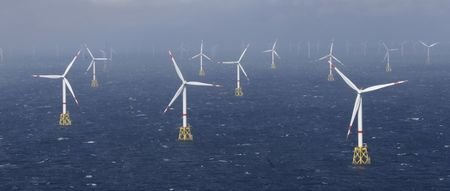
US Offshore Wind Freeze Impacts European Green Energy Investment
The European renewable energy sector has recently observed a tangible dip in share values, directly influenced by the United States’ decision to halt several significant offshore wind farm developments. This unanticipated move by Washington has injected considerable uncertainty into the global green energy landscape, particularly impacting investor sentiment and market stability across the European Union.
Industry analysts point to a confluence of factors behind the US government’s moratorium. Escalating construction costs, persistent supply chain disruptions, and complex permitting processes have rendered large-scale offshore wind projects in American waters less viable in the short term, leading to a strategic pause with international repercussions.
For numerous European companies deeply invested in offshore wind technology, the news from the United States represents a significant hurdle. Many European firms had earmarked the nascent US market as a crucial avenue for substantial expansion, aiming to leverage their extensive expertise to accelerate America’s transition towards cleaner energy sources.
The immediate impact is clearly reflected in stock market performance, with several prominent European renewable energy enterprises experiencing notable depreciation. Investors are reacting to the potential loss of future contracts and an amplified perception of risk associated with expansive renewable infrastructure projects, regardless of their geographical placement.
This episode underscores the intrinsic interconnectedness of global energy markets. Major policy decisions in one leading economy can rapidly propagate, influencing others. The US, a vital catalyst for offshore wind expansion, now necessitates a review of global market strategies due to its current recalibration.
Moreover, the slowdown in American offshore wind ambitions could indirectly affect financing and viability of similar projects within Europe. Financial institutions, observing operational hurdles in the US, may adopt a more cautious investment approach, potentially leading to increased borrowing costs for European developers and project delays.
This situation highlights the inherent volatility and policy dependence characteristic of the renewable energy sector. While the long-term drive towards a sustainable energy future remains strong, short to medium-term challenges, often triggered by political shifts or economic headwinds, can generate significant turbulence.
European policymakers and industry leaders are now closely tracking these developments, evaluating potential sustained impacts on national and regional energy transition programmes. A concerted effort is underway to safeguard the continent’s commitment to achieving net-zero emissions from external market shocks.
Looking ahead, the European Union may need to intensify efforts to stimulate domestic investment and further streamline its own regulatory processes to sustain momentum. The strategic focus will likely shift towards bolstering internal market conditions and reinforcing investor confidence through stable frameworks and attractive incentive mechanisms.
Ultimately, while the US offshore wind project freeze presents immediate challenges, the fundamental imperative driving the transition to renewable energy remains exceptionally strong. This event serves as a crucial lesson in the complexities of forging a sustainable energy future, emphasising agile strategies and resilient market architectures.