
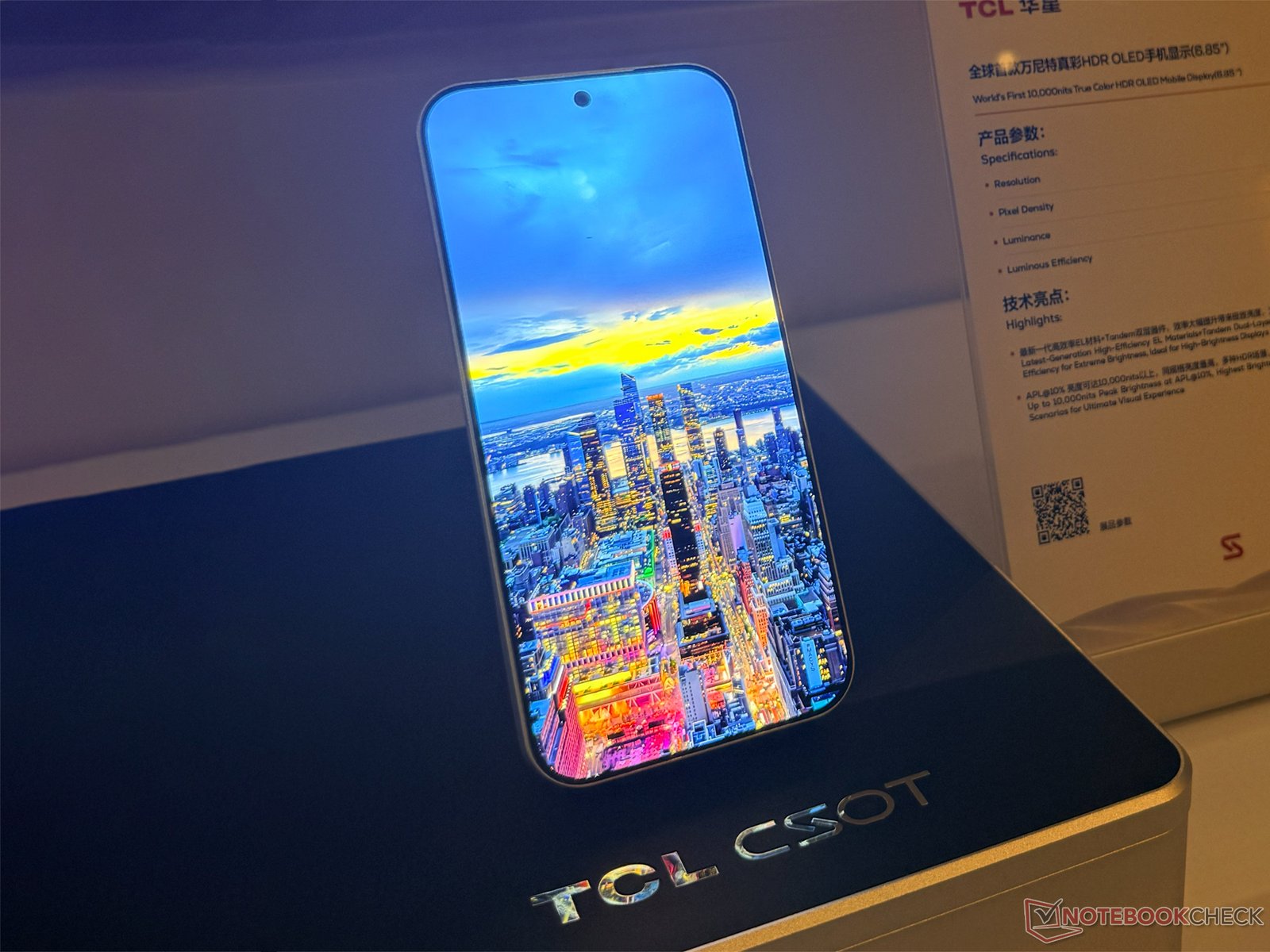
TCL CSOT Unveils 10000 Nits OLED Display at DTC 2026
TCL CSOT Reveals Groundbreaking OLED Technology at DTC 2026
TCL CSOT has stolen the spotlight at Display Technology Conference 2026 with the unveiling of what it claims to be the world first HDR OLED display for 6.85 inch smartphones featuring an unprecedented peak brightness of 10000 nits at 10 percent APL. This prototype represents a massive leap forward in mobile display technology and sets a new benchmark for the entire industry.
Breaking Down the 10000 Nits Milestone
The demonstration at DTC 2026 showcases a 6.85 inch OLED panel capable of reaching 10000 nits peak brightness at 10 percent average picture level. This achievement dwarfes current flagship smartphone displays which typically max out between 2000 and 3000 nits. The technology utilizes advanced tandem OLED architecture combined with new blue phosphorescent materials to achieve this extraordinary luminance while maintaining power efficiency.
Industry analysts suggest this breakthrough could arrive in consumer devices as early as late 2026 or early 2027. Potential candidates for first adoption include the Samsung Galaxy S26 Ultra, iPhone 17 Pro Max, Xiaomi 16 Ultra, and OnePlus 13 Pro. These flagship devices have historically pushed display boundaries and would benefit immensely from such extreme brightness capabilities.
Real World Benefits for Smartphone Users
The practical implications of 10000 nits peak brightness extend far beyond marketing numbers. Outdoor visibility under direct sunlight would improve dramatically making content readable in even the harshest lighting conditions. HDR content playback would gain incredible highlight detail with specular reflections and bright light sources appearing genuinely lifelike rather than clipped.
Gaming experiences on devices like the ASUS ROG Phone 9 or RedMagic 10 Pro would see enhanced visibility in bright scenes while maintaining deep blacks in dark areas thanks to OLED per pixel illumination. Content creators using smartphones for on the go photo and video review would gain reference grade accuracy in challenging environments.
Technical Challenges and Implementation Timeline
Despite the impressive demo several hurdles remain before mass production. Thermal management at such extreme brightness levels requires sophisticated solutions to prevent panel degradation. Power consumption during sustained high brightness operation must be optimized to maintain acceptable battery life. TCL CSOT engineers indicated they have developed new heat dissipation structures and adaptive brightness algorithms to address these concerns.
The company also demonstrated a secondary prototype featuring improved longevity characteristics suggesting they are actively solving the burn in risks associated with ultra high brightness OLED operation. This dual approach indicates serious commercialization intent rather than mere technology demonstration.
Competitive Landscape and Industry Impact
Samsung Display and LG Display have both been working on similar high brightness OLED technologies but have not publicly demonstrated 10000 nits at smartphone scale. This gives TCL CSOT a significant first mover advantage in marketing and potential supply agreements. Chinese smartphone manufacturers including Vivo, Oppo, and Honor are likely to be early adopters given their close relationships with TCL CSOT.
The ripple effects could accelerate adoption of tandem OLED across the mid range segment as manufacturing yields improve and costs decrease. Google Pixel 10 Pro and Nothing Phone 3 might leverage this technology to differentiate in competitive markets.
What This Means for Future Smartphone Design
Beyond raw brightness this advancement enables new form factors and use cases. Foldable devices like the Samsung Galaxy Z Fold 7 and Huawei Mate X7 could benefit from brighter more durable internal displays. Augmented reality applications on smartphones would gain viability with displays bright enough to overcome optical passthrough losses.
As TCL CSOT moves toward mass production the smartphone industry stands at the threshold of a display revolution that will redefine user expectations for mobile visual experiences. The 10000 nits barrier has been broken and the implications will resonate through product roadmaps for years to come.