
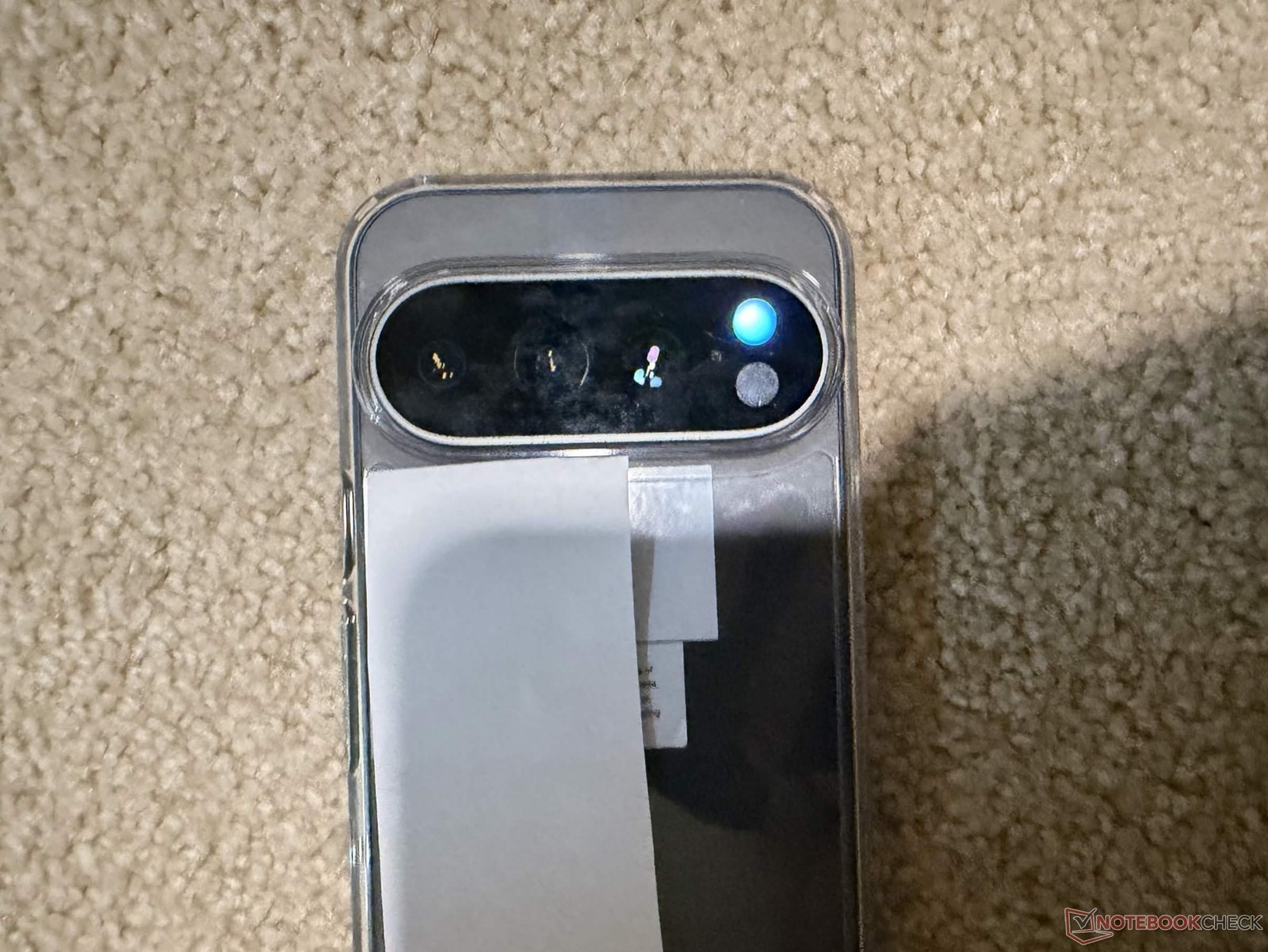
Google Pixel 11 Pro Prototype Reveals HiLight Beside Unusable Temperature Sensor
Exclusive Pixel 11 Pro Prototype Surfaces
Leaked images of a working Google Pixel 11 Pro EVT1.0 prototype built in 2025 have surfaced online, offering a rare glimpse into the search giant’s next flagship development cycle. The engineering validation test unit reveals a distinctive HiLight indicator glowing beside a temperature sensor window that appears non-functional on this early hardware revision. This discovery suggests Google is experimenting with advanced sensor integration well ahead of the Pixel 11 series expected launch window, following a pattern seen with previous Pixel generations where EVT prototypes surface months before official announcements.
HiLight Feature Spotted on EVT1.0 Hardware
The HiLight system, previously rumored for Pixel devices, appears as a subtle glowing element near the rear camera array on this prototype. Unlike the notification LEDs found on older Android handsets such as the Samsung Galaxy S25 series or OnePlus 13 models, HiLight seems designed as an always-on ambient indicator capable of displaying contextual information through color and pulse patterns. Sources familiar with Google’s hardware roadmap indicate this feature may tie into the Gemini AI assistant ecosystem, providing visual feedback for voice commands, incoming notifications, or smart home status without requiring the display to activate. The implementation on this EVT1.0 unit appears production-ready in terms of physical integration, though software control remains rudimentary.
Temperature Sensor Window Present But Inactive
Perhaps the most intriguing aspect of these prototype photos is the clear presence of a temperature sensor window positioned adjacent to the HiLight module. The cutout matches specifications for a thermopile-based infrared sensor similar to those deployed in the Apple Watch Series 10 and Galaxy Watch Ultra for wrist-based temperature tracking. However, firmware analysis of this EVT1.0 unit confirms the sensor remains unconnected to the mainboard’s I2C bus, rendering it incapable of data acquisition. This mirrors Google’s approach with the Pixel 8 Pro’s object temperature sensor, which launched with limited functionality before gaining expanded use cases through software updates. The Pixel 11 Pro appears to follow a similar hardware-first, software-later strategy.
Google’s Sensor Strategy Compared to Rivals
While Apple has tightly integrated temperature sensing into the Apple Watch Series 10’s cycle tracking and sleep analysis features, and Samsung leverages comparable hardware in the Galaxy Watch Ultra for workout optimization, Google’s smartphone implementation remains unique in the Android space. The Pixel 8 Pro introduced an object temperature sensor marketed for measuring cooking surfaces and baby bottles, but adoption remained niche. Competitors like the iPad Air M2 lack dedicated thermal sensors entirely, relying on internal thermals for throttling management. Google’s decision to include a second-generation temperature sensor on the Pixel 11 Pro prototype suggests renewed commitment to this differentiator, potentially enabling body temperature monitoring if regulatory clearance is obtained — a feature currently exclusive to wearables from Apple and Samsung.
What This Means for Pixel 11 Series Launch
The EVT1.0 designation indicates this prototype represents an early engineering validation stage, typically occurring six to nine months before mass production. Given the 2025 build date visible on the device’s regulatory labels, the Pixel 11 Pro remains on track for a fall 2025 announcement alongside the standard Pixel 11 and potential Pixel 11 Pro XL variant. The HiLight feature appears further along in development than the temperature sensor, suggesting it may debut as a headline feature while thermal capabilities arrive via post-launch updates. This staged rollout aligns with Google’s recent hardware philosophy of shipping ambitious hardware foundations and unlocking potential through quarterly Pixel Feature Drops, a strategy that has differentiated the Pixel line from more static offerings like the iPhone 16 Pro series.