Revolutionary 4D Vision: UK Robotics Breakthrough with Advanced Imaging Sensor
Unlocking 4D Vision in Robotics: A UK Innovation
Imagine a world where robots can analyse their surroundings in exquisite detail, capturing both the colour and depth of their environment. Researchers in the UK have made this a reality by developing an innovative imaging sensor that gives robots 4D vision. This breakthrough technology has the potential to revolutionise the field of robotics, enabling machines to navigate and interact with their surroundings with unprecedented precision.
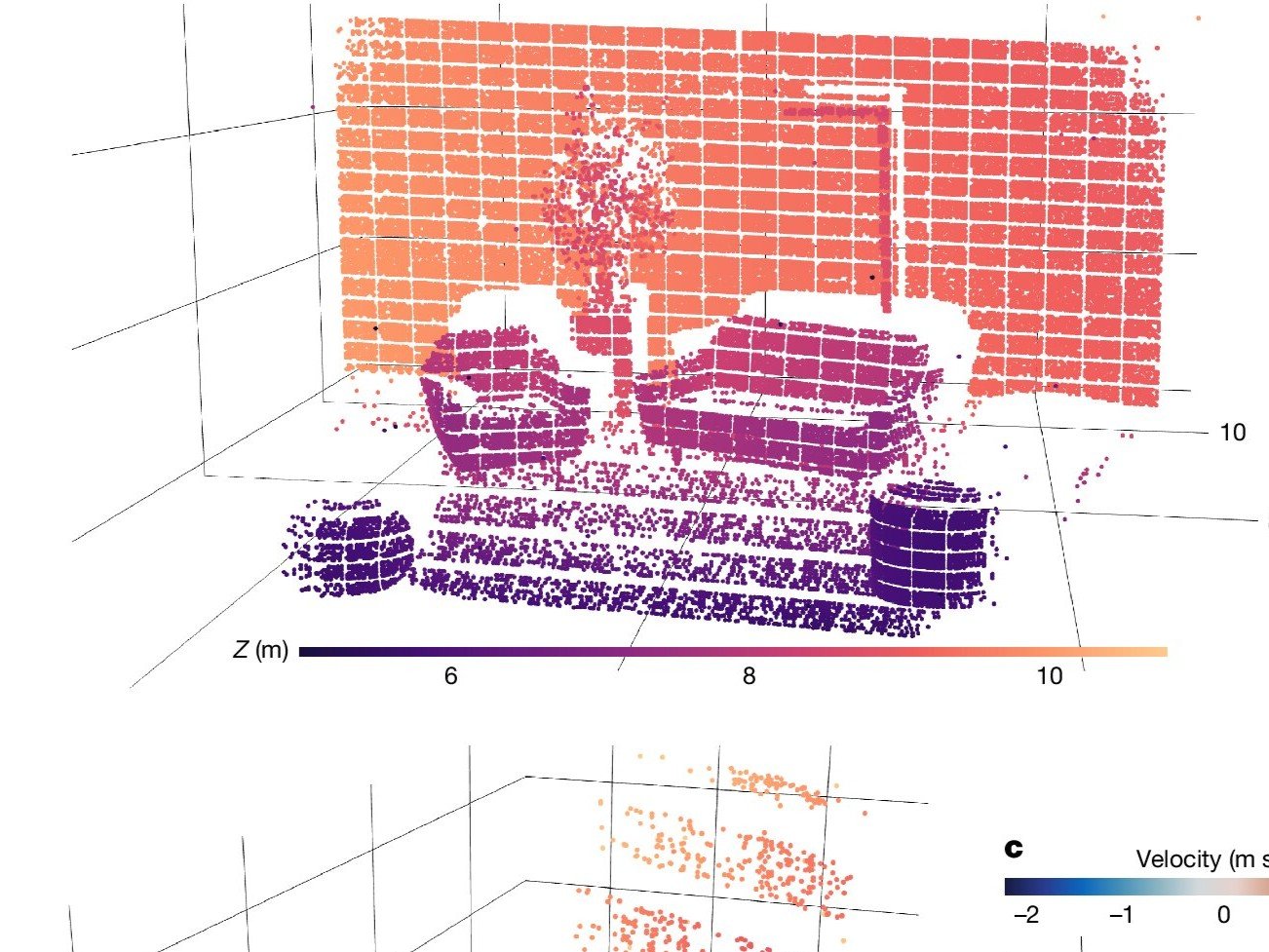
The new imaging sensor is the result of a groundbreaking project that involved integrating over half a million microscopic components onto a single silicon chip. This remarkable achievement has enabled the creation of an advanced camera system that can map three-dimensional environments and measure the velocity of moving objects simultaneously. By combining these capabilities, robots equipped with this sensor can build a comprehensive understanding of their surroundings, allowing them to behave in a more intelligent and autonomous manner.
The implications of this technology are far-reaching, with potential applications in a wide range of fields, from manufacturing and logistics to healthcare and transportation. In the UK, researchers are already exploring ways to utilise this technology to improve the safety and efficiency of robotic systems, enabling them to operate with greater precision and accuracy in complex environments. As the technology continues to evolve, we can expect to see significant advances in the field of robotics, driven by the development of more sophisticated sensors and imaging systems.
The development of this 4D vision technology is a testament to the power of innovation and collaboration in the UK. By bringing together experts from a range of disciplines, researchers have been able to push the boundaries of what is possible, creating a new generation of robotic systems that are capable of interacting with their surroundings in a more intelligent and intuitive way. As we look to the future, it is exciting to think about the potential applications of this technology, and how it could be used to improve our daily lives and transform the way we work and interact with the world around us.
The UK is at the forefront of this technological revolution, with researchers and industry leaders working together to develop and deploy this innovative technology. With its strong track record of innovation and collaboration, the UK is an ideal location for the development and testing of new robotic systems, providing a unique combination of academic expertise, industrial partnerships, and government support. As the demand for more sophisticated robotic systems continues to grow, the UK is well-placed to play a leading role in shaping the future of this exciting and rapidly evolving field.
In conclusion, the development of 4D vision technology is a significant breakthrough that has the potential to transform the field of robotics. With its ability to capture both the depth and velocity of moving objects, this innovative imaging sensor is set to revolutionise the way robots interact with their surroundings, enabling them to behave in a more intelligent and autonomous manner. As researchers continue to explore the possibilities of this technology, we can expect to see significant advances in the development of more sophisticated robotic systems, driving innovation and growth in a wide range of industries and applications.