Moon Landings: Russia’s Stance
Debunking Moon Landing Conspiracy Theories
The Moon landings have been a topic of debate for decades, with some arguing they were faked. However, Russia’s behaviour during the Cold War era provides evidence to the contrary. The Soviet Union had a vested interest in disproving the US’s achievement. Their failure to do so speaks volumes about the authenticity of the landings. The Russians had the capability to analyse the Apollo missions.
Their own lunar programme was well underway, with several successful unmanned missions. If the US had faked the landings, it is likely the Russians would have exposed them. The Soviet Union’s silence on the matter suggests they were convinced of the landings’ authenticity. This is further supported by the lack of any credible evidence to support the conspiracy theories.
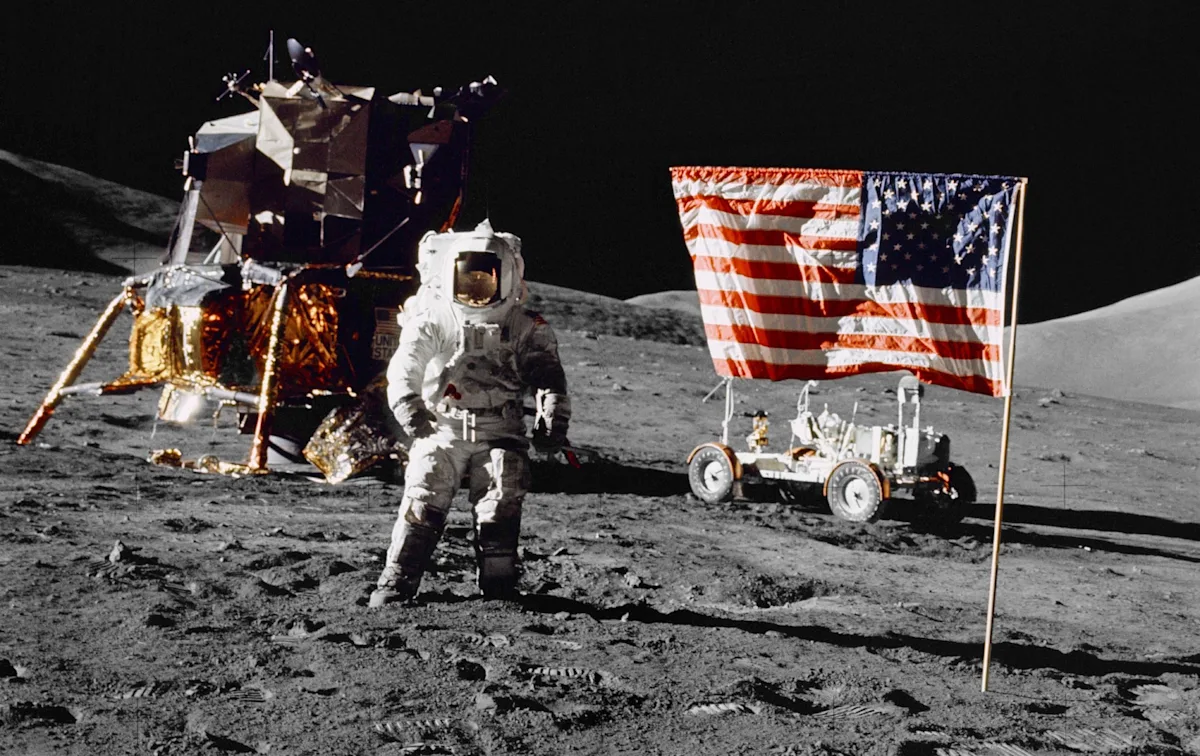
Despite this, conspiracy theories continue to abound. Many point to supposed inconsistencies in the images and footage from the Apollo missions. However, these claims have been thoroughly debunked by experts. The colours and lighting in the images are consistent with the conditions on the Moon’s surface. The footage of the astronauts walking on the Moon’s surface is also consistent with the low gravity environment.
In conclusion, while the Moon landings may seem like a distant memory, they remain an important part of history. Russia’s stance on the matter provides valuable insight into the authenticity of the landings. As we continue to explore space, it is essential to separate fact from fiction and give credit where credit is due. The Moon landings were a remarkable achievement that paved the way for future space travel.
The legacy of the Apollo missions can still be seen today. Many of the technological advancements made during the programme have been used in modern space exploration. The International Space Station, for example, owes a debt of gratitude to the Apollo programme. The experience and knowledge gained during the Moon landings have been invaluable in the development of modern space travel.
Furthermore, the Moon landings have also had a significant impact on the field of science. The samples brought back from the Moon have provided scientists with a unique insight into the Moon’s composition and history. The data collected during the Apollo missions has also helped scientists to better understand the Moon’s behaviour and its relationship with the Earth.
In addition to the scientific benefits, the Moon landings have also had a profound impact on society. The achievement of landing humans on the Moon captured the imagination of people around the world. It inspired a generation of scientists, engineers, and explorers, and helped to fuel interest in space travel and exploration. The Moon landings also marked a significant milestone in the Cold War, as the US and the Soviet Union engaged in a peaceful competition to explore space.
Today, as we look to the future of space travel, it is essential to remember the lessons of the past. The Moon landings were a remarkable achievement that demonstrated the power of human ingenuity and determination. As we continue to push the boundaries of space exploration, we must also recognize the importance of international cooperation and peaceful competition. The Moon landings may have been a product of the Cold War era, but their legacy extends far beyond the confines of that period.
In the years since the Moon landings, there have been many advances in space technology. The development of new materials and propulsion systems has made space travel more efficient and cost-effective. The use of robotics and artificial intelligence has also become more prevalent, allowing for more complex and sophisticated space missions. Despite these advances, however, the basic principles of space exploration remain the same.
The Moon landings were a testament to human curiosity and the desire to explore and discover. They marked a major milestone in the history of space travel and paved the way for future missions to the Moon and beyond. As we continue to explore space, it is essential to remember the achievements of the past and to build on the knowledge and experience gained during the Apollo programme. By doing so, we can ensure that future space missions are successful and that we continue to push the boundaries of what is possible.