Huawei Watch Air Titanium Smartwatch Set To Be Thinnest Ever
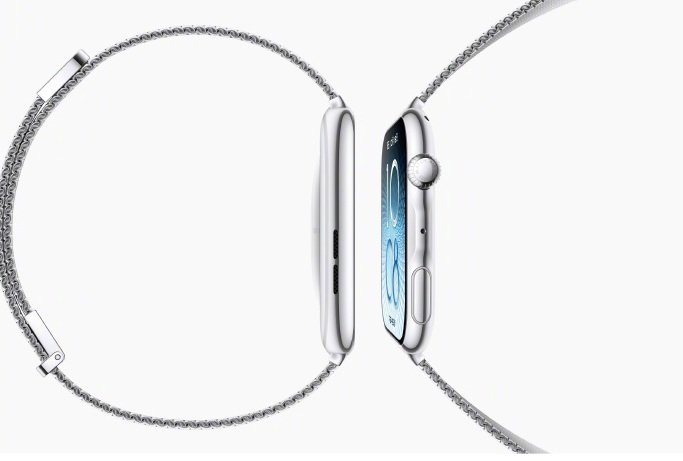
Huawei Unveils Watch Air With Titanium Unibody Design
Huawei has officially confirmed the upcoming launch of what could be its most ambitious smartwatch yet. The Huawei Watch Air will debut next week featuring a titanium-alloy unibody construction and an incredibly thin physical profile that aims to claim the title of world’s thinnest smartwatch. This announcement positions the Chinese tech giant to compete directly with established players like the Apple Watch Series 10 and Samsung Galaxy Watch 7 in the premium wearable market.
Revolutionary Titanium Construction Redefines Durability
The Watch Air’s titanium-alloy unibody represents a significant engineering achievement. Unlike the stainless steel cases found on the Apple Watch Series 10 or the aluminum frames of the Samsung Galaxy Watch 7, Huawei’s titanium construction offers an exceptional strength-to-weight ratio. This material choice allows for ultra-thin walls while maintaining structural integrity, potentially making the Watch Air lighter than the Google Pixel Watch 3 which weighs approximately 30 grams.
Titanium’s hypoallergenic properties also make it ideal for users with sensitive skin who experience irritation from nickel-containing stainless steel. The material’s natural corrosion resistance means the Watch Air should maintain its premium appearance longer than competitors using lesser alloys.
Ultra-Thin Profile Challenges Industry Standards
Current thinness benchmarks in the smartwatch category are held by devices like the Apple Watch Series 10 at roughly 9.7mm and the Samsung Galaxy Watch 7 at approximately 9.8mm. If Huawei delivers on its thinnest-ever claim, the Watch Air would need to measure under 9mm while still accommodating a meaningful battery, comprehensive sensor suite, and robust connectivity options including 4G LTE and Wi-Fi 6.
Achieving this profile requires innovations in component miniaturization, potentially including custom silicon similar to Apple’s S10 SiP or Samsung’s Exynos W1000. The Watch Air may leverage Huawei’s in-house Kirin chipset optimized for wearable form factors.
Health Tracking Capabilities Target Premium Segment
To justify its likely premium positioning above the Apple Watch Series 10’s $399 starting price, the Huawei Watch Air must deliver comprehensive health monitoring. Expected features include continuous heart rate tracking, SpO2 measurement, sleep stage analysis, stress monitoring, and ECG functionality comparable to the Samsung Galaxy Watch 7’s FDA-cleared electrocardiogram.
Advanced metrics like body composition analysis via bioelectrical impedance — a feature introduced on the Samsung Galaxy Watch 6 — could differentiate the Watch Air. Integration with Huawei’s Health app ecosystem provides longitudinal trend analysis that rivals Apple’s Fitness+ platform.
Battery Life Expectations For Ultra-Thin Design
The primary challenge for any ultra-thin smartwatch remains battery endurance. The Apple Watch Series 10 achieves 18 hours typical use while the Samsung Galaxy Watch 7 reaches 30 hours with its 300mAh cell. Huawei’s previous Watch GT series demonstrated multi-day battery life through aggressive power management and LTPO display technology.
If the Watch Air incorporates similar efficiency optimizations alongside a silicon-carbon anode battery — technology appearing in smartphones like the Xiaomi 15 Pro — it could achieve 48-hour runtime despite its slender profile. Wireless charging and reverse wireless charging from compatible Huawei smartphones like the Pura 70 Ultra would enhance convenience.
Software Experience And Ecosystem Integration
The Watch Air will likely run HarmonyOS 5, Huawei’s proprietary operating system optimized for cross-device collaboration. This enables seamless interaction with Huawei smartphones, tablets like the MatePad Pro 13.2, and laptops such as the MateBook X Pro 2024.
Third-party app support remains a consideration compared to watchOS on Apple Watch Series 10 or Wear OS 5 on Samsung Galaxy Watch 7. However, Huawei’s Petal Maps, Petal Search, and growing developer ecosystem provide core functionality for navigation, voice assistance, and contactless payments via Huawei Wallet.
Market Positioning And Competitive Landscape
Launch timing suggests Huawei aims to capture holiday season demand alongside the Apple Watch Series 10 and Samsung Galaxy Watch 7. Pricing will determine whether the Watch Air targets the premium tier above $500 or the mid-range segment around $350-$400 occupied by the Google Pixel Watch 3.
Availability outside China remains uncertain given ongoing trade restrictions affecting Huawei’s access to Google Mobile Services. However, the Watch Air’s standalone connectivity reduces dependency on smartphone pairing for core functions.
Industry Implications For Wearable Design
The Huawei Watch Air‘s titanium unibody and ultra-thin profile could accelerate industry adoption of premium materials beyond stainless steel and aluminum. Competitors including Apple, Samsung, and Google may respond with titanium variants of their flagship watches, following the smartphone trend where titanium frames debuted on iPhone 15 Pro and Galaxy S24 Ultra.
This push toward thinner, lighter wearables addresses consumer demand for 24/7 wearability including sleep tracking comfort. The Watch Air’s success could establish titanium as the new standard for premium smartwatches, much as ceramic and sapphire crystal elevated the category previously.