Discover the Best Xiaomi Phones Available in the UK
Discover the Best Xiaomi Phones Available in the UK
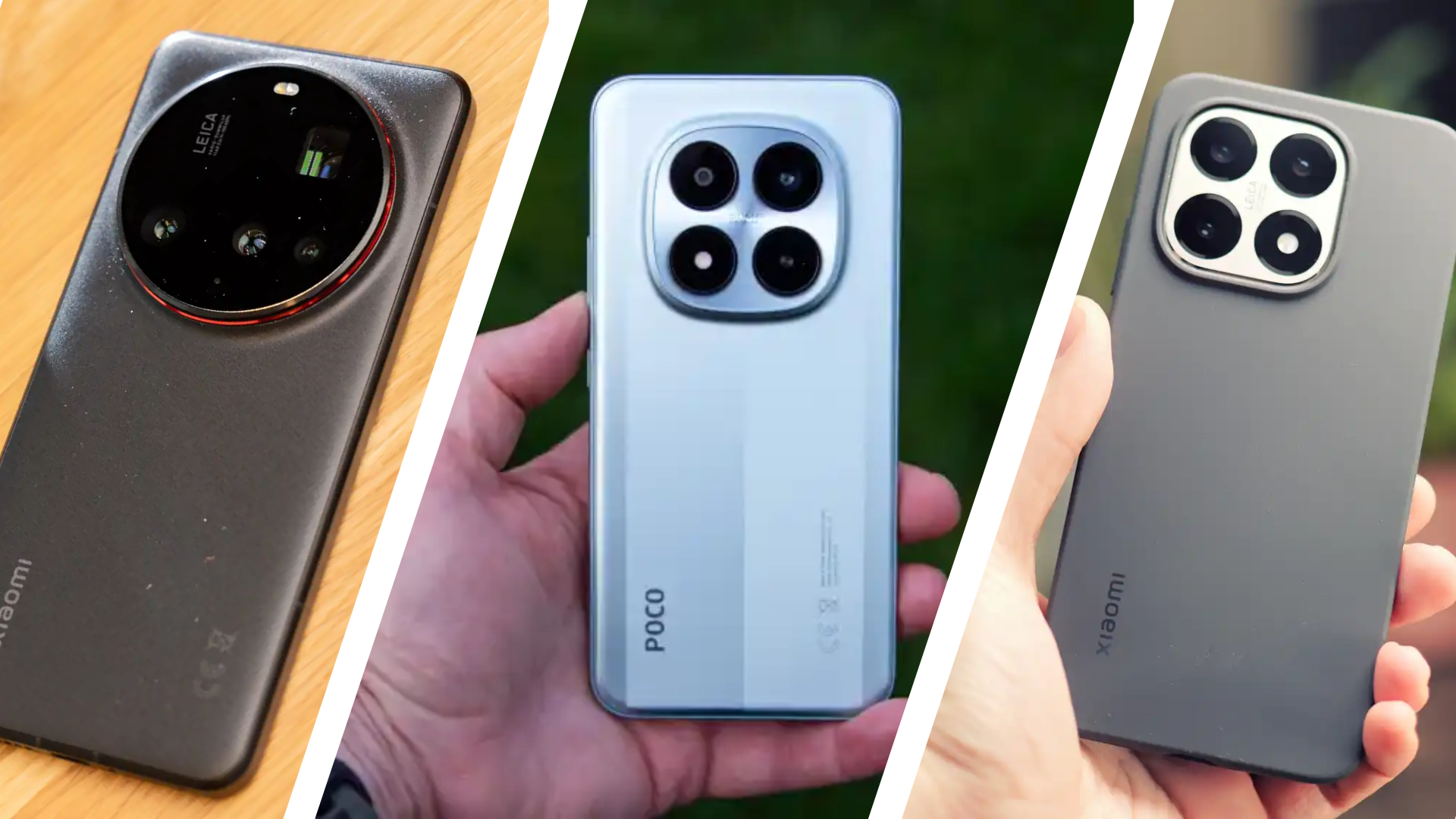
Xiaomi has become one of the most prolific contenders in the smartphone industry, offering handsets that provide outstanding value to consumers.
Despite fierce competition from other Chinese brands, Xiaomi’s phones regularly make an appearance in our best phones list.
The company’s multi-faceted approach ensures a steady presence amongst the best budget phones and the best mid-range phones.
Xiaomi’s phones often put companies more familiar in the West, like Apple and Samsung, to shame with their top-of-the-line processors, cameras, and displays.
The battery life and charging speeds also tend to be outstanding across the entire range of Xiaomi phones, with many making the possibility of two days of use an easy milestone to hit.
All the phones below are available in the UK, but not all of them are sold in the US.
On a different budget, see our dedicated guides to the budget phones and best phones overall.
Xiaomi had us absolutely floored with the Xiaomi 14T Pro, and now the company’s done it yet again with a successor that’s better in every way.
The Xiaomi 15T Pro is in that sweet spot of still being within the price bracket to be considered amongst the best mid-range phones, but just cheap enough to outdo handsets like the Galaxy S25 and the standard iPhone 17.
In typical Xiaomi fashion, the 15T Pro offers an array of features that feel far more in line with what you’d get at the higher end of the market.
The MediaTek Dimensity 9400+ chipset, for example, while it doesn’t quite match the highs of the Snapdragon 8 Elite, still operates at a very high level with excellent everyday performance and benchmarking results that aren’t that far behind.
The battery has had a major upgrade here, jumping forward to a 5500mAh offering that can last for up to two days at a time, depending on how you use it.
Thankfully, when you do need to top up the phone, you now have 90W wired and 50W wireless charging at your disposal.
The former can net you 80% after just a 30-minute charge.
The more powerful chipset, upgraded charging speeds, faster 144Hz refresh rate and a 5x telephoto lens are the key reasons why you would want to buy this phone over the standard Xiaomi 15T, but if you’d rather save some money, then the 15T itself is no slouch and offers quite a few similar features, including the same-sized battery and display.
As much as we loved the Xiaomi 15T Pro, and it’s well worth the upgrade if your budget can stretch to meet its price tag, the Xiaomi 15T offers a brilliant alternative that more closely matches the cost of the Pixel 9a and the iPhone 16e, whilst offering quite a few flagship features that those phones do not have.
The big upgrades this year are an enlargement of both the display and the battery life.
On the former, users now get to enjoy a gigantic 6.83-inch 120Hz OLED panel, which, as you can imagine, is great for streaming content when you’re at home or on the commute.
It’s also very easy to see when you’re outdoors, so you won’t have to squint if you’re trying to order a train ticket on your way to the station.
With regards to battery life, you can expect to reach a full two days of use from the 5500mAh cell included, so even if you are a heavier user who likes to use their phone as a hotspot or even dive into a bit of gaming, then you won’t have any battery anxiety with safely reaching the end of the day.
The phone itself has a very premium aesthetic that, at first glance, makes it look nothing like a mid-range phone.
The only reason why you might shop for one of its competitors is to get a better software experience, particularly as HyperOS still can’t compete with Google’s stock Android, but on the hardware front, Xiaomi is king.
Xiaomi had us absolutely floored with the Xiaomi 15, and now the company’s done it yet again with a successor that’s better in every way.
The Xiaomi 15 is in that sweet spot of still being within the price bracket to be considered amongst the best budget phones, but just cheap enough to outdo handsets like the Galaxy A57 and the standard iPhone 17.
In typical Xiaomi fashion, the 15 offers an array of features that feel far more in line with what you’d get at the higher end of the market.
The Qualcomm Snapdragon 7s Gen 4 chipset, for example, while it doesn’t quite match the highs of the Snapdragon 8 Elite, still operates at a very high level with excellent everyday performance and benchmarking results that aren’t that far behind.
The battery has had a major upgrade here, jumping forward to a 5240mAh offering that can last for up to two days at a time, depending on how you use it.
Thankfully, when you do need to top up the phone, you now have 90W wired and 50W wireless charging at your disposal.
The former can net you 80% after just a 30-minute charge.
The more powerful chipset, upgraded charging speeds, faster 144Hz refresh rate and a 5x telephoto lens are the key reasons why you would want to buy this phone over the standard Xiaomi 15, but if you’d rather save some money, then the 15 itself is no slouch and offers quite a few similar features, including the same-sized battery and display.
At a time when even Xiaomi itself continues to hop aboard the industry bandwagon of aiming for increasingly larger displays, it’s nice to still have an option available for folks who prefer the idea of a smartphone that can be comfortably used one-handed.
Thankfully, that’s exactly where the Poco M8 Pro comes in.
This entry-level model to the flagship Poco M8 range has a nicely compact 6.83-inch display, which can easily be reached by your thumb and doesn’t require any gymnastics to reach any apps or icons at the top.
Still, with AMOLED technology and a 1-120Hz refresh rate, it pops with enough colour to make for an enjoyable viewing experience.
Its battery life is also surprising, given that you’d typically expect something of a downgrade in this department when dealing with a smaller phone.
In spite of its stature, there’s still a massive 6500mAh cell included under the hood, which can then be topped up quickly via 100W wired charging.
The triple rear-facing cameras do an incredible job of handling pretty much every scenario you could want to throw at them, with low-light shots packing plenty of colour and detail, whilst daytime photos have a certain professional quality about them that draws you in.
At £299, the phone does cost quite a bit less than entry-level flagships from Apple and Samsung, but for what you get here, the added expense is easily justified.
If you’re shopping in the mid-range market and are tempted by the likes of the Pixel 10a or the Galaxy A57, you might want to hold off and give the Poco F8 Pro a look instead.
Poco’s Pro-level phone has long since provided tons of flagship features for a mid-range price, but now you can get even more bang for your buck in the F8 Pro.
Starting at just £549, the real allure of the F8 Pro is that, in its design, there’s no sense of compromise to be found anywhere.
It boasts a glass-backed chassis that feels great in the hand and is more than ready to withstand the elements with an IP68 rating.
On top of that you’re getting superb performance thanks to the epic Snapdragon 8 Elite chipset, which just boggles the mind as it’s typically reserved for much pricier handsets.
The big change over the Poco F7 Pro is that the newer model comes with an all-new 50Mp telephoto lens with 2.5x optical zoom.
With that third lens in tow, it’s much easier to pick up detailed shots of subjects from a distance, and as much as we love the photos you can pick up from Google’s A-series of smartphones, they do not have a telephoto lens of their own right now, so you’re getting a more versatile set-up here.
The only area where the likes of Samsung and Google really do have the upper hand is in software support.
Xiaomi has promised only four years of software updates from the time of launch, alongside six years of security patches.
While a lot better than previous years, it’s far from ideal for folks who want to put off upgrading again for quite some time.
Let’s get the obvious out of the way first – yes, the Poco F8 Ultra is arguably one of the nicest looking phones around right now.
It’s the Denim Blue option in particular that stands out for us as there really isn’t another handset out there that features such a backing, and it feels great in the hand too.
It’s almost as if the F8 Ultra is singlehandedly trying to show that phones don’t have to be homogeneous in 2026.
In terms of specs, you’re getting a larger 6.9-inch display that gives off quite a cinematic feel owing to its stature, which can really draw you in.
If you don’t have a pair of headphones to hand, then the Bose-engineered onboard speakers are easily some of the best that we’ve ever seen on a smartphone, with a tangible sense of bass and weight to the dialogue.
The biggest upgrade of them all relates to the battery, which has now leapt from 5,300mAh on the F7 Ultra to a whopping 6,500mAh.
There’s also 100W wired fast charging, which, according to Poco, can net you a full battery in just 38 minutes, although you’ll need to splurge for a compatible charger.
It’s a shame then that for all the flagship prowess that the F8 Ultra delivers, you don’t get the same flagship-level software support as what you’ll find on similarly priced handsets from Apple and Samsung.
To get just four years of OS updates when you’re paying a minimum of £749 is absurd, and we’d like to see Xiaomi rectify this in the F8 Ultra’s eventual successor.
The Redmi series has long been a great, go-to option for anyone sniffing around the budget end of the market and that sentiment continues with the Xiaomi Redmi Note 15 Pro.
In terms of its core principles, the Note 15 Pro nails it on the main camera, the display and the available battery life so if those are the features most important to you then you’ll appreciate what Xiaomi’s put together here.
Starting with the camera, the main 200Mp wide lens is a true beauty, capturing so much colour and detail that even if you crop into a photo, it doesn’t feel as if you’re losing a ton of quality in the process.
There is an 8Mp ultrawide lens on board but it doesn’t come anywhere near the prowess of that main 200Mp snapper.
When it comes to lining up your shots, the massive 6.83-inch display is perfect for the job, and with minimal bezels surrounding it, you can really settle in for a great streaming experience too.
Colours are vibrant and the 3200 nits of peak brightness allow it to be used outside without issue.
It’s all backed up by a 6580mAh battery that, from our testing, can run for up to two days between charges.
Holding the Redmi Note 15 Pro back from greatness is the bloatware bundled in with Xiaomi’s HyperOS.
There isn’t a great deal of optimisation for the software to work with Google’s ‘Material You’ UI either, and if you’re someone who’s obsessed with having a smooth UI then there’s a good chance that you’ll be clamouring for the nearest Samsung instead.
If you want a smartphone dedicated to photography, the Xiaomi 14 Ultra is the best previous-gen model you can buy.
The phone boasts an incredible Leica quad camera system, with OIS and a huge 1-inch sensor on the main 50Mp snapper.
It even comes with an optional Photography Kit, which transforms it into a rival for compact mirrorless DSLRs.
The Xiaomi 14 Ultra has a distinctive design, along with a durable IP68 rating.
Combined with the 6.7-inch AMOLED 120Hz curved display and 90W fast charging, this smartphone is a true premium option.
All those features are reflected in its high price tag.
However, if your budget can stretch that far, then this can still take some of the best photos of any smartphone, period.
The Xiaomi Mix Flip is the first attempt at a foldable for the Western market from the brand, and its first-generation build is pretty apparent compared to its biggest rivals, which cost less but offer more.
Performance is a strong point for this foldable, as it’s fitted with a Snapdragon 8 Gen 3 processor.
Therefore, if you’re looking for a flip phone that can also handle large games or heavy-duty tasks, you should consider this one.
The 4780mAh battery is also impressive, giving one and a half day’s worth of usage on average.
That said, there’s no water resistance rating, the software is clunky and the outer screen experience needs improvement.
If the phone gets a big discount during sale seasons such as Black Friday, then it may be worth considering.
Otherwise, there are better foldables out there such as the Samsung Galaxy Z Flip 6 and the Motorola Razr 50 Ultra.