Trump’s Zelensky Talks Marred by Conspiracy Theories
Trump’s Zelensky Talks: A Mix of Diplomacy and Controversy
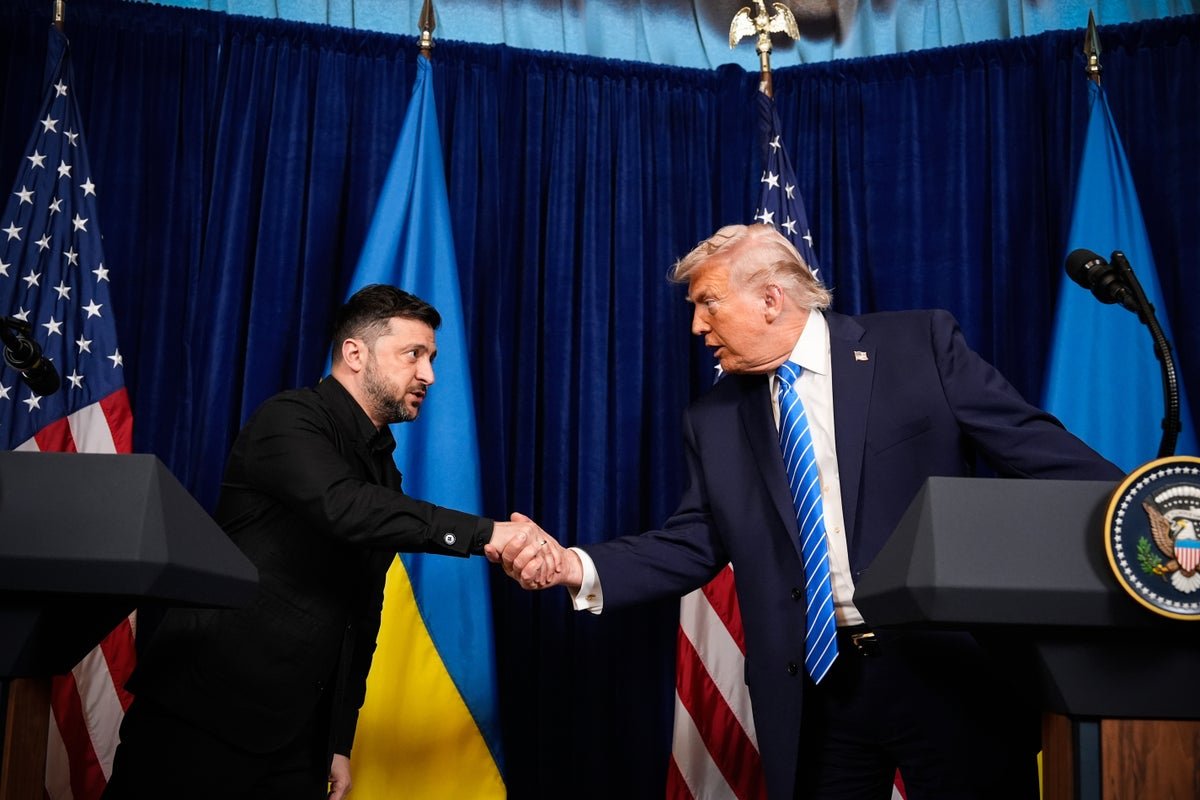
US President Donald Trump recently met with Ukrainian President Volodymyr Zelensky to discuss peace talks. However, the meeting was overshadowed by Trump’s indulgence in conspiracy theories about the 2020 election and the ‘Russia hoax’. This behaviour has raised concerns about Trump’s ability to analyse complex geopolitical issues.
The talks were intended to focus on the ongoing conflict between Ukraine and Russia. Instead, Trump used the opportunity to air his grievances about the 2020 election and the investigation into Russian interference. This has led to criticism from Democrats and Republicans alike, who argue that Trump’s actions are undermining the credibility of the US diplomatic corps.
The ‘Russia hoax’ refers to Trump’s claims that the investigation into Russian interference in the 2016 election was a witch-hunt. However, the investigation uncovered significant evidence of Russian meddling, and several Trump associates have been convicted of crimes related to the scandal. Despite this, Trump continues to downplay the significance of Russian interference and instead focuses on unsubstantiated claims of voter fraud.
The implications of Trump’s actions are far-reaching, with potential consequences for the US-Ukraine relationship and the broader geopolitical landscape. As the US prepares for the 2024 election, Trump’s behaviour is likely to come under increasing scrutiny. The colour of US politics is likely to become even more divided, with Trump’s supporters and detractors taking opposing views on his handling of the situation.
In conclusion, Trump’s meeting with Zelensky was a missed opportunity for meaningful diplomacy. Instead, the talks were marred by Trump’s conspiracy theories and divisive rhetoric. As the US navigates an increasingly complex geopolitical environment, it is essential that the President is able to separate fact from fiction and prioritize the interests of the country over personal grievances.
The US-Ukraine relationship is critical to regional stability, and it is essential that both countries work together to address common security challenges. However, Trump’s behaviour has raised concerns about the US commitment to Ukraine and the broader region. The US must demonstrate a clear and consistent approach to diplomacy, rather than allowing personal interests to dictate foreign policy.
The situation highlights the need for a more nuanced approach to US foreign policy, one that balances competing interests and prioritizes diplomacy over rhetoric. The US must work with international partners to address shared challenges and promote regional stability. Only through a coordinated and sustained effort can the US hope to achieve its foreign policy objectives and promote a more peaceful and prosperous world.
Ultimately, the success of US foreign policy depends on the ability of the President to analyse complex issues, prioritize national interests, and engage in meaningful diplomacy. The US must demonstrate a commitment to diplomacy and international cooperation, rather than allowing personal interests and conspiracy theories to dictate foreign policy.
The US-Ukraine relationship is a critical component of US foreign policy, and it is essential that both countries work together to address common challenges. The situation highlights the need for a more nuanced approach to diplomacy, one that balances competing interests and prioritizes cooperation over conflict. By working together, the US and Ukraine can promote regional stability and achieve shared foreign policy objectives.
The implications of Trump’s actions are likely to be felt for years to come, with potential consequences for the US-Ukraine relationship and the broader geopolitical landscape. As the US prepares for the 2024 election, it is essential that the President is able to separate fact from fiction and prioritize the interests of the country over personal grievances.
In the context of US foreign policy, it is essential to consider the potential consequences of Trump’s actions. The US must demonstrate a clear and consistent approach to diplomacy, rather than allowing personal interests to dictate foreign policy. By prioritizing diplomacy and international cooperation, the US can promote regional stability and achieve its foreign policy objectives.
The situation highlights the need for a more nuanced approach to US foreign policy, one that balances competing interests and prioritizes cooperation over conflict. The US must work with international partners to address shared challenges and promote regional stability. Only through a coordinated and sustained effort can the US hope to achieve its foreign policy objectives and promote a more peaceful and prosperous world.