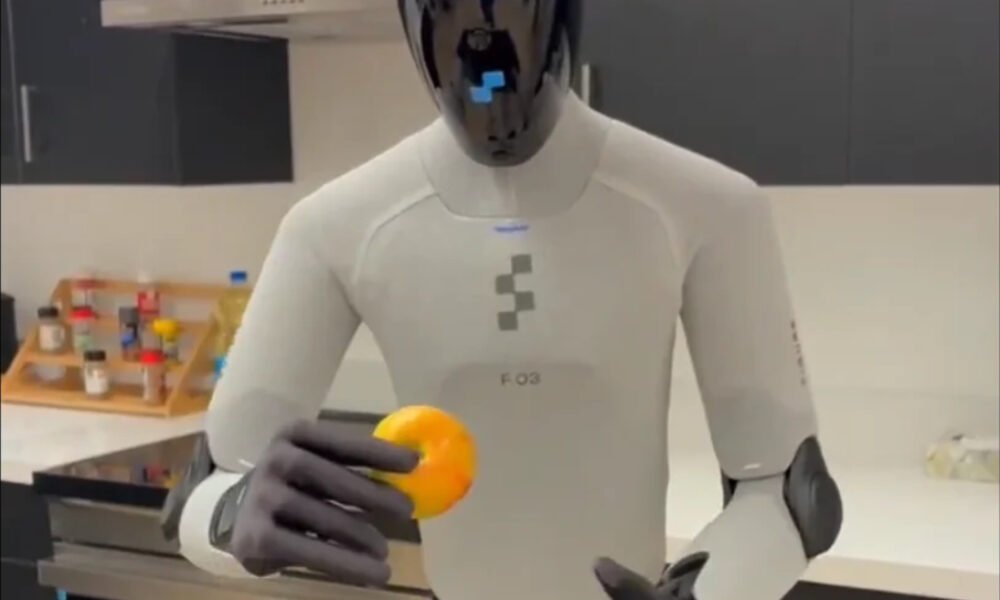
Figure AI Counters Musk Robot Criticism With Apple Demo
Elon Musk Challenges Humanoid Robot Demonstrations
Elon Musk has repeatedly claimed that most humanoid robot demonstrations presented to the public are carefully staged performances rather than genuine autonomous capabilities. The Tesla CEO specifically pointed to a simple test involving an apple as his benchmark for authentic robot intelligence. According to Musk, if a robot cannot reliably identify, grasp, and manipulate an apple in an unstructured environment without pre-programmed routines, the demonstration lacks credibility.
Figure AI Responds With Figure 01 Robot
Brett Adcock, CEO of Figure AI, accepted Musk’s challenge directly. The robotics startup unveiled video footage showing their Figure 01 humanoid robot completing the exact apple test Musk described. The robot identified a red apple on a table, reached out with its five-fingered hand, grasped the fruit securely, and transferred it to its other hand — all without teleoperation or scripted motion sequences.
The Figure 01 stands five feet six inches tall and weighs approximately sixty kilograms. Its hands feature sixteen degrees of freedom, enabling human-like dexterity for manipulation tasks. The robot uses onboard neural networks trained through reinforcement learning and simulation-to-real transfer, allowing it to adapt to variations in object position, lighting, and surface texture.
Tesla Optimus Development Continues In Parallel
Meanwhile, Tesla’s own humanoid robot, the Optimus Gen 2, has progressed through multiple iterations since its initial announcement. The latest version features Tesla-designed actuators, a two-degree-of-freedom neck, and hands with eleven degrees of freedom per hand. Musk has stated that Optimus will eventually handle tasks that are unsafe, repetitive, or boring for humans, with a target price below twenty thousand dollars.
Tesla leverages its Full Self-Driving computer hardware and vision-based neural networks for Optimus perception. The robot shares architectural similarities with Tesla vehicles, using the same inference hardware and software stack adapted for bipedal locomotion and manipulation.
Broader Humanoid Robot Landscape Heats Up
The Figure AI versus Tesla rivalry reflects intensifying competition across the humanoid robotics sector. Boston Dynamics continues advancing its Atlas platform, now fully electric and designed for commercial deployment. Agility Robotics operates a fleet of Digit robots at Amazon fulfillment centers for tote handling tasks. Apptronik’s Apollo targets logistics and manufacturing applications, while Sanctuary AI’s Phoenix focuses on general-purpose work through its Carbon AI control system.
Each company pursues different technical approaches. Some prioritize hydraulic actuation for power density, others favor electric motors for precision and maintenance. Vision systems range from stereo cameras to lidar fusion. Control strategies vary between model-based predictive control and end-to-end learned policies.
Apple Test Reveals Core Robotics Challenges
The apple manipulation task exposes fundamental difficulties in robotics: visual perception under varying conditions, grasp planning for irregular objects, force control to prevent damage, and bimanual coordination. Success requires integrating perception, planning, and control in real time — a capability that distinguishes general-purpose robots from specialized automation.
Figure AI’s demonstration suggests meaningful progress toward robust manipulation. However, a single controlled video does not prove consistent performance across thousands of repetitions in diverse environments. The path from lab demonstration to reliable commercial deployment remains substantial.
Implications For Future Robot Deployment
If humanoid robots achieve reliable general manipulation, applications span manufacturing, logistics, elder care, and domestic assistance. Figure AI targets commercial shipments in 2025, while Tesla aims for limited Optimus production for internal use next year. Both timelines assume continued progress in AI training, hardware reliability, and cost reduction.
The public exchange between Musk and Adcock highlights how benchmark tasks shape industry discourse. The apple test, while simple in concept, encapsulates the perception-manipulation gap that defines the frontier of humanoid robotics. Whether Figure 01, Optimus, or another platform crosses this threshold first, the competition accelerates development across the field.