NVIDIA Revolutionises Path Tracing with AI and RTX
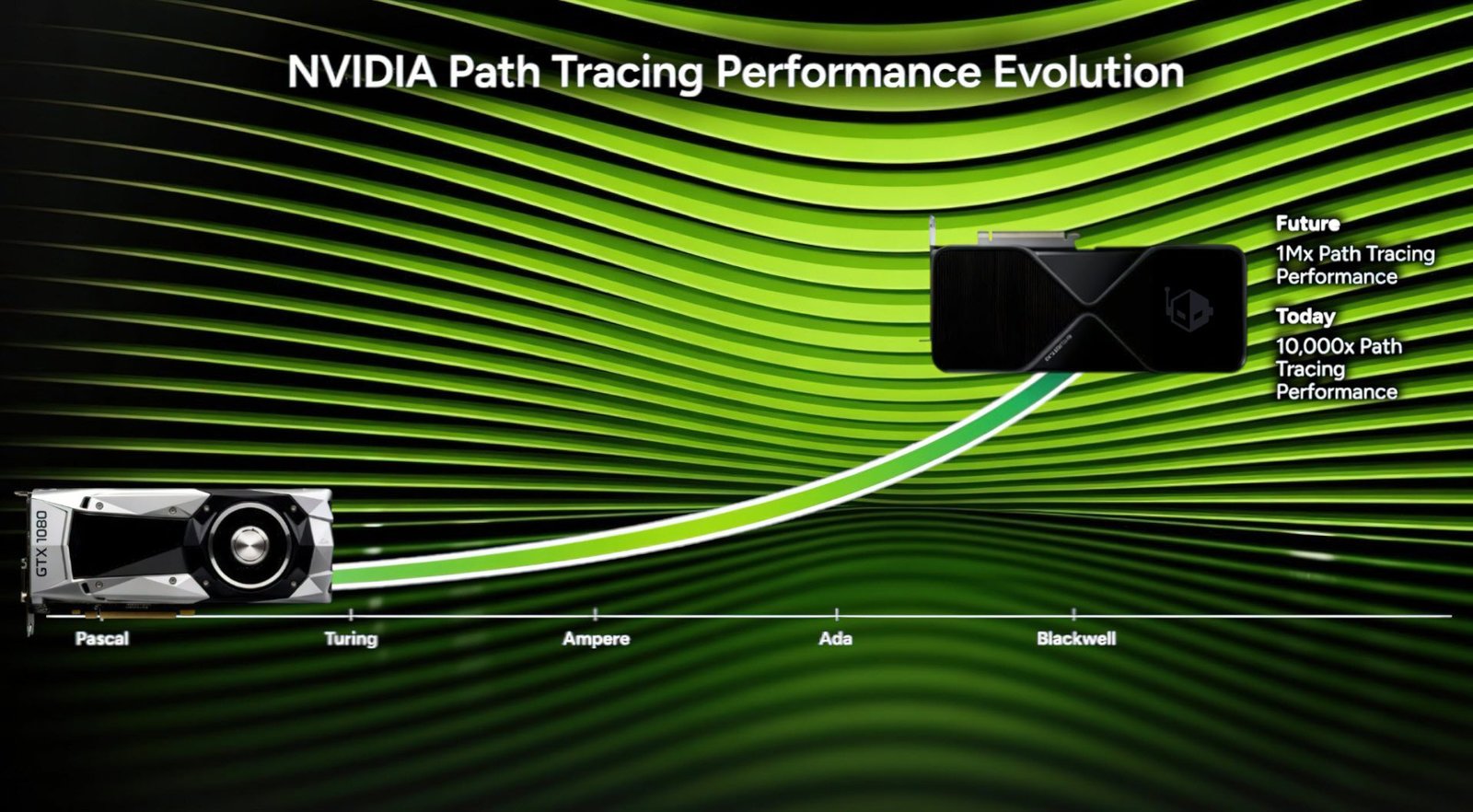
NVIDIA has revealed its plans to bring a monumental 1,000,000x leap in path tracing performance to its future gaming GPUs, harnessing the power of AI and RTX advancements. As Moore’s Law is declared dead, the company is relying on these innovations to drive massive performance gains. During GDC 2026, NVIDIA’s VP of Developer and Performance Technology, John Spitzer, presented a path tracing roadmap, highlighting the significant strides made with each GPU architecture.
The journey began with the Pascal architecture, released in April 2016, which was a game-changer in its time. Since then, NVIDIA has consistently pushed the boundaries of what is possible, with each successive architecture building upon the previous one. The current RTX 40 series has already demonstrated impressive capabilities, but the future looks even brighter.
NVIDIA’s commitment to AI and RTX is evident in its roadmap, which showcases the potential for exponential growth in path tracing performance. By leveraging these technologies, the company aims to deliver unparalleled visual fidelity and realism in gaming. As the UK gaming community eagerly awaits these developments, one thing is clear – the future of gaming is looking incredibly bright.
The implications of this leap in performance are far-reaching, with potential applications in fields such as film production, architecture, and product design. As NVIDIA continues to drive innovation, we can expect to see significant advancements in these areas, further solidifying the company’s position as a leader in the field.
In the UK, gamers are particularly excited about the prospect of enhanced gaming experiences, with many anticipating the release of NVIDIA’s next-generation GPUs. With the company’s focus on AI and RTX, it is likely that we will see significant improvements in areas such as ray tracing, artificial intelligence, and deep learning.
As the gaming industry continues to evolve, NVIDIA is well-positioned to remain at the forefront of innovation. With its dedication to pushing the boundaries of what is possible, the company is set to revolutionise the world of gaming and beyond. As we look to the future, one thing is certain – NVIDIA’s commitment to AI and RTX will have a profound impact on the UK gaming landscape.
The future of gaming is not just about improved performance; it is also about creating immersive experiences that draw players in and refuse to let go. With NVIDIA’s focus on AI and RTX, we can expect to see games that are more realistic, more engaging, and more entertaining than ever before. As the UK gaming community looks to the future, it is clear that NVIDIA is leading the charge.
In conclusion, NVIDIA’s plans to bring a 1,000,000x leap in path tracing performance to its future gaming GPUs is a monumental development that is set to revolutionise the UK gaming industry. With its commitment to AI and RTX, the company is poised to deliver unparalleled visual fidelity and realism, creating immersive experiences that will leave gamers in awe.
NVIDIA’s Revolutionary Feynman GPU: A New Era for AI in the UK
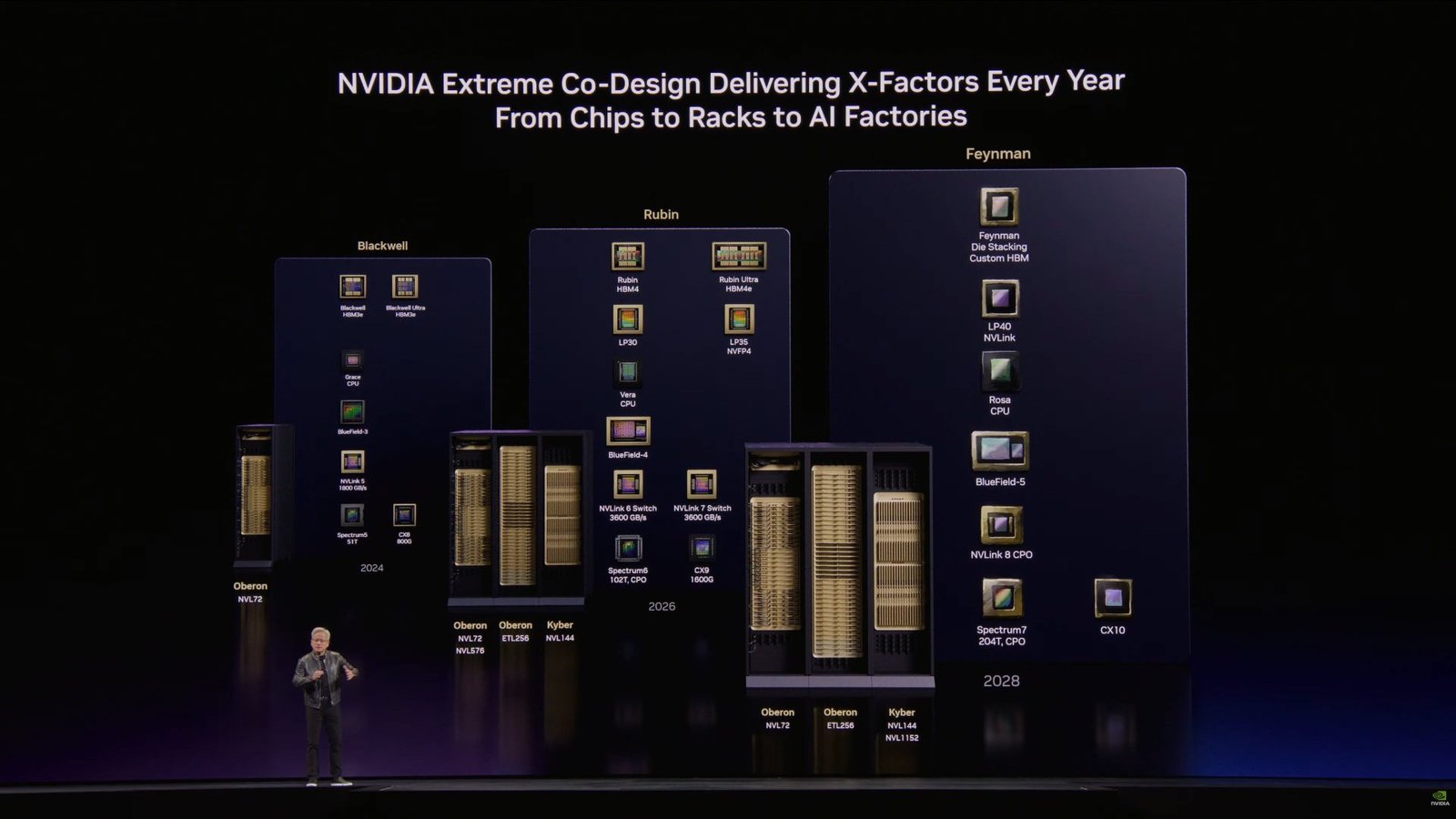
NVIDIA has unveiled its next-generation AI Data Center solution, Rosa Feynman, featuring 3D Die-Stacking and custom HBM. This innovative technology is set to revolutionise the UK’s AI landscape. With its cutting-edge architecture, the Feynman GPU is poised to deliver unparalleled performance. The UK will likely be at the forefront of this technological shift.
The Feynman GPU architecture was first announced at GTC 2025, with NVIDIA confirming its adoption of 3D Die-Stacking and custom HBM. This year at GTC 2026, NVIDIA has revealed more details about its next-gen Rosa Feynman AI chips. The company’s decision to use 3D Die-Stacking and custom HBM is expected to significantly enhance the GPU’s performance and efficiency.
NVIDIA’s Feynman GPU is part of the company’s broader strategy to dominate the UK’s AI market. With its advanced architecture and custom HBM, the Feynman GPU is well-positioned to meet the growing demand for AI computing power in the UK. As the UK continues to invest in AI research and development, NVIDIA’s Feynman GPU is likely to play a key role in shaping the country’s AI landscape.
The UK’s AI sector is expected to benefit significantly from NVIDIA’s Feynman GPU. With its enhanced performance and efficiency, the GPU will enable UK-based businesses and researchers to analyse complex data sets and develop more sophisticated AI models. This, in turn, will drive innovation and growth in the UK’s AI industry, cementing the country’s position as a global leader in AI research and development.
NVIDIA’s commitment to innovation is evident in its Feynman GPU. The company’s use of 3D Die-Stacking and custom HBM demonstrates its willingness to push the boundaries of what is possible in GPU design. As the UK’s AI sector continues to evolve, NVIDIA’s Feynman GPU will likely remain at the forefront of this technological shift.
The Feynman GPU’s impact on the UK’s AI industry will be significant. With its advanced architecture and custom HBM, the GPU will enable UK-based businesses and researchers to develop more sophisticated AI models and analyse complex data sets. This, in turn, will drive innovation and growth in the UK’s AI sector, cementing the country’s position as a global leader in AI research and development.
In conclusion, NVIDIA’s Feynman GPU is a game-changer for the UK’s AI industry. With its cutting-edge architecture and custom HBM, the GPU is poised to deliver unparalleled performance and efficiency. As the UK continues to invest in AI research and development, NVIDIA’s Feynman GPU will likely play a key role in shaping the country’s AI landscape.
The UK’s AI sector is expected to benefit significantly from NVIDIA’s Feynman GPU. With its enhanced performance and efficiency, the GPU will enable UK-based businesses and researchers to develop more sophisticated AI models and analyse complex data sets. This, in turn, will drive innovation and growth in the UK’s AI industry, cementing the country’s position as a global leader in AI research and development.
NVIDIA’s Feynman GPU is a testament to the company’s commitment to innovation. The company’s use of 3D Die-Stacking and custom HBM demonstrates its willingness to push the boundaries of what is possible in GPU design. As the UK’s AI sector continues to evolve, NVIDIA’s Feynman GPU will likely remain at the forefront of this technological shift.
The Feynman GPU’s impact on the UK’s AI industry will be significant. With its advanced architecture and custom HBM, the GPU will enable UK-based businesses and researchers to develop more sophisticated AI models and analyse complex data sets. This, in turn, will drive innovation and growth in the UK’s AI sector, cementing the country’s position as a global leader in AI research and development.
NVIDIA’s Feynman GPU is set to revolutionise the UK’s AI landscape. With its cutting-edge architecture and custom HBM, the GPU is poised to deliver unparalleled performance and efficiency. As the UK continues to invest in AI research and development, NVIDIA’s Feynman GPU will likely play a key role in shaping the country’s AI future.
In the UK, NVIDIA’s Feynman GPU will likely have a significant impact on various industries, including healthcare, finance, and education. With its advanced architecture and custom HBM, the GPU will enable UK-based businesses and researchers to develop more sophisticated AI models and analyse complex data sets. This, in turn, will drive innovation and growth in these industries, cementing the UK’s position as a global leader in AI research and development.
The UK’s AI sector is expected to benefit significantly from NVIDIA’s Feynman GPU. With its enhanced performance and efficiency, the GPU will enable UK-based businesses and researchers to develop more sophisticated AI models and analyse complex data sets. This, in turn, will drive innovation and growth in the UK’s AI industry, cementing the country’s position as a global leader in AI research and development.
NVIDIA’s commitment to innovation is evident in its Feynman GPU. The company’s use of 3D Die-Stacking and custom HBM demonstrates its willingness to push the boundaries of what is possible in GPU design. As the UK’s AI sector continues to evolve, NVIDIA’s Feynman GPU will likely remain at the forefront of this technological shift.
Nvidia’s Game Ready Driver 595.71: Does it Resolve Performance Issues for UK Gamers?
Recently, Nvidia released the Game Ready driver version 595.71, aiming to address issues found in the previous version 595.59. However, it appears that Resident Evil Requiem players in the UK are still encountering performance problems. This raises concerns about the effectiveness of the new driver in enhancing gaming behaviour.
The performance issues reported by Resident Evil Requiem players are a significant concern, as they can impact the overall gaming experience. Nvidia’s efforts to resolve these issues are crucial in maintaining a loyal customer base in the UK. The company’s ability to analyse and address these problems will be closely watched by gamers and industry experts alike.
In the UK, gamers are eagerly awaiting a solution to the performance issues plaguing Resident Evil Requiem. The new Game Ready driver 595.71 is a step in the right direction, but it seems that more work is needed to fully resolve the problems. As the gaming community in the UK continues to grow, the need for reliable and efficient drivers becomes increasingly important.
The impact of performance issues on the gaming community in the UK cannot be overstated. Gamers expect a seamless and immersive experience, and any disruptions can lead to frustration and disappointment. Nvidia’s commitment to resolving these issues is essential in maintaining the trust and loyalty of its customers in the UK. By prioritising the development of efficient and reliable drivers, Nvidia can ensure that gamers in the UK can enjoy their favourite games without interruption.
Nvidia’s Game Ready driver 595.71 is a crucial update for UK gamers, as it aims to enhance the gaming experience by resolving performance issues. While the new driver is a positive step, it is clear that more work is needed to fully address the problems faced by Resident Evil Requiem players. As the gaming industry continues to evolve, the importance of efficient and reliable drivers will only continue to grow.
In conclusion, the release of Nvidia’s Game Ready driver 595.71 is a significant development for UK gamers. While it may not have fully resolved the performance issues faced by Resident Evil Requiem players, it demonstrates Nvidia’s commitment to addressing these problems. As the gaming community in the UK looks to the future, it is clear that the development of efficient and reliable drivers will play a vital role in shaping the industry.
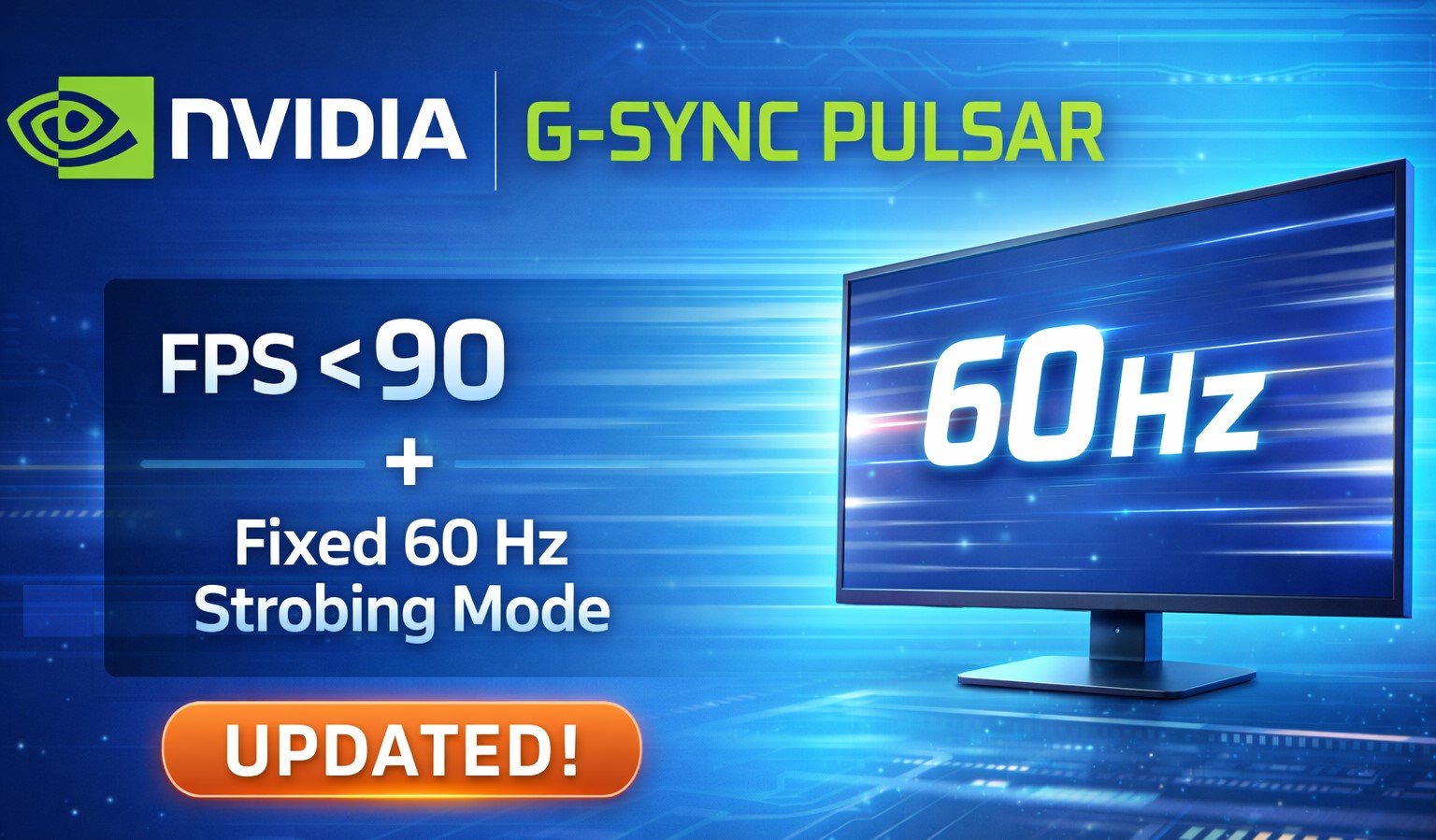
NVIDIA has rolled out a significant update to its G-Sync Pulsar technology, designed to improve motion clarity in games running below 90 FPS. This innovation is set to enhance the gaming experience in the UK.
The G-Sync Pulsar technology combines Variable Refresh Rate (VRR), blur reduction, and backlight strobing to minimise motion blur. This approach differs from other techniques, offering a unique solution for gamers.
First introduced in 2024, G-Sync Pulsar has been making waves in the gaming community. The latest update promises even better performance, particularly for games that don’t maintain high frame rates.
By reducing motion blur, NVIDIA aims to provide a smoother and more immersive experience. This is especially important for fast-paced games where clarity can be the difference between victory and defeat.
The update also includes a fixed 60 Hz strobing mode, further expanding the technology’s capabilities. This move by NVIDIA demonstrates its commitment to pushing the boundaries of gaming technology in the UK.
As the gaming landscape continues to evolve, innovations like G-Sync Pulsar are crucial. They not only enhance the gaming experience but also set new standards for the industry.
With this update, NVIDIA reinforces its position as a leader in gaming technology. The company’s dedication to improving performance and clarity is a testament to its focus on delivering the best possible experience for gamers in the UK.
The implications of this technology extend beyond the gaming community. It could potentially influence the development of other display technologies, further enriching the overall visual experience.
For gamers in the UK, the G-Sync Pulsar update is a welcome development. It promises to make gaming more enjoyable, with clearer and smoother visuals that draw players deeper into the game world.
As technology continues to advance, it will be interesting to see how NVIDIA and other companies innovate and improve upon existing technologies. For now, the G-Sync Pulsar update is a significant step forward.
The future of gaming is looking brighter than ever, thanks to innovations like NVIDIA’s G-Sync Pulsar. With its enhanced clarity and smoother performance, this technology is set to revolutionise the gaming experience in the UK.
NVIDIA’s Vera Rubin Racks: A New Era in UK AI Technology
NVIDIA’s Vera Rubin AI racks are revolutionising the UK AI landscape with their sophisticated design and cutting-edge technology. Featuring seven newly-designed chips, these racks are the epitome of innovation. The Vera CPU, Rubin GPU, and enhanced NVLink 6 chip are just a few components that make these racks a prized possession.
The demand for NVIDIA’s Vera Rubin racks is consistently growing, despite the expected significant price increase from Blackwell. With a reported cost of up to $7 million per rack, AI giants are willing to pay the price to stay ahead of the curve.
In the UK, the adoption of AI technology is on the rise, and NVIDIA’s Vera Rubin racks are at the forefront of this trend. With their ability to analyse complex data and provide insights, these racks are a valuable asset for businesses looking to improve their behaviour and decision-making.
The Vera Rubin racks are not just a testament to NVIDIA’s commitment to innovation but also a reflection of the UK’s growing importance in the global AI market. As the demand for AI technology continues to grow, NVIDIA’s Vera Rubin racks are poised to play a key role in shaping the UK’s AI landscape.
The cost of NVIDIA’s Vera Rubin racks may be steep, but for AI giants, the benefits far outweigh the costs. With the ability to process vast amounts of data and provide real-time insights, these racks are a valuable tool for businesses looking to gain a competitive edge.
In conclusion, NVIDIA’s Vera Rubin racks are a game-changer in the UK AI market. With their advanced technology and sophisticated design, these racks are set to revolutionise the way businesses approach AI and data analysis.
The future of AI in the UK is exciting, and NVIDIA’s Vera Rubin racks are at the forefront of this trend. As the demand for AI technology continues to grow, it will be interesting to see how these racks evolve and improve over time.
One thing is certain – NVIDIA’s Vera Rubin racks are a valuable asset for any business looking to improve its AI capabilities. With their ability to analyse complex data and provide insights, these racks are a prized possession for AI giants and businesses alike.
The UK AI market is set to continue growing, and NVIDIA’s Vera Rubin racks will play a key role in this growth. With their advanced technology and sophisticated design, these racks are set to revolutionise the way businesses approach AI and data analysis.
In the world of AI, the UK is becoming an increasingly important player, and NVIDIA’s Vera Rubin racks are at the forefront of this trend. With their ability to process vast amounts of data and provide real-time insights, these racks are a valuable tool for businesses looking to gain a competitive edge.
NVIDIA’s commitment to innovation is evident in the design and development of the Vera Rubin racks. With their advanced technology and sophisticated design, these racks are a testament to the company’s dedication to improving AI capabilities.
The Vera Rubin racks are not just a valuable asset for businesses but also a reflection of the UK’s growing importance in the global AI market. As the demand for AI technology continues to grow, NVIDIA’s Vera Rubin racks are poised to play a key role in shaping the UK’s AI landscape.
OnePlus expands its lineup with official add-ons for the new flagship
OnePlus has officially launched a full range of accessories alongside the OnePlus 15, giving users a complete ecosystem of protective cases, chargers, and power gear. The brand is positioning these add-ons as more than just extras — they’re designed to complement the phone’s premium build and performance.
At the centre of the lineup are the new magnetic cases, built using reinforced polycarbonate and soft microfiber interiors. These cases feature a built-in magnetic ring that supports magnetic mounts, wireless chargers, and card wallets, making them compatible with OnePlus’s new wireless charging accessories. The design comes in three finishes — Sand Storm Beige, Obsidian Black, and Glacier Blue — matching the phone’s primary colour options.
OnePlus has also introduced a clear protective case made of flexible TPU, included in some regions’ box sets but now sold separately for custom buyers. It offers decent drop protection while keeping the phone’s premium finish visible. The matte grip version, meanwhile, provides extra texture for users who prefer more secure handling during outdoor or active use.
Charging accessories have received a major upgrade too. The brand’s 120W SuperVOOC charger remains the fastest option and is bundled with the OnePlus 15. However, OnePlus has now launched a compact 65W GaN charger for travellers, supporting both smartphones and laptops via USB-C Power Delivery. The charger’s reduced heat output and foldable pins make it ideal for UK commuters and frequent flyers.
For wireless enthusiasts, OnePlus has rolled out its new 50W AirCharge Dock. Designed for magnetic alignment, it allows vertical or horizontal placement while maintaining steady charging speeds. The dock uses a cooling fan to manage temperature during long sessions, ensuring both safety and efficiency — a feature particularly useful for gaming or video streaming while charging.
Complementing the hardware are official screen protectors and tempered glass kits tailored specifically for the OnePlus 15’s 1.5K curved display. These protectors use edge-to-edge adhesive for bubble-free installation and are made from impact-resistant Gorilla Glass material, offering additional clarity and touch sensitivity. A basic film protector is already pre-applied to new devices, but these upgraded versions provide long-term resilience.
Power accessories round out the collection. The company has released a 10,000 mAh Power Bank Pro with 45W bidirectional fast charging. It supports both OnePlus and third-party devices, allowing users to charge two devices simultaneously. The power bank’s matte finish and compact design align with the brand’s minimalist aesthetic, while its intelligent protection circuitry prevents overheating.
OnePlus is also expanding its audio lineup to pair with the new flagship. The OnePlus Buds 4 Pro have been updated with Snapdragon Sound support, offering ultra-low latency and spatial audio. They integrate seamlessly with the OnePlus 15’s ecosystem, allowing fast pairing, adaptive noise cancellation, and multi-device switching — all from within the phone’s settings.
For UK buyers, all accessories will be available through the official OnePlus Store and select retail partners later this month. Early bundles are expected to include discounts on chargers and magnetic cases when purchased alongside the device. This launch ensures that OnePlus 15 owners can fully optimise their device experience from day one, with accessories that are purpose-built for durability, style, and everyday practicality.
In short, the new accessory range cements OnePlus’s reputation for delivering a complete ecosystem rather than just a smartphone. From cases to chargers and audio gear, every item reflects the same design philosophy — precision, performance, and lasting quality — making the OnePlus 15 ecosystem one of the most comprehensive yet for flagship users in 2025.
Optimising the massive 7,300 mAh battery for maximum endurance
The OnePlus 15 already ships with one of the largest smartphone batteries ever — a 7,300 mAh silicon-carbon dual-cell unit. It’s engineered to deliver outstanding endurance, but with a few smart tweaks, users can stretch it even further. Whether you’re a heavy multitasker or a casual user in the UK’s mixed climate, these settings can help you get the most from each charge.
Start with the display, the biggest power consumer in any flagship. The OnePlus 15 features a 6.78-inch LTPO AMOLED screen with a 165Hz adaptive refresh rate. For everyday use, set the refresh rate to “Auto” instead of locking it at 165Hz. This allows OxygenOS to dynamically drop it down to as low as 1Hz during idle periods, saving significant power. If you don’t game often, switching to a constant 60Hz or 90Hz mode will give a noticeable boost in battery life.
Brightness management also makes a big difference. Enable “Adaptive Brightness” under display settings, so the phone adjusts lighting automatically based on your environment. Keeping brightness manually at around 40 to 60 percent indoors helps reduce drain without compromising visibility. Additionally, turning on “Extra Dim” for nighttime use and “Dark Mode” throughout the day can cut display power consumption by up to 10 percent.
Next, check your connectivity settings. Disable 5G when you don’t need it, especially in areas with weak signal coverage, since constant network switching drains power. For users who work mostly on Wi-Fi, toggling 5G off in the quick settings panel can extend usage by several hours per charge. Similarly, turning off Bluetooth and GPS when idle can help maintain efficiency without major inconvenience.
The OnePlus 15’s OxygenOS 16 offers an intelligent “Battery Saver” and a deeper “Smart Battery Management” mode. Enable “Optimised Charging” to slow charging speeds overnight and reduce cell wear. This feature learns your sleep schedule, ensuring the phone hits 100 percent just before you wake up rather than staying fully charged for hours. It’s an easy way to improve long-term battery health.
For those who play games or stream often, the “Bypass Charging” option is a must-use feature. It powers the phone directly from the charger without cycling the battery, which keeps temperatures lower and prevents unnecessary charge cycles. Activating this feature while gaming plugged in can add months to your battery’s lifespan.
App control is another key area. Go to “Battery” → “App Battery Management” and set lesser-used apps to “Optimise” or “Deep Optimise.” This stops background refresh and keeps unused apps from running silently. For essential apps like messaging or mail, keep them in “Don’t optimise” mode to maintain real-time notifications.
Animations and haptic feedback also consume more power than many users realise. Switching off “Fancy animations” under developer options and reducing vibration strength in sound settings can add an extra few percentage points to daily endurance. Similarly, using static wallpapers instead of live ones and keeping Always-On Display to “Tap to show” rather than “Always” can make a difference over time.
Charging habits matter just as much as settings. Using the included 120W SuperVOOC charger is fine for quick top-ups, but avoid keeping the device plugged in continuously. OnePlus’s silicon-carbon chemistry handles fast charging well, but slower top-ups — like using a 30–45W charger — generate less heat and improve cell longevity. Also, aim to keep the charge between 25 and 85 percent for daily use rather than draining completely.
In typical UK conditions, where temperatures fluctuate and signal strength varies, these adjustments can extend the OnePlus 15’s already strong battery life from about two days of moderate use to nearly three. The combination of smart display management, background app control, and adaptive charging makes a real difference.
In conclusion, the OnePlus 15’s 7,300 mAh battery isn’t just about raw size — it’s about how intelligently you use it. With the right settings and habits, it transforms from a high-performance powerhouse into an endurance champion. By optimising refresh rate, connectivity, and charging behaviour, users can enjoy unmatched reliability without sacrificing performance or convenience.
NVIDIA’s Trillion-Dollar Partnership: A Key to AI Supply Chain Success
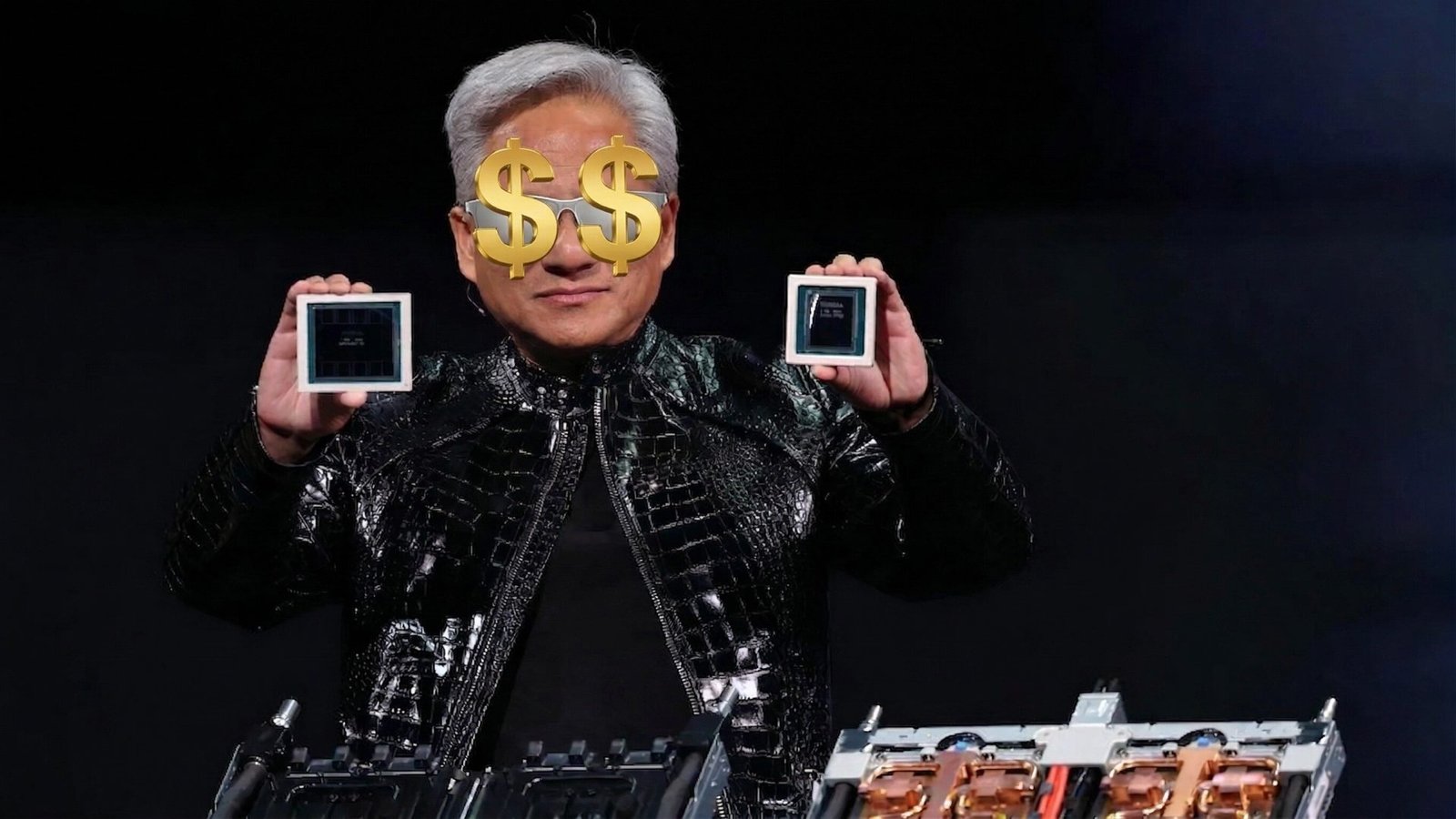
NVIDIA’s CEO, Jensen Huang, recently hosted a ‘trillion-dollar’ dinner with Taiwanese supply chain executives, highlighting the importance of their partnership. This close relationship has been crucial in navigating the AI frenzy. As the demand for AI technology continues to grow, NVIDIA’s strategic ties with Taiwan have become increasingly vital.
The company’s ability to vertically integrate its supply chain sources has been a key factor in its success. By being the first to access these sources and maintaining strong relationships with its partners, NVIDIA has managed to stay ahead of the competition. This is particularly significant given the current shortages of DRAM, NAND, chips, and advanced packaging.
Under Jensen Huang’s leadership, NVIDIA has demonstrated its commitment to building strong relationships with its Taiwanese partners. This dedication has enabled the company to remain unfazed by the challenges posed by the AI supply chain. As the AI landscape continues to evolve, NVIDIA’s strategic partnerships will undoubtedly play a crucial role in its ongoing success.
The ‘trillion-dollar’ dinner hosted by Jensen Huang serves as a testament to the significance of NVIDIA’s partnership with Taiwan. As the company continues to push the boundaries of AI technology, its relationships with Taiwanese supply chain executives will remain essential. With its strong foundation in place, NVIDIA is well-positioned to maintain its dominance in the AI supply chain.
NVIDIA’s ability to navigate the complex AI landscape has been impressive, and its strategic partnerships have been a key factor in this success. As the company looks to the future, it is clear that its relationships with Taiwanese partners will continue to play a vital role. With the AI frenzy showing no signs of slowing down, NVIDIA’s trillion-dollar partnership is set to remain a crucial aspect of its ongoing success.
The importance of NVIDIA’s partnership with Taiwan cannot be overstated. As the company continues to drive innovation in the AI space, its relationships with Taiwanese supply chain executives will remain essential. With a strong foundation in place, NVIDIA is well-positioned to maintain its position as a leader in the AI supply chain.
As the AI landscape continues to evolve, NVIDIA’s strategic partnerships will undoubtedly play a crucial role in its ongoing success. The company’s ability to build strong relationships with its Taiwanese partners has been a key factor in its ability to stay ahead of the competition. With the AI frenzy showing no signs of slowing down, NVIDIA’s trillion-dollar partnership is set to remain a crucial aspect of its ongoing success.
NVIDIA’s commitment to building strong relationships with its Taiwanese partners has been impressive, and this dedication has enabled the company to remain a leader in the AI supply chain. As the company looks to the future, it is clear that its relationships with Taiwanese partners will continue to play a vital role in its success.
The future of AI is exciting, and NVIDIA is well-positioned to play a leading role in shaping this future. With its strong relationships with Taiwanese partners and its commitment to driving innovation, the company is set to remain a dominant force in the AI supply chain. As the AI landscape continues to evolve, NVIDIA’s strategic partnerships will undoubtedly be a key factor in its ongoing success.
In conclusion, NVIDIA’s ‘trillion-dollar’ dinner with Taiwanese partners has highlighted the importance of the company’s relationships with its supply chain executives. As the AI frenzy continues to drive demand for AI technology, NVIDIA’s strategic partnerships will remain essential. With its strong foundation in place, the company is well-positioned to maintain its dominance in the AI supply chain.
NVIDIA’s ability to navigate the complex AI landscape has been impressive, and its strategic partnerships have been a key factor in this success. As the company looks to the future, it is clear that its relationships with Taiwanese partners will continue to play a vital role in its ongoing success. With the AI frenzy showing no signs of slowing down, NVIDIA’s trillion-dollar partnership is set to remain a crucial aspect of its ongoing success.
As the AI landscape continues to evolve, NVIDIA’s strategic partnerships will undoubtedly play a crucial role in its ongoing success. The company’s ability to build strong relationships with its Taiwanese partners has been a key factor in its ability to stay ahead of the competition. With the AI frenzy showing no signs of slowing down, NVIDIA’s trillion-dollar partnership is set to remain a crucial aspect of its ongoing success.
NVIDIA’s commitment to driving innovation in the AI space has been impressive, and its relationships with Taiwanese partners have been a key factor in this success. As the company looks to the future, it is clear that its relationships with Taiwanese partners will continue to play a vital role in its success. With the AI frenzy showing no signs of slowing down, NVIDIA’s trillion-dollar partnership is set to remain a crucial aspect of its ongoing success.
NVIDIA’s Shift to Micron GDDR7 Memory for RTX 50 Series in the UK
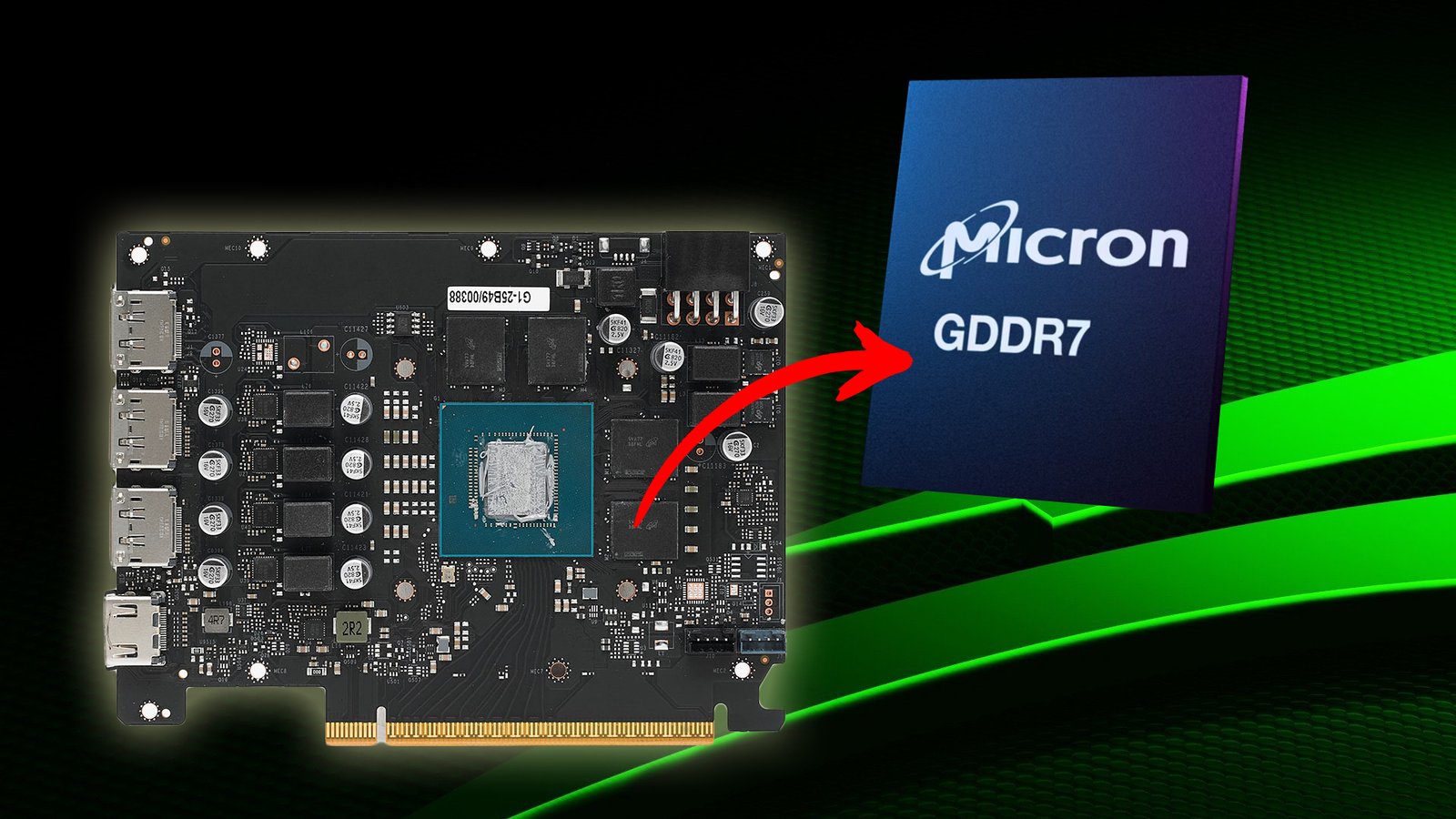
NVIDIA is reportedly sourcing GDDR7 memory chips from Micron for its RTX 50 series cards in the UK, amidst the ongoing DRAM shortages.
This move marks a significant change in NVIDIA’s strategy, as the company has primarily relied on Samsung and HK Hynix for memory chips in the past.
The use of Micron’s GDDR7 memory chips is expected to improve the performance of NVIDIA’s RTX 50 series cards, which are already popular among UK gamers and graphics designers.
However, the ongoing DRAM shortages continue to disrupt the hardware market, making it challenging for manufacturers to secure enough memory chips.
NVIDIA’s decision to source memory chips from Micron is seen as a strategic move to mitigate the effects of the shortages and ensure a stable supply chain for its RTX 50 series cards in the UK.
The RTX 50 series cards, including the Galax RTX 5060, have been spotted with Micron GDDR7 memory chips, revealing a new partnership between NVIDIA and Micron.
This partnership is expected to have a significant impact on the UK gaming and graphics design industries, as it will provide a more stable and reliable source of high-performance memory chips.
The use of GDDR7 memory chips from Micron is also expected to improve the overall performance and efficiency of NVIDIA’s RTX 50 series cards, making them even more attractive to UK gamers and graphics designers.
As the demand for high-performance graphics cards continues to grow in the UK, NVIDIA’s partnership with Micron is seen as a positive development for the industry.
The ongoing DRAM shortages, however, remain a concern, and it is unclear how long it will take for the market to stabilize.
In the meantime, NVIDIA’s decision to source memory chips from Micron is seen as a strategic move to stay ahead of the competition and provide the best possible products to its customers in the UK.
The future of the UK gaming and graphics design industries looks bright, with NVIDIA’s RTX 50 series cards and Micron’s GDDR7 memory chips leading the way.
NVIDIA’s commitment to innovation and performance is evident in its partnership with Micron, and it will be interesting to see how this partnership evolves in the future.
The UK gaming and graphics design communities will be watching with interest as NVIDIA continues to push the boundaries of what is possible with its RTX 50 series cards and Micron’s GDDR7 memory chips.
The real-world performance of OnePlus 15 in dark conditions
The OnePlus 15 arrives with a refreshed camera system focused on improved low-light performance. Its new 50-megapixel main sensor and updated processing engine aim to deliver brighter, clearer images even in challenging settings. With enhancements to exposure control and noise reduction, the phone enters the competitive night photography space with notable ambition.
Early hands-on impressions from reviewers highlight that the OnePlus 15 produces balanced colours after sunset. The camera tends to preserve natural tones without pushing scenes into artificial brightness. This helps night-time photos retain a realistic look, particularly in softly lit streets and indoor evening environments.
The device’s new imaging engine contributes to improved clarity when capturing stationary subjects. In moderately dark conditions, the phone maintains good detail and avoids heavy smudging. Reviewers have noted that the OnePlus 15 handles soft glows, neon lighting and night-time ambience with a warmer, more cinematic finish than previous generations.
However, comparisons with competing flagships show that the OnePlus 15 occasionally falls short in extreme darkness. When light levels drop significantly, the phone’s exposure algorithm sometimes limits brightness, resulting in darker shadows than those produced by top competitors. This difference is most noticeable when shooting away from artificial lighting.
Motion at night remains a challenge for most smartphone cameras, and the OnePlus 15 is no exception. Tests confirm that fast-moving subjects can appear blurry in low-light scenes. This occurs particularly when the camera automatically lengthens exposure time to gather more light, making steady hands crucial for sharp results.
The ultra-wide lens also receives attention due to its smaller sensor. While the main camera delivers reliable results, the ultra-wide struggles slightly more with noise and reduced dynamic range. In cityscapes with deep contrast, fine details may soften, especially at the edges of the frame.
Telephoto performance in low-light is similarly dependent on available light. In dimmer scenes, the system often reverts to digital cropping from the main sensor. While still usable, the results show less sharpness than daytime zoom shots. Bright night scenes, however, maintain better clarity and contrast.
For handheld point-and-shoot users, the OnePlus 15 performs impressively during typical night outings. Restaurants, concerts and evening walks produce vibrant, usable images. The improved stabilisation helps maintain sharpness when light levels are not extremely low, making casual night photography dependable.
Users seeking the best possible night-time results can benefit from using the device’s Pro mode. This allows manual adjustments such as longer exposure and ISO control, which the automatic mode sometimes limits. Placing the phone on a steady surface produces noticeably sharper and brighter low-light compositions.
Overall, the OnePlus 15 marks a clear improvement over its predecessors in night photography. While it may not lead the field in ultra-dark conditions or motion-heavy situations, it offers strong performance for everyday night scenes. Its natural colours, upgraded processing and reliable main sensor make it a capable companion for evening photography across the UK.
NVIDIA Prepares to Launch GeForce RTX 5060 Ti & RTX 5060 Graphics Cards in the UK
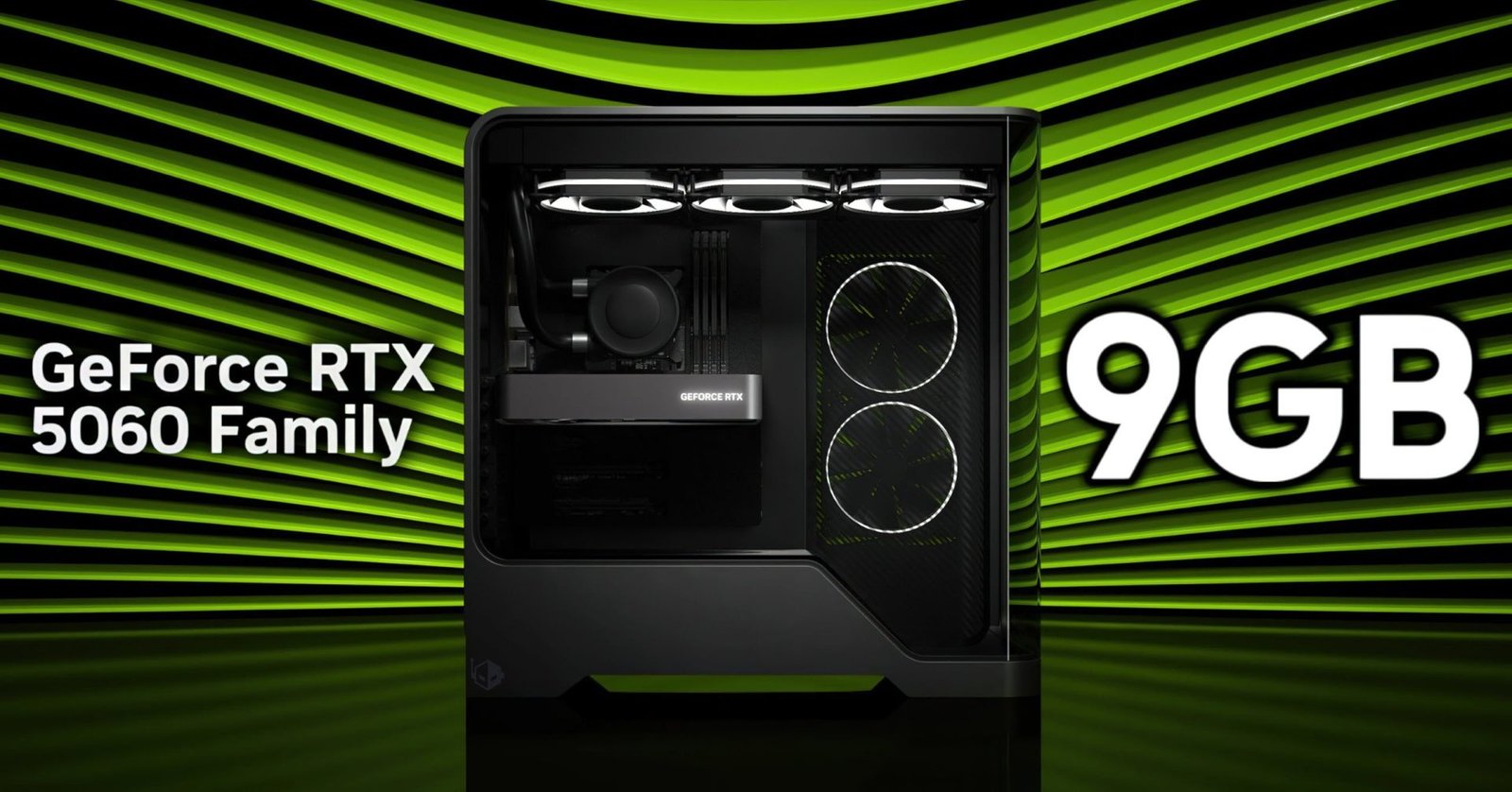
NVIDIA is reportedly working on two new models of the GeForce RTX 5060 Ti & RTX 5060 graphics cards, now equipped with 9 GB memory. This upgrade is set to enhance the performance of these GPUs. The new models will be available in the UK market soon.
The GeForce RTX 5060 Ti & RTX 5060 GPUs will soon get 1 GB extra memory at the expense of bandwidth. This move is expected to boost the overall performance of these graphics cards. NVIDIA’s decision to increase the memory capacity is a strategic one, aiming to provide better performance to gamers and graphics professionals in the UK.
Recently, it was reported that NVIDIA is working on a 9 GB variant of the GeForce RTX 5050 graphics card, but it looks like more models are on the way with increased memory capacities. As per the latest report from Chinese Board Channel forums, NVIDIA is preparing to add two new models to its GeForce lineup in the UK.
The new GeForce RTX 5060 Ti & RTX 5060 models will feature 9 GB GDDR7 memory, which is a significant upgrade from the previous models. This increased memory capacity will enable smoother performance and better handling of graphics-intensive tasks. The launch of these new models is expected to take place in May-June, and gamers and graphics professionals in the UK are eagerly awaiting the release.
The UK market is expected to see a significant impact from the launch of these new GeForce RTX 5060 Ti & RTX 5060 models. With the increased memory capacity and enhanced performance, these graphics cards are set to become a top choice for gamers and graphics professionals. The price point of these new models is yet to be announced, but it is expected to be competitive with other high-end graphics cards available in the UK.
NVIDIA’s decision to launch the GeForce RTX 5060 Ti & RTX 5060 models with 9 GB memory is a strategic one, aiming to provide better performance and value to customers in the UK. The company is known for its innovative approach to graphics card design, and this move is expected to further solidify its position in the UK market.
The GeForce RTX 5060 Ti & RTX 5060 models are expected to feature the latest GDDR7 memory technology, which provides faster speeds and lower power consumption. This technology is set to enable smoother performance and better handling of graphics-intensive tasks, making it an attractive option for gamers and graphics professionals in the UK.
In conclusion, the launch of the GeForce RTX 5060 Ti & RTX 5060 models with 9 GB memory is a significant development in the UK graphics card market. With the increased memory capacity and enhanced performance, these graphics cards are set to become a top choice for gamers and graphics professionals. The UK market is eagerly awaiting the release, and NVIDIA is expected to make a significant impact with these new models.
I’ve been using this phone for about three weeks now. It’s really good. But OnePlus 13 also really exciting because it has three features that will be trends in smartphones for all of 2025.
It has a 6,000 milliamp-hour battery
If this phone isn’t for you,there’s goingg toa be a lot more phones like it that are good, which is sick. So those three things are the incredible battery, the chip, and the record-breaking display. So let’s get right into this battery. It’s an easy place to start. This is the OnePlus 13, and it has a 6,000 milliamp-hour battery. This perfectly reasonably sized, kind of slim phone without being super thick has a battery double the capacity of the Galaxy S8. So if you’ve been keeping track of phone battery sizes for the past few years, you might be wondering what is happening? Like, how is this jump all of a sudden happening with a bunch of phones.
These new batteries, without getting too technical, they are still lithium-ion batteries, but with a new silicon carbon anode. But the results have spoken for themselves.They’ve been bangers. More energy density. So pretty much great all the way around. It’s also pretty new, so this is a bit of an expensive technology. So it’s gonna be in flagships mostly to start, but this is the first part of a wave of new phones shipping with them.
This will be great for small phones having better batteries. This will be great for folding phones like we’ve seen already with the Honor Magic V2, which is impossibly thin but has 5,000 milli AMP – hours of capacity. And that is absolutely how we got this OnePlus 13 being thinner and lighter than the OnePlus 12. It was honestly hard to find a day to challenge it and try to drain the whole thing. The truth is, even with my high brightness use,and plenty of multitasking, this is a two-day phone at 120 hertz, and I turned it up to high resolution.
I had days of, like, hours of, you know, GPS navigation, high brightness, a whole bunch of stuff happening, Bluetooth streaming, a whole ton, and I’d end the day with six hours of screen-on time, and I’d still have 35% battery left. So I basically can’t kill it in a day. It’s sick. But when it finally does get low, it has 80-watt fast charging, so it can go from zero to 100 in 36 minutes, and it supports 50-watt wireless charging with the right charging pad. This is the best that smartphone batteries have been since the modern smartphone.
Snapdragon 8 Elite chip in this phone
This is the Snapdragon 8 Elite chip in this phone. And, you know, this new chip comes out every year from Qualcomm, and a bunch of us flagships use it. We see, you know, 5% improvements here, 10% improvements there if we’re lucky, and that’s respectable. But this year the improvement over last year’s best has been way bigger. It scored 36% higher on the AnTuTu benchmark, and 44% higher on the single-core Geekbench. It jumps up 14% on 3DMark. Like, this thing is putting up Wilt Chamberlain numbers; I’m loving it.
Now, if you’re just opening up Instagram or flipping through emails, it kind of sounds like none of this is gonna matter, and you’d mostly be right. But I love to see this type of jump on both power and efficiency because it means if you’re pushing a chip. But if you aren’t gaming and you are just bouncing around casual apps or scrolling Blue Sky or emailing or whatever, it turns out your battery efficiency gets much better, too. ROG Phone 9 Pro, Red Magic 10 Pro, great performers, great gaming phones. I’m pretty sure the Galaxy S25 lineup’s gonna have this chip, and it’s gonna be great, too.
1,600 nits in high brightness mode, and 4,500 nits peak brightness
Is around the front, and it’s this display. Holy nits! So I called this a record-breaking display earlier, which might not mean much because, you know, every year there’s been a new record-breaking phone with the highest max nits. This is another one on that streak. 1,600 nits in high brightness mode, and 4,500 nits peak brightness. And apparently, this is the world’s first display that’s gotten an A++ from DisplayMate, whatever that means.
What you need to know is this is a big display that looks really good all of the time, and it achieves that because, on paper, it does not miss. It’s 6.82 inches corner to corner; QHD+ resolution, so it’s nice and sharp; 120-hertz LTPO. It’s mostly flat wit just the very edges curving over slightly. It just gets insanely bright from corner to corner, and it can get super dim, as well. Plus, it has 2,160 hertz high-frequency PWM dimming for those with sensitive eyes. There’s an ultrasonic fingerprint reader underneath that’s crazy fast.
It also has a new glove mode for increased sensitivity while wearing thin gloves and Aqua Touch 2.0, which does a great job at keeping the screen responsive when there’s water on it, which a lot of older phones struggle with. The peak brightness number, the 4,500 nits, you know, it’s an impressive, very big number, but it doesn’t mean that much. It can’t do that on all of the pixels at once.
Also the OnePlus 12 had the same number. But it’s more just about the crazy full-screen brightness. If you’re out in the sun taking pictures, or if it’s up in your dash, like, this screen gets insanely bright, and it’s surrounded by basically no bezels that are even all the way around. So, look, I’m excited for a bunch of other phones to also be coming out this year with the same impressive big three that this phone has it. They can have this awesome battery, this great chip, and an incredible display.
There are three colors to pick from
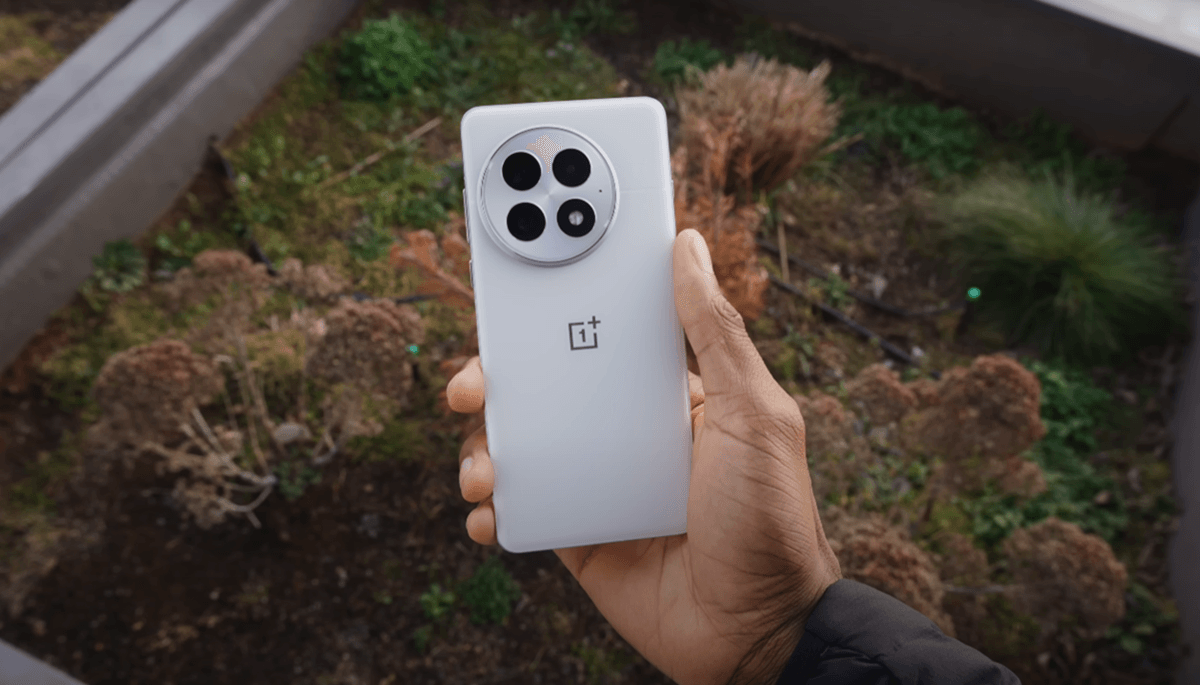
The other twoareg build quality and cameras. And this phone does pretty good with those also. So I think the design and build is pretty nice. This is good hardware. There are three colors to pick from. And they do this thing where the base version, is only available in the black, but then the upgraded one for 1,000 bucks you can get in any color, including this nice blue vegan microfiber leather.
It’s kind of soft to the touch, and I like it. But there’s also still an alert slider on the flatter sides, which is a crowd favorite. The vibration motor inside is super good; it’s really precise. And OnePlus has also hilariously leveled up its IP rating, their certification for water and dust resistance. It’s not IP68; it’s IP69. Which means it can be not just submerged but also can sustain high-pressure water jets at extreme temperatures.
OnePlus 13
This phone can survive the laundry or being in the dishwasher if that happens to you. Now, there’s no Qi2 magnets built into this phone, but I really like what they’ve done with their cases. So they’ve got these official cases that have magnet rings in them, and they are basically the exact same diameter as MagSafe. So now this phone with this case on it works with all of my MagSafe accessories. You know, don’t already have an iPhone and a bunch of iPhone accessories lying around. But what it does do is basically unlock a whole world of accessories for this phone. I’ve been using all my MagSafe phone mounts in the car or any MagSafe charger or dock. They all work and just lock right in firmly with the magnet. It’s great.
Maybe the only design downside that I don’t like is the camera bump is kinda awkwardly slightly to one side, but that’s not a huge deal. Speaking of cameras, though, that’s the other pillar. It’s definitely not its strength. And this is kind of, you’ve seen this before. This is the OnePlus story, where they have fast phones, super smooth, great charging, and all that,
OnePlus 13’s primary camera is the 50-megapixel Sony LYT-808 sensor
It’s cameras are a notch below other flagships. It’s not a bad camera; it’s just if you’re gonna have an awesome, specced-out flagship but also undercut the other flagships, then you gotta save a little money somewhere. So the OnePlus 13’s primary camera is the 50-megapixel Sony LYT-808 sensor, essentially the same as the OnePlus 12. It is clearly… Look, it’s gathering a lot of light, and the pictures during daytime and in nice conditions are really nice. It’s even good for a little soft depth of field with close-up subjects.
It does a good job of freezing moving action and has good autofocus. It’s just that performance drops extra hard when the light goes away, which feels like an obvious statement. It’s like saying a tire loses traction when the ground is wet, but it’s just a little worse than other competing flagships here. It gets a little softer, gets a little HDR-y more often with lights, and is definitely a victim of the make-every-dark-photo-look-bright syndrome that we’ve observed in a lot of phones in the past. Then there’s also a 50-megapixel ultra-wide and a 50-megapixel, 3X tri-prism telephoto camera, which offers some space savings over a periscope zoom, but that’s about it. And their performance in the dark is worse than the main camera.
The video quality is definitely passable, though. I like that basically every new flagship phone now can shoot 4K 60 from all three lenses, and this one can also shoot 8K 30 from the main camera. Now with things like AI Unblur and Reflection Eraser, and Detail Booster, some of which work okay sometimes, but also other times they’re still very obviously AI and not that good, and all of which require an internet connection to work.
Android 15 features and a tiny bit of a coat of fresh paint
I remember when it first got announced back in the day and people were wondering if this is gonna be anything special or if it was more along the same lines of what. We’ve seen from like, Sony and Zeiss or Xiaomi and Leica. And to be honest, apart from, some portrait mode stuff and the orange shutter button and a few tweaks to their pro mode, honestly, it’s turned out to be right in line with those.
There wasn’t some dramatic reinventing of color science or suddenly a huge revolutionary new sensor, but it’s just a little bit better than before. It’s fine. I mean, people, again, you’re not buying this phone just for this camera, but it’s not a disaster. It’ll hold up, and it’ll be fine. Now, something you might have noticed, AI is not yet one of my pillars of a great smartphone. It’s not really close to the list yet, but it is in some of this OS. There are some features with AI built-in; in the camera and some operating system stuff. But honestly, the OS is more important. You could argue that could be a pillar, and I think some people will buy this phone just for the OS. And I think they’d be right.
OxygenOS 15 is still so fast and smooth and brings Android 15 features and a tiny bit of a coat of fresh paint over a lot of things along with some, shall we say, familiar elements. Like they added this little Dynamic Island copycat feature. So, hey, if you liked Apple’s Dynamic Island, well, you’ll feel right at home with the OnePlus 13. They usually call me a bit of a skeptic on a lot of these AI features actually being useful. But in general, like I said, the software, smooth, super fast.