NVIDIA RTX 5090 Connector Issue Persists Despite 500W Power Limit

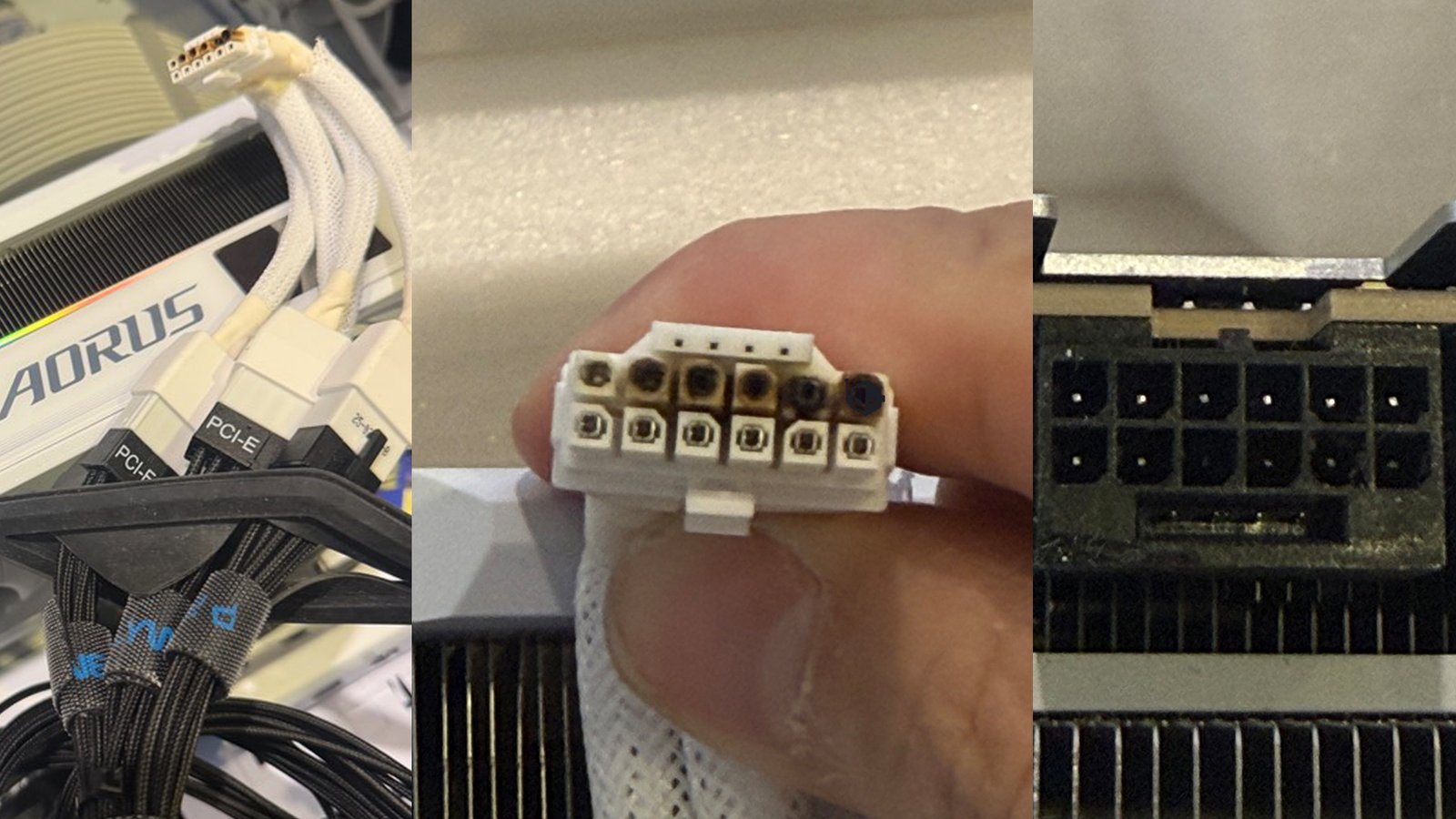
A close-up of a burnt 16-pin power connector on an NVIDIA RTX 5090 GPU, highlighting the issue of connector melting and the need for a safe and reliable design

NVIDIA RTX 5090 Connector Issue: A Persistent Problem

The NVIDIA RTX 5090 has been plagued by a notorious issue: the 16-pin power connector’s tendency to overheat and melt. Despite efforts to mitigate this problem, users continue to report burnt connectors, even when restricting power consumption to 500W or less. This has become a major concern for those seeking to push their GPUs to the limit.

A recent incident involving a GIGABYTE RTX 5090 user highlights the severity of the issue. The user, who had taken steps to limit power consumption, still experienced a burnt 16-pin power connector. This has raised questions about the safety and reliability of the 16-pin connector design.

In contrast to the traditional 6-pin or 8-pin PCIe connectors, the 16-pin connector has proven to be a significant source of trouble. Manufacturers have attempted to address the issue through various mitigation methods, but the problem persists. As a result, users are being forced to take extra precautions to protect their GPUs from damage.

The situation has become increasingly unsettling, with many users feeling that the 16-pin connector is a ticking time bomb waiting to cause chaos. The fact that even careful users, who restrict power consumption to safe levels, are still experiencing connector melting, has sparked a heated debate about the design and safety of the 16-pin connector.

As the debate rages on, one thing is clear: the 16-pin connector issue is a major concern for NVIDIA RTX 5090 users. Until a permanent solution is found, users will be forced to navigate this complex and potentially damaging issue. The question on everyone’s mind is: what can be done to prevent connector melting and ensure the safe operation of the NVIDIA RTX 5090?

For now, users are advised to exercise extreme caution when using their GPUs, ensuring that power consumption is kept within safe limits. However, this is only a temporary solution, and a more permanent fix is needed to address the root cause of the problem. The NVIDIA RTX 5090 is a powerful tool, but its potential is being hindered by the persistent connector issue.

As the gaming and tech communities continue to analyse the situation, it has become clear that a collaborative effort is needed to find a solution. Manufacturers, users, and industry experts must work together to develop a safe and reliable connector design that can handle the power demands of the NVIDIA RTX 5090. Only through this collective effort can we hope to overcome the current limitations and unlock the full potential of this powerful GPU.

In conclusion, the NVIDIA RTX 5090 connector issue is a complex and multifaceted problem that requires a comprehensive solution. While users can take steps to mitigate the risk of connector melting, a more permanent fix is needed to ensure the safe and reliable operation of the GPU. As the situation continues to evolve, one thing is certain: the gaming and tech communities will be watching with bated breath, waiting for a solution to this persistent problem.

The search for a solution is ongoing, and it is likely that we will see new developments in the coming months. For now, users must remain vigilant and take necessary precautions to protect their GPUs. The NVIDIA RTX 5090 is a powerful tool, and with the right solution, it can reach its full potential. The question is, what will that solution be, and when can we expect to see it?

Only time will tell, but one thing is certain: the NVIDIA RTX 5090 connector issue will not be ignored. The gaming and tech communities will continue to push for a solution, and it is likely that we will see significant developments in the near future. For now, users must remain cautious and take necessary steps to protect their GPUs, but the hope is that a permanent solution will be found soon.

The NVIDIA RTX 5090 is a powerful GPU, and its potential is vast. However, the connector issue has cast a shadow over its release, and it is up to the manufacturers and the community to find a solution. With the right approach, it is possible to overcome this issue and unlock the full potential of the NVIDIA RTX 5090. The journey ahead will be challenging, but with perseverance and determination, we can hope to find a solution that will benefit the entire gaming and tech community.


Nothing Phone 4a vs 4a Pro: Key Differences in the UK

The Nothing Phone 4a and 4a Pro side by side, showcasing their unique designs and Glyph lighting systems, with the UK cityscape in the background, highlighting the phones' mid-range smartphone features

Nothing Phone 4a vs 4a Pro: What Sets Them Apart in the UK

The Nothing Phone 4a and 4a Pro have finally arrived in the UK, bringing with them a fresh wave of mid-range smartphone excitement. With their unique designs and innovative features, it can be tricky to decide which model is right for you.

One of the primary differences between the two phones is the Glyph lighting system. The Nothing Phone 4a features a simplified Glyph Bar, comprising 63 mini-LEDs configured into a strip of seven square lights. In contrast, the Nothing Phone 4a Pro boasts a Glyph Matrix display, made up of 137 mini-LEDs, offering animated notifications.

In terms of design, the Nothing Phone 4a and 4a Pro have distinct styles. The non-Pro model has a semi-transparent finish and a pill-shaped camera module, whereas the Pro model has a slimmer, more streamlined look with limited transparency. The Pro also features an aluminium unibody and a slightly better IP65 rating.

Camera enthusiasts will appreciate the superior set-up on the Nothing Phone 4a Pro, which includes a larger Sony LYT700c main sensor and a 50Mp telephoto camera with a maximum 140x hybrid zoom. The Nothing Phone 4a also has a 50Mp telephoto camera, but with a lower 70x hybrid zoom.

As expected, the Nothing Phone 4a Pro comes with a higher price tag, starting at £499 for 8GB of RAM and 128GB of storage. This represents a significant 43% increase over the base Nothing Phone 4a model.

Ultimately, the choice between the Nothing Phone 4a and 4a Pro will depend on your individual needs and budget. Both phones offer a unique blend of style, innovation, and performance, making them two of the most exciting mid-range options available in the UK.

Nothing Phone 4a Pro pre-order tips for USA customers

Nothing Phone 4a Pro pre-order tips for USA customers

How to Secure the Nothing Phone 4a Pro in the U.S.

The Nothing Phone 4a Pro is set to launch in the United States, and prospective buyers can take several steps to ensure a smooth pre-order experience. Planning ahead and understanding the pre-order process is essential to secure the device and any promotional offers.

The pre-order period for the Phone 4a Pro is expected to open in early July 2025. Customers should monitor Nothing’s official U.S. website for announcements and sign up for notifications to receive updates about availability and shipping timelines. Early pre-orders are recommended, as promotional gifts and limited stock may be available on a first-come, first-served basis.

Pricing in the U.S. will vary depending on the chosen configuration. The base model with 8GB RAM and 128GB storage is expected to be priced affordably for mid-range users, while the higher-end 12GB RAM with 256GB storage model offers more storage for power users. Choosing the correct variant based on personal storage needs is important, as the device does not support expandable memory.

Nothing Phone 4a Pro pre-order tips

Shipping and delivery should be carefully considered when pre-ordering. Standard shipping may take several days, while express shipping options, if available, can reduce waiting times. Customers should ensure that their delivery address and contact details are accurate to avoid delays or misdeliveries.

Promotional offers, such as complimentary accessories or upgraded storage, may be included during the pre-order period. Buyers should review the terms and conditions of these offers carefully and make sure to manually add any gifts to the cart during checkout to qualify for the promotion.

Customer support and warranty coverage are also critical considerations. The Nothing Phone 4a Pro will come with a standard warranty covering manufacturing defects, and U.S. customers should register their device to activate warranty services. Nothing’s support channels, including online resources and contact options, can assist with pre-order issues or post-purchase inquiries.

Finally, carrier compatibility should be confirmed prior to purchase. The Phone 4a Pro is expected to support major U.S. carriers and 5G connectivity, but features such as VoLTE or Wi-Fi calling may vary. Checking with your specific carrier ensures full functionality upon arrival.

By following these tips, U.S. consumers can pre-order the Nothing Phone 4a Pro confidently, secure their preferred configuration, and take advantage of any early promotional offers. Proper preparation and attention to detail will help guarantee a smooth launch experience.

NVIDIA RTX 50 SUPER Series Launch Delayed Due to Memory Shortages

NVIDIA GeForce RTX 50 SUPER series graphics cards, impacted by memory shortages and supply chain constraints, with a focus on the primary keyword phrase 'NVIDIA RTX 50 SUPER'

NVIDIA’s Consumer GPU Plans Take a Hit Due to Memory Supply Constraints

NVIDIA’s plans for consumer GPU launches this year are uncertain, with reports suggesting the RTX 50 SUPER series won’t launch at all. The ongoing DRAM supply shortage has forced GPU manufacturers to revise their roadmaps, disrupting future launches. At this year’s CES, there was no mention of next-gen consumer GPUs, primarily due to the difficulty in obtaining necessary chips.

The shortage has significantly impacted NVIDIA’s consumer GPU plans, with many launches being delayed or cancelled. The company’s focus has shifted towards navigating the supply chain challenges, rather than pushing out new products. This has led to a significant slowdown in the client segment, with NVIDIA taking a step back to reassess their strategy.

The RTX 50 SUPER series was expected to be a major launch for NVIDIA, offering improved performance and features. However, with the current supply chain constraints, it seems unlikely that the series will launch this year. NVIDIA’s decision to delay or cancel the launch is likely a result of the company’s efforts to prioritise their resources and manage the supply chain challenges.

The impact of the memory shortage on the tech industry cannot be overstated. With many manufacturers struggling to obtain the necessary components, the launch of new products has been severely disrupted. As the situation continues to unfold, it remains to be seen how NVIDIA and other manufacturers will adapt to the changing landscape. The company’s ability to navigate these challenges will be crucial in determining their success in the client segment.

NVIDIA’s consumer GPU plans are currently under jeopardy, driven by the memory supply constraints. The company’s roadmap for this year has been significantly impacted, with many launches being delayed or cancelled. As the situation continues to evolve, it remains to be seen how NVIDIA will respond to the challenges posed by the memory shortage.

The memory shortage has also had a significant impact on the gaming industry, with many gamers being forced to wait for new hardware. The delay or cancellation of the RTX 50 SUPER series launch will only add to the frustration, as gamers will have to wait even longer for new and improved hardware. NVIDIA’s decision to prioritize their resources and manage the supply chain challenges is likely a result of the company’s efforts to ensure that they can deliver high-quality products to their customers.

As the tech industry continues to navigate the challenges posed by the memory shortage, it remains to be seen how NVIDIA and other manufacturers will adapt. The company’s ability to respond to the changing landscape will be crucial in determining their success in the client segment. With the RTX 50 SUPER series launch delayed or cancelled, NVIDIA will need to reassess their strategy and prioritize their resources in order to stay competitive.

The ongoing DRAM supply shortage has forced GPU manufacturers to revise their roadmaps, disrupting future launches. NVIDIA’s decision to delay or cancel the RTX 50 SUPER series launch is likely a result of the company’s efforts to prioritize their resources and manage the supply chain challenges. As the situation continues to unfold, it remains to be seen how NVIDIA and other manufacturers will adapt to the changing landscape.

NVIDIA’s consumer GPU plans are currently under jeopardy, driven by the memory supply constraints. The company’s roadmap for this year has been significantly impacted, with many launches being delayed or cancelled. The delay or cancellation of the RTX 50 SUPER series launch will only add to the frustration, as gamers will have to wait even longer for new and improved hardware.

The memory shortage has also had a significant impact on the tech industry, with many manufacturers struggling to obtain the necessary components. The launch of new products has been severely disrupted, and it remains to be seen how NVIDIA and other manufacturers will adapt to the changing landscape. As the situation continues to evolve, it is clear that the memory shortage will have a lasting impact on the tech industry.

In conclusion, the delay or cancellation of the RTX 50 SUPER series launch is a significant blow to NVIDIA’s consumer GPU plans. The company’s ability to navigate the supply chain challenges and prioritize their resources will be crucial in determining their success in the client segment. As the tech industry continues to navigate the challenges posed by the memory shortage, it remains to be seen how NVIDIA and other manufacturers will adapt and respond to the changing landscape.

Nvidia GB10 DGX Spark Sees £700 Price Increase in the UK

Nvidia GB10-Powered DGX Spark: A Price Hike in the UK

The Nvidia GB10-based DGX Spark mini workstation has seen a significant price hike in the UK market, which is not entirely unexpected given the current market trends. The system boasts an impressive 128 GB of LPDDR5X memory. This substantial amount of memory makes the system highly susceptible to DRAM price fluctuations. The UK market is feeling the effects of this price increase.

The DGX Spark mini workstation is a powerful tool designed for professionals who require high-performance computing. With its GB10 processor and ample memory, it is an ideal solution for applications that demand intense computational power. However, the recent price hike may affect its appeal to some potential buyers in the UK.

Despite the price increase, the Nvidia GB10-powered DGX Spark remains a top choice for many professionals in the UK. Its exceptional performance and robust features make it a valuable investment for those who require a reliable and high-performance workstation. The system’s 128 GB of LPDDR5X memory is a significant factor in its overall performance.

In the UK, the Nvidia GB10-based DGX Spark mini workstation is widely used in various industries, including gaming, video production, and software development. The system’s ability to handle demanding tasks with ease makes it an essential tool for professionals who need to analyse complex data and run simulations. The recent price hike may lead to a shift in the market, with some buyers potentially exploring alternative options.

The UK market is highly competitive, and the price hike may affect Nvidia’s market share. However, the company remains a leading player in the industry, and its products continue to be in high demand. The Nvidia GB10-powered DGX Spark is a testament to the company’s commitment to delivering high-quality products that meet the needs of professionals in the UK.

As the UK market continues to evolve, it will be interesting to see how the price hike affects the demand for the Nvidia GB10-based DGX Spark mini workstation. One thing is certain – the system remains a top choice for professionals who require a powerful and reliable workstation. The 128 GB of LPDDR5X memory is a significant factor in its appeal, and the system’s overall performance is unparalleled in the UK market.

In conclusion, the Nvidia GB10-powered DGX Spark has seen a significant price hike in the UK, which may affect its appeal to some potential buyers. However, the system remains a top choice for professionals who require a high-performance workstation. Its exceptional performance, robust features, and ample memory make it a valuable investment for those who need a reliable and powerful tool for their work in the UK.

NVIDIA CEO Hails OpenClaw as Game-Changer in UK AI Revolution

A futuristic illustration of a robotic arm interacting with a complex network of computers, symbolising the rise of agentic AI in the UK, with OpenClaw at the forefront of this revolution, bringing about immense compute demand and yields results that replicate human workloads

Revolutionising AI: The Rise of Agentic AI in the UK

NVIDIA’s CEO has recently highlighted the significance of OpenClaw, an innovative software release that has achieved in mere weeks what Linux took 30 years to accomplish. This remarkable feat showcases the immense potential of agentic AI, a technology that is transforming the UK’s AI landscape.

The concept of agentic AI refers to the ability of artificial intelligence systems to interact with their environment in a more human-like manner, yielding impressive results in hyper-personalized settings. OpenClaw, in particular, has demonstrated its capacity to replicate human workloads, bringing about a substantial increase in compute demand.

According to NVIDIA’s CEO, AI can be likened to a ‘5-layer cake’, with the applications layer being a crucial component that generates significant returns for hyperscalers and frontier labs. The integration of AI agents, such as OpenClaw, has the potential to revolutionise various industries in the UK, from healthcare to finance.

As the UK continues to invest in AI research and development, the emergence of agentic AI is expected to have a profound impact on the nation’s economy and behaviour. With its ability to analyse complex data sets and make informed decisions, agentic AI is poised to become a driving force behind the UK’s technological advancements.

The implications of agentic AI on the UK’s colour palette of industries are vast, with potential applications in fields such as education, transportation, and energy. As the technology continues to evolve, it is likely that we will see a significant shift in the way businesses and organisations operate, with a greater emphasis on AI-driven solutions.

In conclusion, the rise of agentic AI in the UK is a testament to the nation’s commitment to innovation and technological progress. With OpenClaw at the forefront of this revolution, we can expect to see significant advancements in the field of AI, leading to improved efficiency, productivity, and decision-making across various industries.

Nvidia DLSS 4.5 Dominates AMD FSR in Massive Gamer Test

A group of gamers sitting in front of a large screen displaying a high-quality gaming scene, with the Nvidia DLSS 4.5 logo prominently displayed, showcasing the technology's ability to deliver exceptional image quality and performance, with a colour palette that is both vibrant and immersive, making it the go-to choice for gamers seeking the best possible experience

Nvidia’s DLSS 4.5 Leaves AMD’s FSR in the Dust

A recent blind test has revealed a significant preference amongst gamers for Nvidia’s DLSS 4.5 over AMD’s FSR 4 and native rendering, with nearly half of the 6,700 respondents choosing DLSS 4.5.

This substantial margin is a testament to the superior technology behind Nvidia’s DLSS, which has been steadily improving with each iteration.

The test, conducted by a prominent publication, aimed to analyse the differences in visual quality and performance between DLSS 4.5, FSR 4, and native rendering.

The results show that less than 15% of gamers chose FSR 4, indicating a clear behaviour trend amongst gamers towards Nvidia’s technology.

DLSS 4.5’s victory can be attributed to its ability to deliver exceptional image quality while maintaining high frame rates, a crucial aspect for gamers seeking immersive experiences.

As the gaming industry continues to evolve, the demand for advanced technologies like DLSS will only continue to grow, further solidifying Nvidia’s position in the market.

With the continuous improvement of DLSS, it will be interesting to see how AMD responds with their FSR technology to stay competitive in the colour palette of the gaming world.

The implications of this test are significant, as they demonstrate the power of Nvidia’s DLSS 4.5 in the eyes of gamers, setting a high standard for future technologies to follow.

As we look to the future, one thing is certain – the battle for supremacy in the graphics rendering space will only continue to intensify, with gamers being the ultimate beneficiaries of this competition.

In conclusion, the results of this massive blind test are a resounding endorsement of Nvidia’s DLSS 4.5, and a clear indication of the direction the gaming industry is heading.

With Nvidia’s commitment to innovation and technological advancement, it is likely that DLSS will remain a dominant force in the gaming world for the foreseeable future.

The choice is clear: for gamers seeking the best possible experience, Nvidia’s DLSS 4.5 is the superior choice, offering unparalleled visual quality and performance.

As the gaming community continues to grow and evolve, the importance of technologies like DLSS 4.5 will only continue to increase, driving the industry forward and pushing the boundaries of what is possible.

Ultimately, the success of DLSS 4.5 is a testament to the power of innovation and the relentless pursuit of excellence in the gaming industry.

Nvidia RTX 5090 Giveaway UK: Win a Custom Resident Evil Requiem GPU

A custom Nvidia RTX 5090 with a unique Resident Evil Requiem wrap, showcasing the GPU's sleek design and powerful performance, perfect for gaming in the UK

Celebrating Resident Evil Requiem with Nvidia’s RTX 5090 Giveaway in the UK

To commemorate the launch of Resident Evil Requiem, Nvidia is hosting an exciting giveaway in the UK, featuring the powerful RTX 5090 with a custom Resident Evil Requiem wrap.

This unique opportunity allows gamers to get their hands on the flagship GPU of the RTX 50-series, perfect for an immersive gaming experience with stunning graphics and performance.

The RTX 5090 is designed to deliver exceptional colour and detail, making it ideal for playing Resident Evil Requiem and other demanding games.

By entering the giveaway, participants can analyse their chances of winning this incredible prize and experience the thrill of gaming with Nvidia’s cutting-edge technology.

NVIDIA CEO Defends DLSS 5 Against UK Gamer Backlash

A descriptive image of NVIDIA's DLSS 5 technology in action, showcasing its ability to create realistic, detailed environments and characters, with a focus on the UK gaming community and the potential impact of AI on the industry

NVIDIA’s DLSS 5 Technology: Separating Fact from Fiction

The recent unveiling of NVIDIA’s DLSS 5 technology has sparked intense debate among UK gamers, with some critics labelling it ‘AI slop’. However, NVIDIA’s CEO, Jensen, has hit back at these claims, insisting that developers have full artistic control over the technology.

DLSS 5 leverages the power of neural rendering to enhance in-game visuals, creating hyper-realistic scenarios that are designed to revolutionise the gaming experience. Despite this, many UK gamers remain sceptical, citing concerns over the potential loss of control and the role of AI in game development.

However, Jensen argues that these concerns are misplaced, and that DLSS 5 is simply a tool designed to give developers the leverage they need to achieve realistic output. The technology, which was showcased at this year’s GTC, has been hailed as a game-changer by many in the industry.

As the UK gaming community continues to analyse and debate the implications of DLSS 5, one thing is clear: the technology has the potential to significantly enhance the gaming experience. With its ability to create realistic, detailed environments and characters, DLSS 5 is set to change the face of UK gaming forever.

But what does this mean for UK gamers, and how will DLSS 5 impact the industry as a whole? As the technology continues to evolve, it will be interesting to see how developers choose to utilise it, and how gamers respond to the new, hyper-realistic worlds that it creates.

Ultimately, the success of DLSS 5 will depend on its ability to deliver on its promises, and to provide UK gamers with the kind of immersive, engaging experience that they crave. If it can do this, then the technology is likely to be a huge success, and will play a major role in shaping the future of the UK gaming industry.

The use of AI in game development is a topic of much debate, with some arguing that it has the potential to stifle creativity and limit the scope of game design. However, others see it as a powerful tool, one that can be used to create new, innovative experiences that would be impossible to achieve through traditional means.

In the case of DLSS 5, the technology is designed to work in conjunction with human developers, providing them with the tools and resources they need to create realistic, engaging environments. This collaborative approach has the potential to revolutionise the gaming industry, and to create new, exciting experiences for UK gamers.

As the UK gaming community continues to evolve and grow, it will be interesting to see how DLSS 5 is received, and how it impacts the industry as a whole. One thing is certain, however: the technology has the potential to be a game-changer, and to play a major role in shaping the future of UK gaming.

The potential benefits of DLSS 5 are clear, but there are also potential drawbacks to consider. For example, the technology requires significant computational power, which can be a challenge for some UK gamers. Additionally, there are concerns over the potential for DLSS 5 to be used to create realistic, but ultimately fake, environments and characters.

Despite these concerns, however, the majority of UK gamers are likely to be excited about the potential of DLSS 5. The technology has the potential to create new, immersive experiences that are more realistic and engaging than ever before. As the industry continues to evolve, it will be interesting to see how DLSS 5 is used, and how it impacts the UK gaming community.

In conclusion, DLSS 5 is a technology that has the potential to revolutionise the UK gaming industry. With its ability to create realistic, detailed environments and characters, it is set to change the face of gaming forever. While there are potential drawbacks to consider, the benefits of DLSS 5 are clear, and it will be exciting to see how the technology is used in the future.

NVIDIA CEO Challenges US Chip Production Targets

NVIDIA CEO speaking at a conference, with a background of chip production lines, highlighting the importance of TSMC in the US chip production target, with a focus on adding newer capacity in the US while maintaining exclusivity in Taiwan

NVIDIA CEO Speaks Out on US Chip Production Targets

The recent trade deal between the US and Taiwan has sparked a significant shift in the chip production landscape. NVIDIA’s CEO has weighed in on the matter, stating that the US chip production target requires TSMC to add more capacity rather than abandoning Taiwan. This move is seen as a strategic play to maintain exclusivity in Taiwan while expanding capacity in the US.

TSMC has been at the forefront of the geopolitical landscape, with chips becoming a matter of national security for several countries worldwide. The pressure to shift chip production lines to the US has increased sharply since President Trump took office. The recent US-Taiwan trade deal has only added to the complexity of the situation.

The CEO’s comments come at a time when the global chip shortage is still a major concern. The shift in production capacity is expected to have a significant impact on the industry, with many players vying for a share of the market. As the situation continues to evolve, one thing is certain – the future of chip production will be shaped by the decisions made today.

The US chip production target is an ambitious one, with many hurdles to overcome. However, with the right strategy and investment, it is possible to achieve the desired outcome. As the industry continues to analyse the situation, one thing is clear – the role of TSMC will be crucial in determining the success of the US chip production target.

The company’s decision to add more capacity in the US rather than abandoning Taiwan is a testament to its commitment to the region. With the recent trade deal in place, it will be interesting to see how the situation unfolds. As the global chip landscape continues to shift, one thing is certain – the importance of Taiwan in the production of chips will not be diminished.

In conclusion, the NVIDIA CEO’s comments have shed new light on the US chip production target. As the industry continues to navigate the complex landscape, it is clear that the role of TSMC will be pivotal in determining the success of the target. With the right strategy and investment, it is possible to achieve the desired outcome and shape the future of chip production.

Nvidia RTX 5090 Ti: A Marginal Performance Boost with a Significant Power Surge

The Nvidia RTX 5090 Ti graphics card, with a minor spec bump and notable increase in power consumption, is set to shape the future of graphics card design with its exceptional performance and power-hungry behaviour, featuring the Blackwell Titan

Nvidia’s Latest Flagship: RTX 5090 Ti/ Blackwell Titan

The upcoming Nvidia RTX 5090 Ti/ Blackwell Titan has been making waves in the tech community, with recent leaks suggesting a minor spec bump. According to Moore’s Law is Dead, the new flagship graphics card will offer only marginal performance gains.

However, what’s more striking is the notable increase in power consumption. The RTX 5090 Ti will reportedly consume remarkably more power than its predecessor.

This development has sparked interesting discussions about the future of graphics card design. As the industry continues to push the boundaries of performance, it’s clear that power consumption will become an increasingly important consideration.

For gamers and content creators, the RTX 5090 Ti’s minor performance boost may not be enough to justify the significant increase in power consumption. Nevertheless, the new flagship card is still expected to deliver exceptional performance.

The RTX 5090 Ti’s power consumption is likely to be a major concern for system builders and enthusiasts. As the demand for more powerful graphics cards continues to grow, manufacturers will need to find innovative ways to balance performance with power efficiency.

While the RTX 5090 Ti may not be a major performance upgrade, it’s still an important release for Nvidia. The new flagship card will likely set the tone for future graphics card designs, and its impact will be felt across the industry.

As we await the official release of the RTX 5090 Ti, it’s clear that the graphics card market is on the cusp of an exciting new era. With the rise of new technologies and innovations, we can expect to see significant advancements in performance and power efficiency.

For now, the RTX 5090 Ti remains an intriguing release that promises to deliver exceptional performance. While its power consumption may be a concern, the new flagship card is still an important step forward for Nvidia and the graphics card industry.

The future of graphics card design is looking bright, with the RTX 5090 Ti set to play a major role in shaping the industry’s direction. As we look to the future, it’s clear that innovation and performance will continue to drive the development of new graphics cards.

With the RTX 5090 Ti, Nvidia is poised to maintain its position as a leader in the graphics card market. The new flagship card’s minor performance boost and significant power surge make it an interesting release that’s sure to generate plenty of discussion.

In conclusion, the Nvidia RTX 5090 Ti is an important release that promises to deliver exceptional performance. While its power consumption may be a concern, the new flagship card is still a significant step forward for Nvidia and the graphics card industry.

NVIDIA Predicts £1 Trillion UK Compute Revenue Boom in 2 Years

NVIDIA CEO Jensen Huang speaking at GTC 2025, highlighting the company's role in driving AI-powered growth in the UK, with a focus on inference and compute revenue

NVIDIA Forecasts Explosive Compute Revenue Growth in the UK

NVIDIA’s CEO, Jensen Huang, has revealed a staggering projection for compute demand in the coming years, with the figure expected to reach £1 trillion in just two years. This unprecedented growth is driven by the AI industry’s shift towards inference, which is revolutionizing the way businesses operate in the UK. As the demand for compute power surges, NVIDIA is poised to capitalize on this trend.

The AI industry has reached an inflection point, with a significant shift from training workloads to inference, resulting in increased compute demand and aggressive revenue growth. This trend is expected to continue, with NVIDIA’s performance with Blackwell playing a crucial role in driving this growth. The company’s ability to deliver high-performance computing solutions will be essential in meeting the growing demand for AI-powered applications in the UK.

The implications of this growth are far-reaching, with the potential to transform industries such as healthcare, finance, and transportation in the UK. As AI continues to evolve, the demand for compute power will only continue to increase, driving innovation and economic growth. With NVIDIA at the forefront of this trend, the company is well-positioned to drive this growth and capitalize on the opportunities it presents.

In the UK, the government has recognized the potential of AI to drive economic growth and has invested heavily in initiatives to support the development of AI-powered technologies. As the demand for compute power continues to grow, it is likely that we will see significant investment in data centres and other infrastructure to support this growth. This will not only drive economic growth but also create new job opportunities in the UK.

The shift towards inference is also expected to drive innovation in areas such as natural language processing, computer vision, and machine learning. As AI-powered applications become more pervasive, we can expect to see significant advances in areas such as speech recognition, image recognition, and predictive analytics. This will have a profound impact on the way businesses operate in the UK, enabling them to make better decisions, improve efficiency, and drive growth.

However, the growth of AI also raises important questions about the potential risks and challenges associated with this technology. As AI becomes more pervasive, there is a growing need for businesses and governments to consider the ethical implications of AI and ensure that it is developed and deployed in a responsible and transparent manner. This will be essential in building trust in AI and ensuring that its benefits are realized.

In conclusion, the predicted £1 trillion compute revenue boom in the UK is a significant opportunity for businesses and investors. As the demand for compute power continues to grow, it is likely that we will see significant investment in data centres, infrastructure, and AI-powered technologies. With NVIDIA at the forefront of this trend, the company is well-positioned to drive this growth and capitalize on the opportunities it presents.