Revolutionising Factory Floors: Humanoid Robots Take Centre Stage in the Age of Automation
Humanoid Robots: The Future of Factory Floors
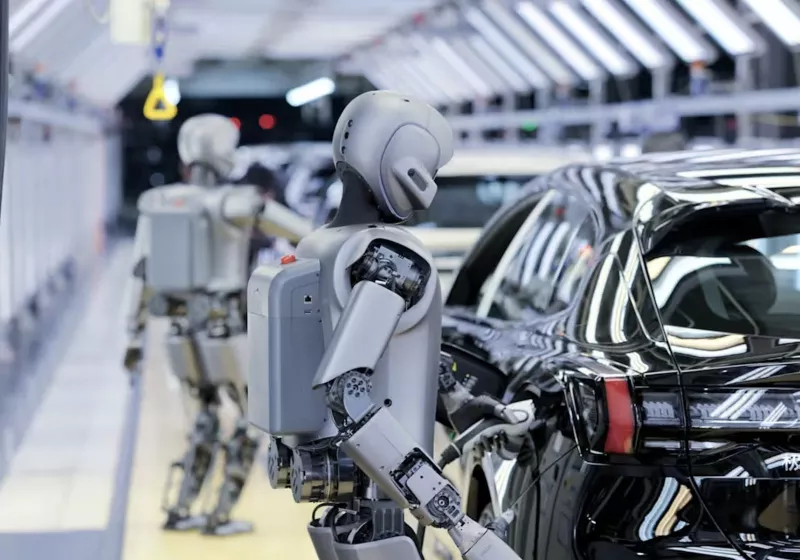
As the world of automation continues to evolve, humanoid robots are becoming increasingly popular in factory settings. Despite being able to work only half as fast as their human counterparts, these machines are in high demand. Manufacturers such as BYD and Foxconn, both partners with UBTech, are at the forefront of this trend, experimenting with humanoids to offset labor shortages and remain competitive.
The rise of humanoid robots is a significant development in the field of automation. With their ability to perform tasks with precision and accuracy, these machines are well-suited to a variety of applications. From assembly lines to packaging, humanoid robots are being used to streamline processes and improve efficiency.
One of the primary benefits of humanoid robots is their ability to work alongside humans. This collaboration enables factories to maintain a high level of productivity while also reducing the risk of accidents and injuries. By automating certain tasks, humanoid robots can help to free up human workers, allowing them to focus on more complex and creative tasks.
Despite the many advantages of humanoid robots, there are still some limitations to their use. For example, they are currently unable to match the speed and agility of human workers. However, as technology continues to advance, it is likely that these machines will become increasingly sophisticated, enabling them to perform tasks with greater speed and accuracy.
The increasing demand for humanoid robots is driven by a number of factors, including labor shortages and the need for increased productivity. As manufacturers seek to remain competitive in a rapidly changing market, they are turning to automation as a means of improving efficiency and reducing costs. Humanoid robots are well-suited to this task, offering a flexible and adaptable solution to a variety of manufacturing challenges.
In conclusion, the rise of humanoid robots is a significant development in the field of automation. With their ability to perform tasks with precision and accuracy, these machines are well-suited to a variety of applications. As technology continues to advance, it is likely that humanoid robots will become an increasingly common sight on factory floors, working alongside humans to improve productivity and efficiency.
The use of humanoid robots in factory settings is a trend that is likely to continue in the coming years. As manufacturers seek to remain competitive and improve productivity, these machines will play an increasingly important role. With their ability to automate tasks and work alongside humans, humanoid robots are set to revolutionise the world of automation, enabling factories to operate with greater efficiency and precision.
As the world of automation continues to evolve, it will be interesting to see how humanoid robots develop and improve. With advances in technology and design, these machines are likely to become increasingly sophisticated, enabling them to perform tasks with greater speed and accuracy. For now, however, they remain an important part of the manufacturing process, helping to streamline production and improve efficiency.
The benefits of humanoid robots are clear, and their use is likely to become more widespread in the coming years. As manufacturers seek to improve productivity and reduce costs, these machines will play an increasingly important role. With their ability to automate tasks and work alongside humans, humanoid robots are set to revolutionise the world of automation, enabling factories to operate with greater efficiency and precision.