
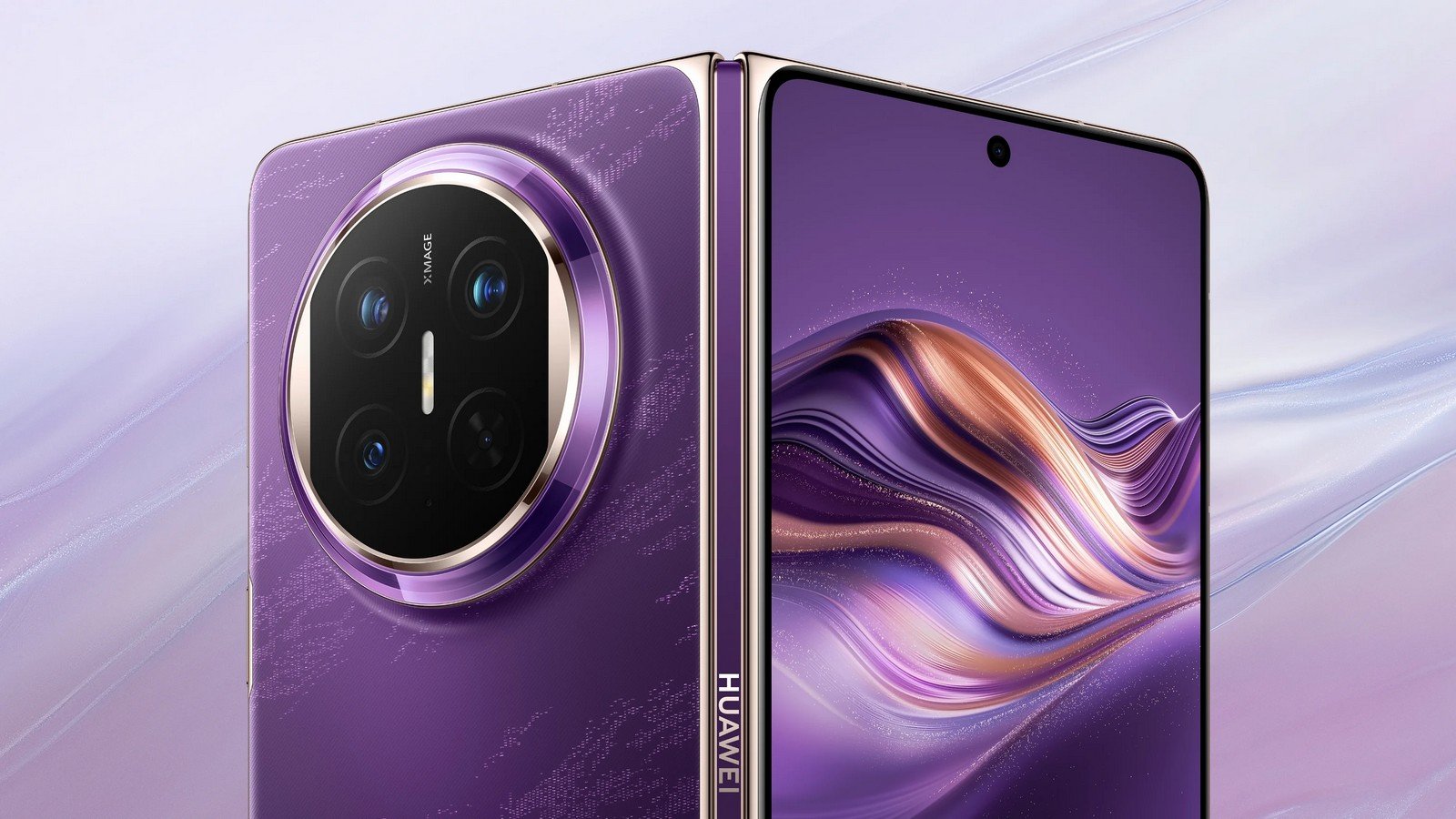
Huawei Unveils Mate X8 Foldable With Magnetic Crease Hiding Technology
Huawei has officially launched the Mate X8, its latest book-style foldable smartphone that pushes the boundaries of display engineering with a magnetic hinge system designed to minimize crease visibility on the expansive 8.2-inch inner screen. The device enters a fiercely competitive segment dominated by the Samsung Galaxy Z Fold 6, Google Pixel 9 Pro Fold, and OnePlus Open, but Huawei aims to differentiate through hardware innovation and aggressive specification sheet.
Design and Display Innovation
The Mate X8 features a redesigned hinge mechanism that incorporates magnetic levitation technology to keep the display layers separated during folding, reducing the telltale crease that has plagued foldable devices since the original Samsung Galaxy Fold. When unfolded, the 8.2-inch OLED panel offers a 2K resolution with 120Hz adaptive refresh rate and 3000 nits peak brightness, putting it on par with the Honor Magic V3 and Xiaomi Mix Fold 4 in terms of raw display metrics. The outer cover display measures 6.5 inches with similar high refresh rate support, enabling full smartphone functionality without unfolding the device.
At just 4.8mm thin when unfolded and weighing approximately 215 grams, the Mate X8 is notably slimmer and lighter than the Samsung Galaxy Z Fold 6 which measures 5.6mm and weighs 239 grams. This dimensional advantage comes from Huawei’s use of carbon fiber reinforcement in the hinge assembly and a new titanium alloy frame that maintains structural rigidity while shedding weight.
Performance and Battery
Powering the Mate X8 is the Kirin 9050 Pro chipset, Huawei’s latest flagship silicon manufactured on SMIC’s 7nm process. The octa-core CPU combines high-performance Taishan cores with efficiency-focused Cortex-A510 cores, paired with a Maleoon 910 GPU. While synthetic benchmarks may trail the Snapdragon 8 Gen 3 found in the Samsung Galaxy Z Fold 6 and OnePlus Open, real-world performance remains smooth for multitasking and gaming scenarios.
A standout feature is the 6,200 mAh silicon-carbon battery, which exceeds the 4,400 mAh unit in the Samsung Galaxy Z Fold 6 and the 4,800 mAh cell in the Google Pixel 9 Pro Fold. This capacity enables Huawei to claim two-day battery life under moderate usage. The device supports 88W wired fast charging and 50W wireless charging, outpacing the 25W wired and 15W wireless speeds of the Samsung competitor.
Camera Capabilities
The Mate X8 inherits Huawei’s imaging pedigree with a triple camera system headlined by a 50-megapixel RYYB main sensor with variable aperture (f/1.4-f/4.0), a 40-megapixel ultra-wide module, and a 12-megapixel periscope telephoto offering 5x optical zoom. The variable aperture mechanism, previously seen on the Pura 70 Ultra, allows precise depth-of-field control and improved low-light performance. Video recording supports 4K at 60fps across all three lenses with optical image stabilization.
Software and Ecosystem
Running HarmonyOS 4.2, the Mate X8 leverages Huawei’s distributed technology for seamless cross-device workflows with MatePad Pro tablets, MateBook laptops, and HarmonyOS-powered smart home devices. The operating system includes enhanced multi-window gestures, floating window support, and app continuity features optimized for the foldable form factor. Notably, the device lacks Google Mobile Services, relying instead on Huawei Mobile Services and the AppGallery ecosystem.
Pricing and Availability
The Mate X8 starts at 12,999 yuan (approximately $1,830) for the 12GB/256GB configuration in China, with higher tiers reaching 15,999 yuan ($2,250) for 16GB/1TB. Pre-orders begin immediately with general availability slated for December 4. International pricing and launch timeline remain unconfirmed, though previous Mate X series models have seen limited global releases.
Competition in the Foldable Market
The foldable landscape in late 2024 presents consumers with more choices than ever. The Samsung Galaxy Z Fold 6 offers refined software maturity and S Pen support, while the Google Pixel 9 Pro Fold emphasizes computational photography and AI features. The OnePlus Open delivers exceptional value at $1,700 with comparable hardware. The Honor Magic V3 currently holds the thinness crown at 4.35mm unfolded. Huawei’s Mate X8 positions itself as the battery life and charging speed leader, with the magnetic hinge as its unique display differentiator.
For enthusiasts seeking maximum screen real estate in a pocketable form factor, the Mate X8 represents a compelling engineering achievement. Its success will ultimately depend on HarmonyOS ecosystem adoption outside China and whether the magnetic hinge durability proves superior to traditional designs in long-term use.