Northern Lights Display Over Iceland and Canada
Northern Lights: A Breathtaking Display of Colour and Light
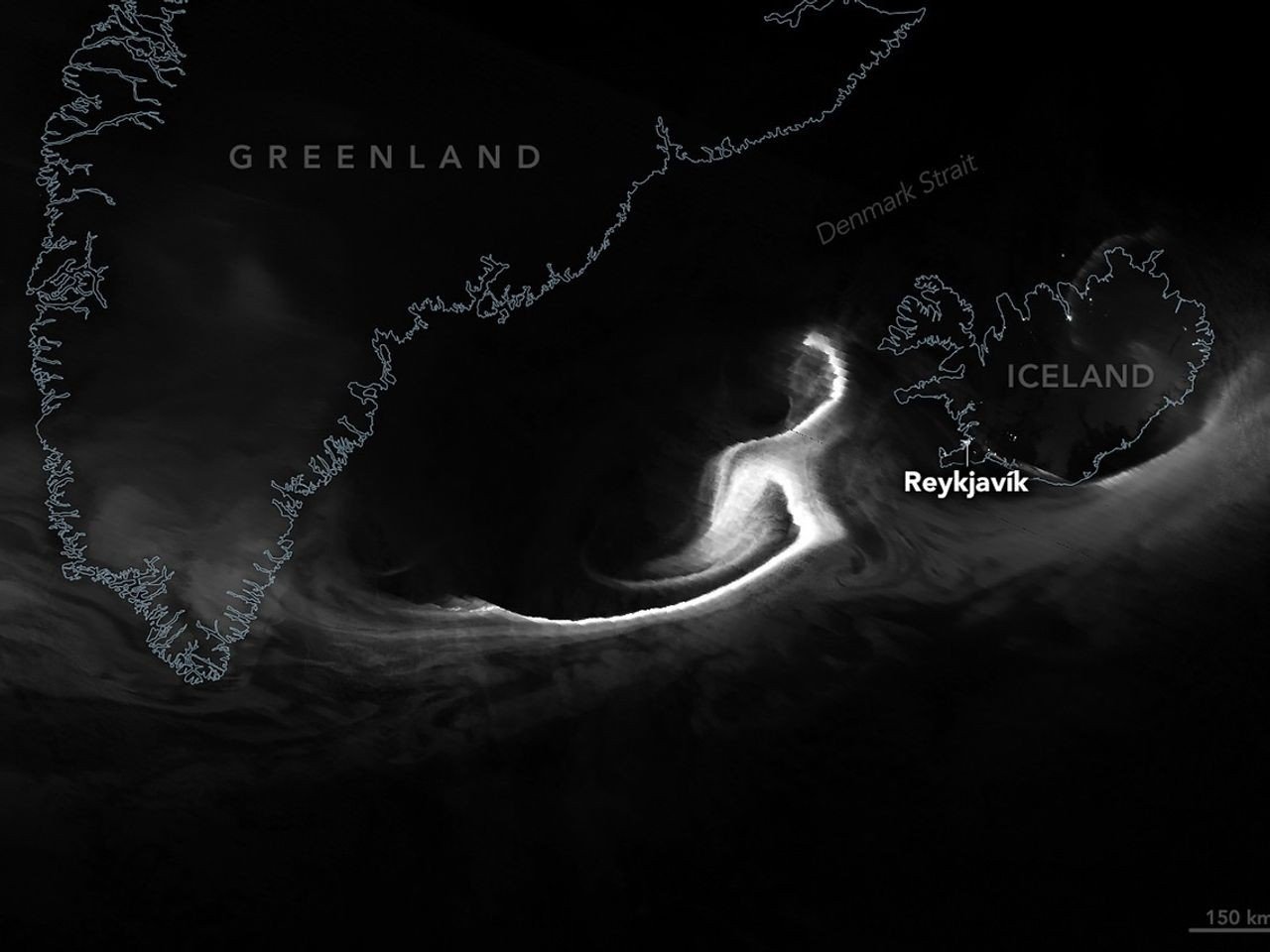
The Northern Lights, also known as the aurora borealis, have been a source of fascination for centuries. Recently, an imaging instrument on a NASA satellite detected a striking display of lights dancing over the Denmark Strait and Eastern Canada. This spectacular display was produced by a minor geomagnetic storm, which caused the night sky to come alive with a kaleidoscope of colour.
The Northern Lights are a natural phenomenon that occurs when charged particles from the sun interact with the Earth’s magnetic field and atmosphere. This interaction causes the particles to collide with atoms and molecules in the atmosphere, resulting in a spectacular display of light and colour. The colour of the Northern Lights can vary depending on the altitude and type of particles involved, with green being the most common colour.
The Northern Lights can be seen in the Northern Hemisphere, primarily at high latitudes such as Iceland, Canada, and Norway. The best time to see the Northern Lights is during the winter months, from September to April, when the nights are darkest and the skies are clearest. The Northern Lights are a popular tourist attraction, with many people travelling to these destinations to witness this breathtaking phenomenon.
In addition to their natural beauty, the Northern Lights also have a significant impact on the environment and human behaviour. The Northern Lights can interfere with communication systems and navigation equipment, and they can also have an impact on the Earth’s climate. Furthermore, the Northern Lights have been a source of inspiration for artists, writers, and musicians throughout history, with many works of art and literature featuring this phenomenon as a central theme.
The recent detection of the Northern Lights by the NASA satellite is a reminder of the awe-inspiring beauty and complexity of our universe. The Northern Lights are a natural wonder that continues to fascinate and inspire us, and their study can provide valuable insights into the workings of our planet and the universe as a whole. By analysing the Northern Lights, scientists can gain a better understanding of the Earth’s magnetic field and atmosphere, and how they interact with the sun and the solar wind.
The study of the Northern Lights is a multidisciplinary field that involves physics, astronomy, and geology. Scientists use a variety of techniques to study the Northern Lights, including satellite imaging, spectroscopy, and computer modelling. By combining these techniques, scientists can gain a more complete understanding of the Northern Lights and their role in the Earth’s system. The Northern Lights are a complex and dynamic phenomenon that continues to capture the imagination of scientists and the general public alike.
In conclusion, the Northern Lights are a breathtaking display of colour and light that can be seen in the Northern Hemisphere. The recent detection of the Northern Lights by the NASA satellite is a reminder of the beauty and complexity of our universe, and the importance of continued scientific study and exploration. By analysing the Northern Lights, scientists can gain a better understanding of the Earth’s magnetic field and atmosphere, and how they interact with the sun and the solar wind.