
Unveiling Uranus’ Auroras: James Webb Space Telescope’s Groundbreaking 3D Mapping
Revolutionising Our Understanding of Ice Giants: The James Webb Space Telescope’s Uranus Auroras Mapping
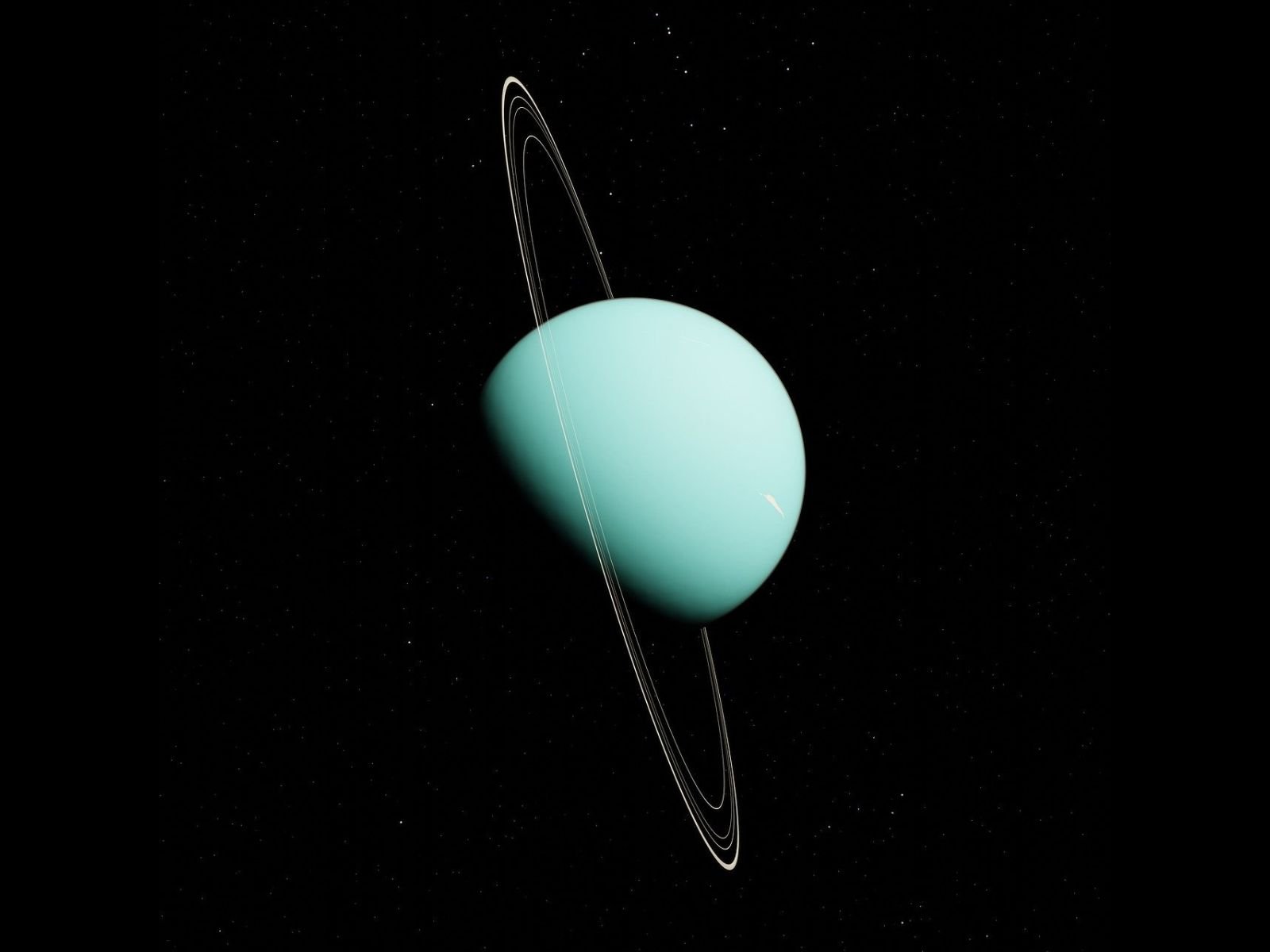
The James Webb Space Telescope has successfully mapped the auroras of Uranus in 3D, a major breakthrough in the field of astronomy. This achievement is set to significantly enhance our understanding of ice giants. By analysing the behaviour of these auroras, scientists can gain valuable insights into the planet’s magnetic field and upper atmosphere. The James Webb Space Telescope’s advanced technology has made it possible to capture the complex dance of charged particles in unprecedented detail.
The study of auroras on Uranus is crucial for understanding the planet’s unique characteristics. The auroras are formed when charged particles from the solar wind interact with the planet’s magnetic field and atmosphere. By mapping these auroras in 3D, astronomers can better comprehend the complex interactions between the solar wind, the magnetic field, and the atmosphere. This knowledge will help scientists to analyse the colour and intensity of the auroras, providing a deeper understanding of the planet’s behaviour.
The James Webb Space Telescope’s findings are expected to have a significant impact on our understanding of the outer planets. The telescope’s advanced instrumentation and sensitivity have enabled scientists to capture high-resolution images of the auroras, revealing intricate details that were previously unknown. As scientists continue to study the data, they will be able to refine their models of the planet’s magnetic field and upper atmosphere, leading to a more comprehensive understanding of the planet’s behaviour and evolution.
The mapping of Uranus’ auroras in 3D is a testament to the James Webb Space Telescope’s capabilities and the dedication of the scientists involved. The telescope’s advanced technology has opened up new avenues for research, allowing scientists to study the universe in unprecedented detail. As the telescope continues to explore the universe, it is likely to make many more groundbreaking discoveries, revolutionising our understanding of the cosmos and inspiring future generations of scientists and astronomers.
The study of Uranus’ auroras is not only important for understanding the planet itself but also for gaining insights into the formation and evolution of our solar system. By analysing the behaviour of the auroras, scientists can learn more about the planet’s history and how it has changed over time. This knowledge will help scientists to better understand the complex interactions between the planets and the solar wind, leading to a more comprehensive understanding of the solar system as a whole.
The James Webb Space Telescope’s discovery is a significant milestone in the field of astronomy, and it is expected to have a lasting impact on our understanding of the universe. As scientists continue to study the data, they will be able to refine their models of the planet’s magnetic field and upper atmosphere, leading to a more comprehensive understanding of the planet’s behaviour and evolution. The telescope’s advanced technology has made it possible to capture the complex dance of charged particles in unprecedented detail, and its findings will continue to inspire and educate scientists and astronomers for years to come.
The mapping of Uranus’ auroras in 3D is a remarkable achievement that demonstrates the power of human curiosity and ingenuity. The James Webb Space Telescope’s discovery is a testament to the importance of continued investment in scientific research and exploration. As we continue to push the boundaries of human knowledge, we will undoubtedly uncover many more secrets of the universe, leading to a deeper understanding of the cosmos and our place within it.
The James Webb Space Telescope’s findings will be published in a forthcoming paper, providing a detailed analysis of the data and the implications for our understanding of the universe. The paper will provide a comprehensive overview of the telescope’s discovery, including the methods used to map the auroras and the results of the study. By sharing their findings with the scientific community, the researchers involved in the project hope to inspire further research and exploration, leading to a greater understanding of the universe and its many mysteries.
The study of Uranus’ auroras is an ongoing process, and scientists will continue to analyse the data and refine their models of the planet’s magnetic field and upper atmosphere. As new discoveries are made, they will be shared with the scientific community, providing a deeper understanding of the planet and its place in the solar system. The James Webb Space Telescope’s discovery is a significant milestone in the field of astronomy, and it will undoubtedly inspire further research and exploration in the years to come.