McDonald’s AI Christmas Advert: A Cautionary Tale of ‘Soulless’ Holiday Spirit
McDonald’s AI Christmas Advert: A Cautionary Tale of ‘Soulless’ Holiday Spirit
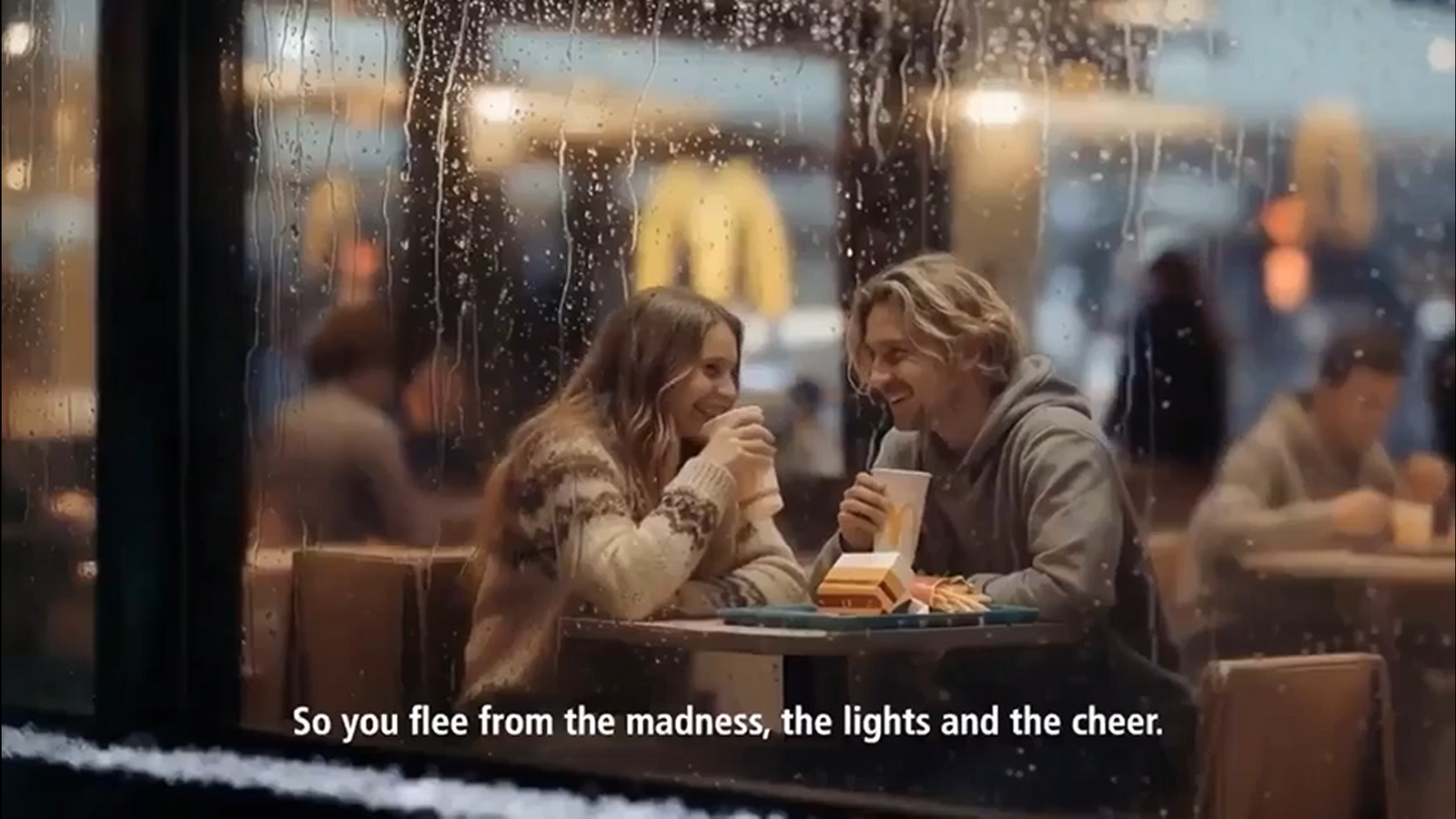
Fast-food giant McDonald’s recently found itself unexpectedly in the limelight, opting to swiftly remove a Christmas commercial from circulation. The festive advert, notably crafted using artificial intelligence, ignited a significant public outcry almost immediately after its online release, leading to its prompt withdrawal from all platforms.
This decisive action by the globally recognised restaurant chain vividly highlights the increasing scrutiny and evolving public sentiment surrounding the rapid integration of AI into creative endeavors. What might have initially seemed like an innovative and cost-effective approach to holiday marketing quickly transformed into a crucial lesson in brand perception and the complex nuances of digital artistry.
The primary source of the widespread criticism directed at the AI-generated offering centred acutely on its perceived stark lack of authenticity and genuine festive warmth. Viewers across social media platforms widely described the visuals as inherently “soulless,” with many expressing that the machine-made imagery profoundly failed to capture the true spirit and heartfelt joy traditionally associated with the cherished Christmas period in the UK.
Furthermore, numerous online commentators pointed out distinct instances of “holiday chaos” within the advert’s visual composition, suggesting a remarkably disjointed or unsettling aesthetic that ultimately detracted significantly from its intended heartwarming message. This often manifests as the unsettling “uncanny valley” effect, where visuals are almost human-like but subtly disconcerting, thereby preventing any true emotional connection with the audience.
For a colossal brand as internationally recognised and beloved as McDonald’s, the initial strategic decision to utilise artificial intelligence for such a prominent and emotionally resonant holiday campaign likely stemmed from a strong desire for enhanced efficiency and perhaps to showcase a progressive embrace of technological advancement. AI promises compelling advantages such as quicker content turnaround times and potentially substantially reduced production costs, making it an appealing prospect for large multinational corporations operating on tight schedules.
However, this particular incident serves as a remarkably potent and timely reminder that mere cost-effectiveness and accelerated production timelines do not inherently guarantee resonance or positive reception from the target audience. Especially during emotionally charged and culturally significant seasons like Christmas, consumers typically seek out and deeply value authentic connections, relatable narratives, and content that genuinely reflects shared human experiences and traditions.
The intensity of the public backlash strongly underscores a rapidly growing societal dialogue and ongoing ethical debate about the burgeoning role of AI within creative industries and its current inherent capacity to truly replicate nuanced human emotion, artistic flair, and genuine creative ingenuity. While advanced AI can certainly generate visually impressive outputs, the irreplaceable human element of intuition, empathy, and storytelling remains an absolutely critical ingredient for profoundly successful and impactful advertising.
This specific episode may also significantly prompt other major international brands to fundamentally reconsider and refine their comprehensive strategies when cautiously exploring the implementation of AI for highly visible and public-facing marketing campaigns. The undeniable potential for widespread negative public relations and the palpable risk of alienating a deeply loyal customer base can unequivocally outweigh any perceived short-term benefits of relying solely on purely AI-driven content generation.
Furthermore, the discerning public’s visceral reaction to the advert suggests a pronounced and strong preference for content that unequivocally feels handcrafted, thoughtfully produced, and imbued with human intention, particularly when it comes to celebrating deeply cherished cultural milestones and festivities. There remains an inherent, profound value placed on the irreplaceable human touch, which AI, in its current iterative form, still significantly struggles to authentically and convincingly replicate with consistent success.
The recurring descriptor of “soulless” used by numerous critics is particularly telling, unequivocally indicating that modern consumers possess an acute ability to discern and differentiate between content born of genuine human creativity and that which is merely generated algorithmically. This crucial distinction is becoming increasingly significant and widely recognised as AI tools become more sophisticated, accessible, and broadly adopted across a diverse array of creative and commercial sectors.
Consequently, forward-thinking brands must now carefully and strategically navigate this rapidly evolving technological landscape, understanding explicitly that while AI can indeed serve as an invaluable and powerful tool for automating specific tasks and enhancing workflows, it may not yet be adequately prepared or sophisticated enough to fully take the creative reins on highly emotive, culturally sensitive, or brand-defining projects without extensive human oversight. Striking the precise and optimal balance between innovation and authenticity is absolutely paramount for steadfastly maintaining brand integrity and fostering enduring customer loyalty.
The incident further ignites a broader and necessary discussion on pertinent issues such as intellectual property rights, copyright implications, and various ethical considerations surrounding AI-generated artistic and commercial content. Crucial questions legitimately arise regarding the original proprietary data sources used to meticulously train these complex AI models, and whether their resultant outputs truly represent genuinely original creative works or are merely exceptionally sophisticated pastiches or remixes of existing human-created content.
Ultimately, McDonald’s remarkably swift and decisive removal of the contentious AI-generated advert powerfully demonstrates a commendable responsiveness to overwhelming public opinion and a clear, pragmatic willingness to promptly course-correct when a high-profile campaign unequivocally misses its intended mark. This proactive and transparent approach is crucial for effectively mitigating any potential long-term damage to their highly valued brand reputation and actively working to rebuild crucial consumer trust.
For astute marketers, innovative advertisers, and discerning creatives alike, the McDonald’s AI Christmas advert serves as an insightful cautionary tale and an exceptionally valuable contemporary case study. It profoundly highlights the critical and enduring importance of vigilant human oversight, rigorous and comprehensive pre-launch testing, and an acute, nuanced understanding of evolving audience expectations when thoughtfully deploying cutting-edge technological advancements in the dynamic and sensitive realm of public communication and brand messaging.
In conclusion, while the inexorable rise of artificial intelligence continues to fundamentally revolutionise and reshape many diverse aspects of modern life and industry, the deeply intricate realm of emotional and cultural resonance in compelling advertising still appears to demand and thrive on an undeniably unique and irreplaceable human touch. The public’s increasingly discerning eye ensures that genuine authenticity and heartfelt connection will invariably triumph over mere algorithmic efficiency and sterile generation in the discerning arena of consumer engagement and brand loyalty in the long run.
Also Read: Google Chrome Fortifies Defences with Advanced AI Prompt Injection Protection