
Why the iPhone Duo’s New Features Put Samsung’s Galaxy Z Fold 8 on Notice in the UK
Just weeks after Samsung unveiled the Galaxy Z Fold 8 – its first truly wide‑folding device – Apple answered with the iPhone Duo, its inaugural folding phone. The partnership is even more striking because Samsung’s own display arm supplies the Duo’s screens, suggesting a deliberate timing clash between the two market leaders.
While brands such as Xiaomi, Huawei and Motorola are also experimenting with foldables, the UK and US markets are essentially a two‑horse race between Apple and Samsung, both of which dominate premium smartphone sales. I was thoroughly impressed with the Galaxy Z Fold 8 when I handled it, and Luke Baker’s in‑depth review echoed that sentiment, yet there remain clear gaps that the iPhone Duo fills.
Beach‑proof design
A foldable that cannot reliably keep out dust feels like a gamble, especially on a sandy beach. The Galaxy Z Fold 8 retains an IP48 rating, meaning particles smaller than 1 mm can still infiltrate the hinge – a problem I experienced firsthand with the previous Z Fold 7. By contrast, the iPhone Duo boasts a genuine IP68 rating, matching the majority of flagship phones and rendering it effectively dust‑proof. A quick blast of compressed air can clear any stray grit, and you can be confident that the hinge will not suffer long‑term damage. For anyone who enjoys a day by the sea, this is a vital improvement.
Built‑in magnets
Samsung has been reluctant to embed Qi2 magnetic charging directly into its devices, meaning users still need a case to benefit from MagSafe‑style accessories. Foldables already present a challenge for case‑wearers, and Samsung encourages a case‑free experience for the Z Fold 8, which limits convenience. Apple, however, has retained full MagSafe compatibility on the iPhone Duo, complete with built‑in magnets on the back. This means existing MagSafe accessories – wallets, grips, stands and even cooling fans – work straight away without a bulky case. Rumours hint that Samsung may introduce magnets on the forthcoming Galaxy S27 series, but for a foldable, we won’t see them until at least the Z Fold 9.
Smart stand‑by functionality
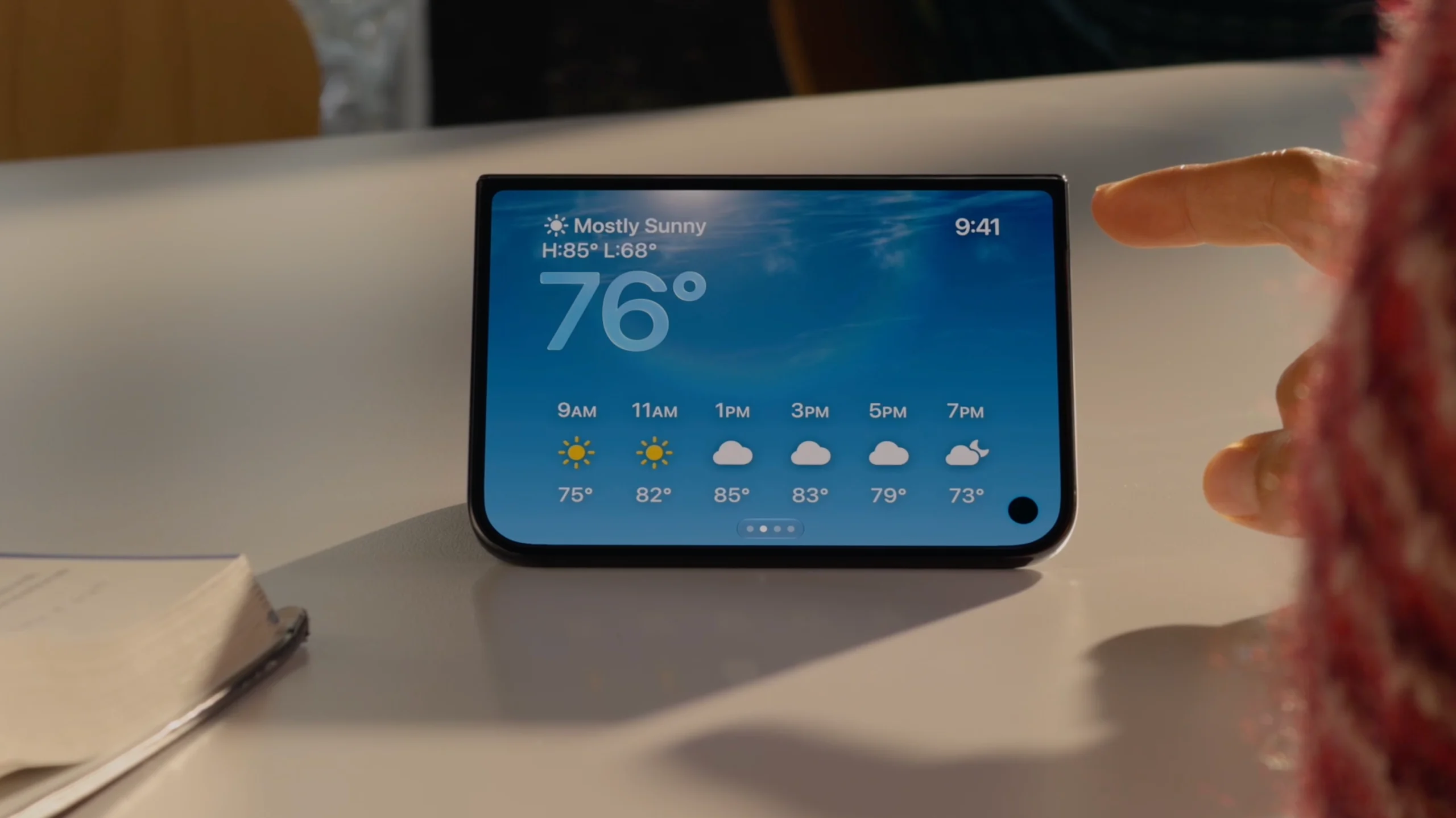
Samsung’s Flex Mode, which locks the hinge at a set angle for hands‑free video calls or gaming, is absent from the standard Z Fold 8 (only the Z Fold 8 Ultra offers it). Apple’s answer is the ‘StandBy’ mode on the iPhone Duo, turning the outer display into a smart showcase that can act as a digital clock, photo frame or information hub. The hinge can be positioned at any angle, giving users precise control over viewing comfort. Apple pushes the envelope further with ‘Smart Take’, an AI‑driven feature that snaps a photo automatically when everyone is ready, potentially eliminating the need for timers.
Price‑wise, the Galaxy Z Fold 8 starts at £1,699 in the UK, roughly £300 less than the iPhone Duo, which may soften the impact of the missing features for cost‑sensitive buyers. In the US, however, both start at $1,999, putting Samsung at a disadvantage when it omits dust‑proofing, magnetic accessories and a versatile stand‑by mode.
Overall, while the Galaxy Z Fold 8 remains an impressive piece of engineering, the iPhone Duo’s attention to practical details – robust dust resistance, integrated MagSafe magnets and a flexible StandBy display – give it a compelling edge in the fiercely competitive UK foldable market.